If your skin becomes oily within a few hours, feels congested, or frequently develops blackheads and breakouts, your cleanser matters more than you might think. A Salicylic Acid Cleanser can be a useful addition to an acne-prone skincare routine because it combines cleansing with gentle chemical exfoliation.
Unlike a basic face wash that primarily removes surface impurities, salicylic acid works particularly well for skin affected by excess oil and clogged pores. It belongs to a group of exfoliating ingredients called beta hydroxy acids (BHAs) and is oil-soluble, allowing it to work effectively in environments where sebum and dead skin cells accumulate.
But using a salicylic acid face wash is not simply about choosing the strongest formula or washing your face more often. The concentration, frequency of use, supporting products, and your individual skin type all matter.
This guide explains what salicylic acid cleanser does, who can benefit from it, how to use it correctly, common mistakes to avoid, and how to build a balanced routine around it.
What Does Salicylic Acid Do to Your Skin?
Salicylic acid is a beta hydroxy acid commonly used in skincare for exfoliation and managing blemish-prone skin. Because it is oil-soluble, it has an advantage when dealing with oily skin and pore congestion.
Your pores naturally contain sebum, the oil produced by your skin. Dead skin cells and other impurities can mix with this oil and contribute to clogged pores. When pores become congested, they may appear enlarged or develop blackheads, whiteheads, and acne.
A salicylic acid cleanser helps loosen this buildup while the cleansing action removes excess oil, sunscreen, dirt, and other surface impurities.
The important point is that salicylic acid is not a magical acne cure. It is one useful skincare ingredient that can help manage specific concerns when used consistently and appropriately.
Salicylic Acid Cleanser vs Regular Face Wash
A conventional cleanser is primarily designed to remove substances from the surface of your skin. A cleanser containing salicylic acid provides that cleansing function while also introducing a chemical exfoliant into the routine.
This makes it particularly interesting for people whose main concerns include:
- Excess facial oil
- Blackheads
- Whiteheads
- Congested pores
- Acne-prone skin
- Rough or uneven skin texture
- An oily T-zone
However, more exfoliation does not automatically mean better skin.
If a cleanser leaves your face feeling extremely tight, dry, burning, or uncomfortable, your skin may be receiving more cleansing or exfoliation than it can tolerate.
A good skincare routine should aim for clean, comfortable, balanced skin—not a completely oil-free face.
Key Benefits of a Salicylic Acid Cleanser
1. Helps Clear Congested Pores
Pore congestion is one of the main reasons oily skin can look uneven or develop frequent blemishes.
Salicylic acid helps exfoliate dead skin cells and loosen oil-based buildup. When combined with an effective cleansing routine, this can help keep pores from becoming excessively congested.
This is especially relevant for areas such as the nose, forehead, and chin, where many people notice blackheads or excess oil.
2. Helps Manage Excess Oil
Sebum is important for maintaining the skin barrier, but excessive oil can contribute to a greasy appearance and pore congestion.
A salicylic acid face wash can help remove excess surface oil without relying on aggressive scrubbing. This makes it a practical option for people who want a cleanser specifically suited to oily or combination skin.
The goal should not be to eliminate every trace of oil. Healthy skin still needs its natural lipids.
3. Supports Blackhead and Whitehead Care
Blackheads and whiteheads are forms of comedonal acne associated with blocked pores.
Because salicylic acid is oil-soluble, it is particularly well suited to skincare routines focused on clogged pores. Regular, appropriate use can help improve the appearance of congestion over time.
This is one reason salicylic acid is so common in products marketed for acne-prone and oily skin.
4. Provides Gentle Chemical Exfoliation
Physical scrubs use particles or friction to exfoliate the skin. Salicylic acid takes a different approach by chemically loosening dead skin cells.
For many people, this can be preferable to repeatedly scrubbing blemish-prone skin.
Still, “chemical exfoliation” does not mean irritation-free exfoliation. Overuse can cause dryness and discomfort, so frequency should be adjusted according to your skin’s tolerance.
5. Can Improve the Look of Uneven Texture
When dead skin cells and oil accumulate, skin can appear rough or dull.
By supporting regular exfoliation and cleansing, salicylic acid can help the skin appear smoother and more refined with consistent use.
Visible improvement is generally a gradual process rather than something that happens after a single wash.
Is Salicylic Acid Good for Oily Skin?
Yes, salicylic acid is particularly well suited to oily and combination skin because it addresses two common concerns at once: excess oil and pore congestion.
If your skin becomes shiny quickly and you frequently experience blackheads or clogged pores, a salicylic acid cleanser may fit well into your routine.
However, oily skin can still become dehydrated or irritated.
That is why choosing a cleanser with a balanced formulation matters. You do not want to aggressively strip the skin every morning and night in an attempt to eliminate oil. Excessive cleansing can leave the skin uncomfortable and may disrupt the skin barrier.
A better approach is to cleanse effectively, moisturize afterward, and adjust frequency based on how your skin responds.
Can You Use Salicylic Acid for Acne?
Salicylic acid is widely used in acne-focused skincare, particularly for mild breakouts, blackheads, whiteheads, and clogged pores.
Its exfoliating properties make it useful for managing the buildup that contributes to comedones. It may therefore be a sensible ingredient for people whose acne is closely associated with oily and congested skin.
However, not every type of acne responds equally to a cleanser.
Deep, painful, widespread, or persistent acne may require professional assessment rather than simply adding more active ingredients to your routine.
If your breakouts are severe, painful, scarring, or not improving, consider speaking with a qualified dermatologist.
How to Use a Salicylic Acid Cleanser Correctly
Using the product correctly is just as important as choosing the ingredient.
Step 1: Wet Your Face
Use lukewarm water to wet your face. Extremely hot water can make already-sensitive skin feel dry and irritated.
Step 2: Apply the Cleanser
Use an appropriate amount and gently massage it over your face. There is no benefit to aggressively rubbing acne-prone areas.
Pay attention to areas where you experience oiliness or congestion, but avoid unnecessary friction.
Step 3: Rinse Thoroughly
Rinse the cleanser away with lukewarm water and gently pat your face dry.
Do not scrub your skin with the towel.
Step 4: Moisturize
Follow with a lightweight moisturizer suitable for your skin type.
Even oily skin needs hydration. Skipping moisturizer simply because your skin produces oil can make your routine unnecessarily harsh.
Step 5: Apply Sunscreen in the Morning
If your morning routine includes exfoliating skincare, finish with a broad-spectrum sunscreen.
Daily sun protection is an important part of maintaining healthy-looking skin and preventing unwanted pigmentation.
How Often Should You Use a Salicylic Acid Face Wash?
There is no universal frequency that works for everyone.
If you are new to salicylic acid, starting gradually is a sensible approach. For example, begin with once-daily use or use it less frequently if your skin is sensitive.
If your skin remains comfortable, you may continue according to the product’s directions.
Watch for signs that you are overdoing it, such as:
- Persistent dryness
- Burning or stinging
- Excessive redness
- Peeling
- Tight or uncomfortable skin
If these symptoms appear, reduce usage and simplify your routine until your skin settles.
More product and more frequent washing do not necessarily produce faster results.
Who Should Consider a Salicylic Acid Cleanser?
A salicylic acid cleanser may be a good option if you have:
- Oily skin
- Combination skin
- Frequent blackheads
- Whiteheads
- Congested pores
- An oily T-zone
- Mild blemish-prone skin
- Rough or uneven skin texture
People with dry or highly sensitive skin may need to use salicylic acid more cautiously.
If you already use multiple exfoliating products, retinoids, or acne treatments, adding another active ingredient can increase the possibility of irritation. A simple routine is often easier to manage.
Salicylic Acid Cleanser for Men and Women
Salicylic acid is not limited to one gender.
The ingredient works according to skin biology rather than whether someone is male or female. Men with oily skin, clogged pores, or frequent breakouts can use salicylic acid skincare just as women can.
Men who shave regularly should pay particular attention to irritation. Combining shaving friction with several strong active ingredients may leave sensitive skin uncomfortable.
A gentle cleansing routine, proper shaving technique, moisturizer, and sunscreen can provide a better foundation than constantly adding stronger products.
Salicylic Acid Cleanser in Hot and Humid Weather
Climate can influence how skincare feels on the skin.
Hot, humid environments can increase sweating and make oily skin feel heavier or shinier. Dust, pollution, sunscreen, and makeup can also contribute to the feeling of a congested face.
For people living in Pakistan, these factors can make an effective cleansing routine particularly important.
However, climate does not mean you should wash your face excessively. Cleansing several times throughout the day can become counterproductive if it leaves the skin dry or irritated.
A better strategy is to use an appropriate cleanser at sensible times and maintain the rest of your routine consistently.
What to Avoid When Using Salicylic Acid
Adding salicylic acid to your routine does not mean you need to use every acne product available.
Avoid unnecessarily combining multiple exfoliating products simply because you want faster results.
Be particularly careful with routines containing several potentially irritating actives at the same time.
Also avoid:
- Harsh physical scrubs
- Excessive cleansing
- Picking or squeezing blemishes
- Using extremely hot water
- Ignoring moisturizer
- Skipping daytime sunscreen
Skincare is not a race. Consistency usually beats aggression.
Can Salicylic Acid Make Your Skin Dry?
It can.
Salicylic acid is an exfoliating ingredient, and excessive use may cause dryness or irritation, especially if your skin is naturally dry or sensitive.
The cleanser format may be convenient because it is rinsed away, but that does not mean irritation is impossible.
If your face feels tight after cleansing, starts peeling, or becomes unusually sensitive, consider reducing frequency and reviewing the rest of your skincare routine.
A healthy skin barrier is part of the goal—not something to sacrifice for perfectly oil-free skin.
What Should You Use After a Salicylic Acid Cleanser?
A simple routine is often enough.
Morning
Salicylic acid cleanser → Moisturizer → Sunscreen
Evening
Salicylic acid cleanser → Moisturizer
Depending on your individual concerns, additional products can be introduced, but there is no need to create a complicated ten-step routine simply because a skincare trend recommends it.
If you use other active ingredients, introduce them carefully and avoid creating a routine where several potentially irritating products are used together without a clear reason.
How Long Does Salicylic Acid Take to Work?
Skincare ingredients rarely produce meaningful, lasting changes overnight.
With consistent use, you may gradually notice improvements in oiliness, congestion, blackheads, and overall skin texture. The timeline varies depending on your skin, the severity of your concerns, the formulation, and the rest of your routine.
If you have been using an appropriate product consistently and your acne continues to worsen, becomes painful, or begins leaving scars, do not keep escalating your skincare routine indefinitely.
Professional dermatological advice may be more appropriate.
How to Choose a Salicylic Acid Cleanser
When buying a salicylic acid cleanser, do not judge the product solely by the ingredient name on the front label.
Consider:
Skin Type
Oily and combination skin may benefit most from a salicylic acid cleanser, while dry or sensitive skin may require more cautious use.
Formula
Look for a thoughtfully formulated cleanser rather than one designed around the idea that stronger automatically means better.
Supporting Ingredients
The overall formulation matters. Ingredients that support cleansing and skin comfort can make a product more suitable for regular use.
Brand Transparency
Look for clear product information, ingredient details, directions for use, and appropriate usage guidance.
Your Actual Skin Concern
If your main problem is blackheads and congestion, salicylic acid may make sense. If your concern is severe inflammatory acne, persistent cystic breakouts, or scarring, a cleanser alone may not be enough.
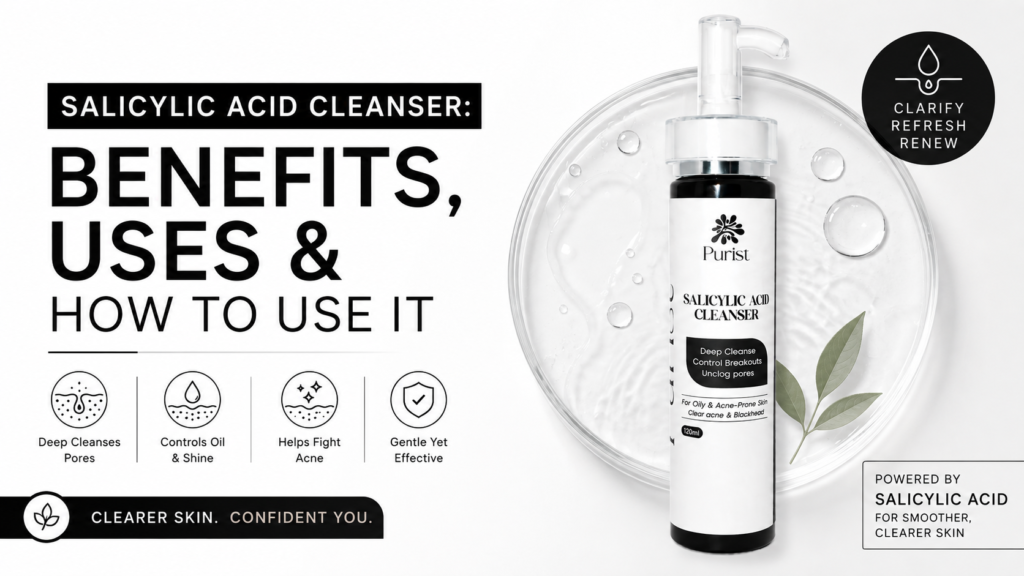
Purist Salicylic Acid Cleanser
For shoppers in Pakistan looking to add salicylic acid to an acne-prone skincare routine, Purist Salicylic Acid Collection is designed around the needs of oily and blemish-prone skin.
Rather than treating cleansing as an aggressive process, the aim should be to remove excess oil and impurities while keeping the overall routine balanced.
When introducing any active cleanser, start according to the product’s directions and pay attention to how your skin responds. Pairing cleansing with appropriate hydration and daily sun protection can create a more sustainable routine than relying on a single product.
Frequently Asked Questions
Is salicylic acid cleanser suitable for oily skin?
Yes. Salicylic acid is particularly popular for oily and combination skin because it helps with excess oil, dead skin buildup, and clogged pores.
Can I use salicylic acid cleanser every day?
Many people can use a salicylic acid cleanser regularly, but frequency depends on the formulation and your skin’s tolerance. If you are new to salicylic acid, introduce it gradually.
Does salicylic acid cleanser remove blackheads?
It can help manage blackheads by exfoliating and reducing pore congestion. Consistent use is more important than trying to remove blackheads aggressively.
Can I use moisturizer after salicylic acid cleanser?
Yes. Moisturizer can help maintain skin comfort and support the skin barrier, including for people with oily skin.
Should I use sunscreen with salicylic acid?
Daily sunscreen is a sensible part of a skincare routine, particularly when using exfoliating ingredients.
Is salicylic acid cleanser good for sensitive skin?
It can be irritating for some people with sensitive skin. Start cautiously, follow the product instructions, and stop or reduce use if significant irritation develops.
Can teenagers use salicylic acid cleanser?
Salicylic acid is commonly used in acne skincare, including products intended for younger users. However, the appropriate product and routine depend on age, skin sensitivity, and the severity of acne. For persistent or severe acne, professional advice is preferable.
Final Takeaway
A salicylic acid cleanser can be a practical choice for oily, combination, and congestion-prone skin. Its biggest advantage is the combination of everyday cleansing with salicylic acid’s exfoliating action, making it particularly useful for concerns such as excess oil, blackheads, whiteheads, and clogged pores.
But effective skincare is not about using the strongest active ingredient as often as possible.
Choose a suitable formulation, introduce it gradually, moisturize afterward, protect your skin from the sun, and give your routine enough time to work. If acne is severe, painful, persistent, or leaving scars, a cleanser should not replace professional dermatological care.
For people in Pakistan dealing with oily or blemish-prone skin, a well-formulated salicylic acid cleanser can be a straightforward first step toward a more consistent and balanced skincare routine.