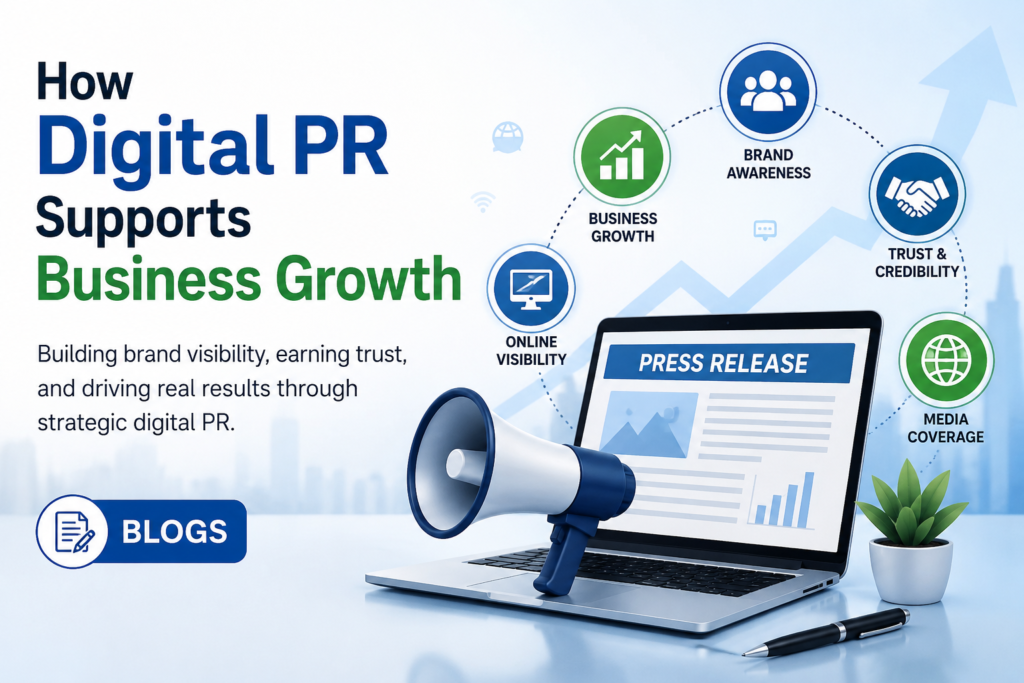
In today’s digital-first marketplace, businesses are constantly looking for ways to build credibility, strengthen their online presence, and reach new audiences. While traditional public relations focused on newspapers, television, and magazines, Digital PR has transformed the way brands connect with customers and the media.
Rather than relying solely on offline publicity, digital PR combines online media coverage, content marketing, search engine optimization (SEO), and relationship building to increase visibility across trusted websites and digital publications. Whether you’re a startup, small business, or established enterprise, an effective digital PR strategy can contribute significantly to long-term business growth.
This guide explains how digital PR works, why it matters, and the practical ways it helps organizations grow sustainably.
What Is Digital PR?
Digital PR is the practice of earning online mentions, media coverage, and backlinks from reputable websites, blogs, online magazines, and news publications. Its goal is to improve brand awareness while strengthening a company’s online reputation and search visibility.
Unlike traditional PR, which often focuses on print and broadcast media, digital PR targets audiences where they spend most of their time—online.
Common digital PR activities include:
- Publishing industry insights
- Sharing company announcements
- Building relationships with journalists
- Creating original research
- Producing data-driven content
- Contributing expert opinions
- Participating in interviews and podcasts
The result is increased exposure across trusted digital platforms.
Why Digital PR Matters Today
Modern consumers research companies before making purchasing decisions. They read reviews, compare brands, search Google, and evaluate online credibility.
Businesses that appear in respected publications often establish trust more quickly than those relying only on advertising.
Digital PR helps businesses:
- Improve online credibility
- Reach wider audiences
- Earn trust through third-party mentions
- Increase search engine visibility
- Support long-term marketing efforts
Because digital PR focuses on earned media rather than paid advertising, many consumers perceive it as more authentic.
How Digital PR Supports Business Growth
1. Builds Brand Authority
Authority is one of the most valuable business assets.
When respected publications mention your business or quote your experts, your company becomes associated with trusted sources.
Over time, consistent media exposure positions your organization as a knowledgeable voice within your industry.
Customers naturally feel more confident working with businesses that are recognized by established media outlets.
2. Improves Search Engine Visibility
Search engines evaluate many signals when ranking websites.
One important factor is the quality of websites linking back to your content.
Digital PR often results in editorial backlinks from reputable publications, industry blogs, and trusted websites. These high-quality links help search engines better understand your site’s authority.
Although backlinks alone don’t guarantee rankings, they can strengthen an overall SEO strategy when combined with valuable content and a technically optimized website.
3. Increases Website Traffic
Every online publication that features your business introduces your brand to a new audience.
Readers interested in your expertise may visit your website to learn more.
Unlike paid advertising, where traffic typically stops when campaigns end, articles published on reputable websites can continue generating visitors for months or even years.
This creates ongoing opportunities for businesses to reach potential customers.
4. Strengthens Online Reputation
Reputation influences buying decisions.
Customers often search a company’s name before making contact.
Positive media coverage helps shape what people see when researching your business.
Consistent digital PR efforts can improve search results by highlighting valuable content, expert interviews, educational resources, and industry contributions.
A strong online reputation supports customer confidence and long-term brand loyalty.
5. Generates Brand Awareness
Even when readers don’t immediately become customers, media coverage increases familiarity with your brand.
Repeated exposure across multiple websites makes your business more recognizable.
Brand awareness often leads to:
- Increased website visits
- More direct searches
- Higher social media engagement
- Better audience recall
- Greater customer trust
Awareness is often the first step toward future conversions.
6. Supports Content Marketing
Creating quality content requires time and expertise.
Digital PR extends the reach of that content by introducing it to journalists, bloggers, and publishers looking for reliable information.
Examples include:
- Research reports
- Industry statistics
- Case studies
- Expert commentary
- Educational guides
When useful content receives media attention, it continues delivering value beyond your own website.
7. Attracts Business Partnerships
Visibility doesn’t only influence customers.
Potential partners, investors, suppliers, and collaborators also research businesses online.
Companies that maintain an active media presence often appear more established and credible.
Digital PR can open opportunities for:
- Strategic partnerships
- Speaking engagements
- Podcast invitations
- Industry collaborations
- Joint marketing campaigns
These relationships contribute to sustainable business growth.
8. Supports Local and National Growth
Businesses serving local communities benefit from regional media coverage.
Organizations expanding nationally can use digital PR to reach broader audiences through industry publications and national news websites.
Whether your goal is local recognition or nationwide visibility, digital PR strategies can be tailored to different markets.
9. Creates Long-Term Marketing Value
Advertising campaigns usually stop producing results once the budget ends.
Digital PR works differently.
Published articles often remain indexed in search engines, allowing readers to discover them long after publication.
This long-term visibility provides ongoing value and complements other marketing channels like SEO, email marketing, and social media.
10. Encourages Customer Trust
Consumers trust recommendations and editorial coverage more than promotional advertisements.
When independent publishers discuss your company, readers often perceive the information as more objective.
Trust influences nearly every stage of the customer journey, from awareness to purchase decisions.
Digital PR helps businesses build that trust gradually through credible online exposure.
Key Components of a Successful Digital PR Strategy
An effective digital PR campaign typically includes several elements working together.
Create Valuable Content
Content should educate, inform, or solve real problems.
Examples include:
- Industry reports
- Expert guides
- Research findings
- Surveys
- Educational articles
- Original insights
Useful content naturally attracts more attention from journalists and publishers.
Develop Media Relationships
Successful digital PR relies on strong relationships with journalists, editors, bloggers, and industry publications.
Understanding what each publication covers increases the likelihood of relevant coverage.
Personalized outreach is generally more effective than mass email campaigns.
Focus on Expertise
Businesses that consistently share genuine expertise are more likely to earn media mentions.
Subject matter experts should contribute insights based on experience rather than promotional messaging.
This aligns with Google’s emphasis on Experience, Expertise, Authoritativeness, and Trustworthiness (E-E-A-T).
Use Data to Support Stories
Statistics, surveys, and research make content more newsworthy.
Journalists frequently reference reliable data when covering industry topics.
Businesses that publish original research often receive more media attention than those relying solely on opinions.
Monitor Results
Digital PR performance can be measured using:
- Referral traffic
- Media mentions
- Brand searches
- Organic traffic growth
- Backlink quality
- Audience engagement
Monitoring these metrics helps refine future campaigns.
Common Digital PR Mistakes to Avoid
Businesses sometimes reduce the effectiveness of their campaigns by making avoidable mistakes.
Common examples include:
- Sending generic media pitches
- Publishing overly promotional content
- Ignoring audience interests
- Focusing only on backlinks
- Using unreliable data
- Neglecting relationship building
Digital PR works best when businesses prioritize providing value rather than seeking publicity alone.
Digital PR and SEO Work Better Together
Although digital PR and SEO have different objectives, they complement each other effectively.
SEO focuses on improving website visibility within search engines.
Digital PR increases authority through earned media coverage and high-quality editorial mentions.
Together they can help businesses:
- Reach larger audiences
- Improve search performance
- Build stronger credibility
- Increase organic traffic
- Establish industry leadership
Many successful organizations integrate both strategies into their broader digital marketing plans.
The Future of Digital PR
Consumer expectations continue evolving.
People increasingly seek trustworthy information from credible sources before making decisions.
As search engines prioritize quality content and authoritative signals, digital PR is expected to remain an important part of sustainable online growth.
Businesses that invest in helpful content, authentic expertise, and meaningful relationships will likely continue benefiting from stronger visibility and improved brand reputation.
Organizations such as sptechsolutions demonstrate how combining valuable content with ethical digital marketing practices can contribute to long-term online growth while maintaining credibility.
Final Thoughts
Digital PR has become an essential component of modern business growth. By increasing brand authority, improving search visibility, attracting qualified audiences, and strengthening online reputation, it supports sustainable success across multiple marketing channels.
Rather than focusing solely on short-term publicity, effective digital PR emphasizes valuable content, genuine expertise, and trusted relationships. Businesses that consistently educate their audiences and earn recognition from reputable publications are better positioned to build lasting credibility in today’s competitive digital landscape.
As digital marketing continues to evolve, organizations that incorporate digital PR into their overall strategy will be better equipped to grow their visibility, strengthen customer trust, and create meaningful long-term opportunities.