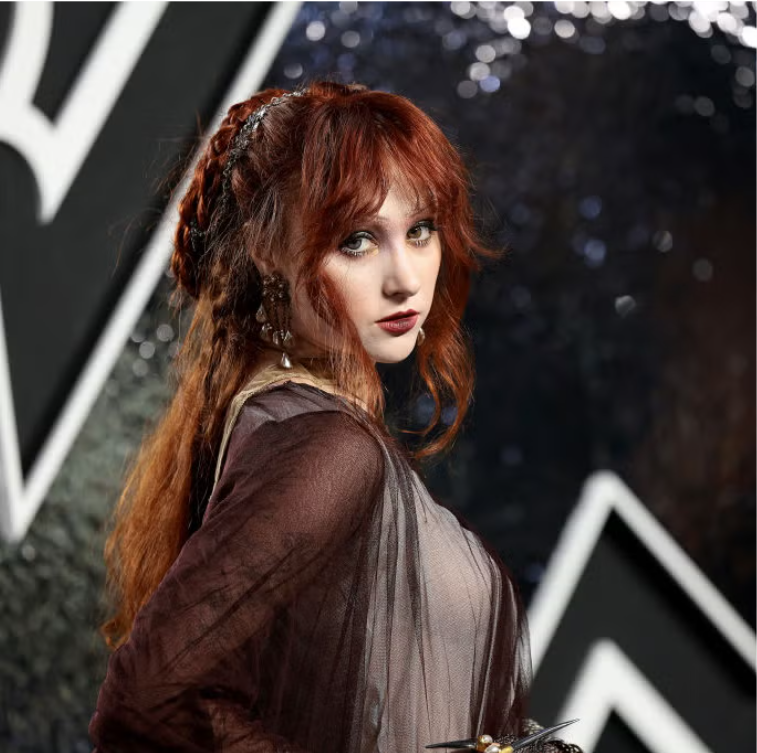
Chappell Roan’s journey from a small Missouri town to global pop recognition is one of the most compelling stories in modern music. Born Kayleigh Rose Amstutz on February 19, 1998, in Willard, Missouri, she grew up in a conservative Christian environment before transforming herself into a theatrical pop artist known for queer-centered songs, camp-inspired visuals, and emotionally direct lyrics. Her rise did not happen overnight. It took years of YouTube uploads, early recordings, a difficult major-label experience, and live performances before “Good Luck, Babe!” made her famous in 2024 Click here.
Early Life in Missouri
Chappell Roan was born and raised in Willard, Missouri, a small community near Springfield. She grew up in a conservative Christian household where traditional beliefs shaped daily life. Her early environment placed strong emphasis on religious expectations and conventional ideas about identity and relationships.
Willard was not simply a backdrop to Roan’s childhood. It shaped the way she understood belonging, difference, and self-expression. She has described feeling stifled during adolescence, especially as she began to recognize feelings that did not fit the expectations of her community. The town became both a source of memory and a symbol of the restrictions she would later challenge through music.
Roan has said that she felt isolated growing up and believed she was never good enough because she was gay. That feeling of not belonging became one of the most important emotional threads in her work. Her songs often explore the desire to escape a place that feels limiting while still acknowledging the complexity of leaving home.
Family and Religious Environment
Roan was raised in a religious household where church was a regular part of life. Her family attended services multiple times each week, and the values of her community influenced the way she understood morality, identity, and relationships.
She was taught that being gay was a sin, an idea that made her early understanding of her sexuality especially painful. Rather than feeling free to explore who she was, Roan initially pushed those feelings aside and tried to fit into the heterosexual norms expected of her.
That experience created a deep emotional conflict. Roan loved her family and her hometown, but she also felt restricted by the beliefs and expectations surrounding her. This tension became a central theme in her music, particularly in songs that describe the desire to leave a familiar place in search of acceptance and freedom.
Feeling Different and Isolated
Roan’s early life was marked by a sense of isolation. She has described feeling like she did not fit in with the people around her and struggled with the emotional weight of growing up queer in a conservative environment. Those feelings were not simply about being different; they were about believing that difference made her less worthy of love or acceptance.
She has also spoken openly about experiencing anxiety, depression, and emotional instability during her youth. At the time, she did not fully understand what she was experiencing. She later learned that some of her struggles were symptoms of bipolar disorder, a diagnosis that helped her make sense of feelings she had carried for years.
That honesty has become an important part of Roan’s public identity. She does not present her childhood as a simple story of overcoming hardship. Instead, she acknowledges the pain, confusion, and loneliness that shaped her, while also showing how those experiences became the foundation for her creativity.
Music as an Escape
Music became one of the few spaces where Roan could express emotions she could not easily explain. She began playing piano and singing as a child, developing an early connection to music that would later become central to her identity.
She began taking piano lessons around age twelve and also received vocal training. She taught herself to play along with songs by ear and became increasingly interested in writing and recording. Music gave her a way to imagine a life beyond the limitations she felt in her hometown.
Her early performances were not glamorous or industry-driven. She sang at school talent shows and local events in Missouri, learning how to connect with audiences before she had professional resources. Those early experiences gave her practical skills and helped her develop the confidence that would later become essential to her career.
YouTube and the First Steps
As a teenager, Roan began uploading music to YouTube under her birth name, Kayleigh Rose Amstutz. Her early videos included covers, which allowed her to build an audience and develop confidence before she had access to major-label resources.
In 2014, she released an original song called “Die Young,” which she wrote while attending a music and art summer camp. The experience introduced her to other young creative people and strengthened her desire to pursue music seriously. Later that year, she released a self-titled debut EP under the name Kayleigh Rose.
Roan has said that “Die Young” set everything into motion. The song helped attract attention from industry figures and gave her a sense that a professional music career might be possible.
Leaving Missouri for Los Angeles
Roan’s move toward Los Angeles marked a major turning point in her life. At seventeen, she found herself in a queer community that inspired her to write music in a more personal and liberated way. The experience gave her access to creative spaces where identity and self-expression were celebrated rather than judged.
Los Angeles did not erase her Missouri roots. Instead, it gave her a new perspective on them. She could look back at her upbringing with greater understanding and turn those experiences into songs about leaving home, seeking acceptance, and discovering a wider world.
The contrast between Missouri and Los Angeles became central to her artistic identity. Her music often moves between small-town memory and big-city freedom, creating songs that feel both personal and universal Read more.
The Meaning of Chappell Roan
Roan’s stage name is a tribute to her late grandfather, Dennis K. Chappell. “Chappell” comes from his surname, while “Roan” refers to “The Strawberry Roan,” a country song he loved. She adopted the professional name as a way of honoring him while creating a distinct artistic identity.
The name became more than a professional label. It allowed Roan to create a persona that could be theatrical, colorful, humorous, and larger than life. Chappell Roan became a space where she could express desire, identity, and freedom more openly than she had been able to as Kayleigh Rose in Missouri.
That separation became central to her artistry. Roan uses performance not as a disguise but as a way of becoming more fully herself. Her stage persona draws inspiration from club culture, 1980s punk, burlesque, and drag aesthetics, creating a visual world that is immediately recognizable.
Atlantic Records and Early Setbacks
Roan’s early momentum led to a major-label opportunity. In May 2015, while she was still in high school, she signed with Atlantic Records. The deal gave her access to professional recording and development, but it did not produce immediate success.
In 2017, she released the EP School Nights through Atlantic. The project received limited attention, and Roan later described the experience as difficult. She felt pressure to fit into an industry model that did not fully understand her artistic identity. Eventually, Atlantic dropped her from its roster, leaving her uncertain about her future in music.
The setback forced Roan to reconsider her path. She returned to Missouri for a period and worked as a barista while trying to support herself. The experience was humbling, but it also gave her time to reflect on what kind of artist she wanted to become. Rather than abandoning music, she began rebuilding her confidence and creative direction.
“Pink Pony Club” and Reinvention
Roan’s artistic turning point came with “Pink Pony Club,” released in April 2020. The song tells the story of a small-town girl who dreams of dancing at a drag club in West Hollywood. Its joyful sound, theatrical style, and openly queer perspective marked a major shift from her earlier work.
The song did not become an immediate commercial hit, but it became central to Roan’s identity. It gave her a clearer creative direction and connected her with LGBTQ+ audiences who recognized its themes of freedom, acceptance, and self-discovery. It also introduced the campy visual world that would later define her performances.
“Pink Pony Club” showed that Roan was no longer trying to fit into a conventional pop formula. She was creating music that reflected her own experiences and imagination. The song eventually became one of the works most closely associated with her rise, even though its success came years after its release.
Working With Dan Nigro
Roan’s collaboration with producer and songwriter Dan Nigro became essential to her later success. Nigro, known for his work with Olivia Rodrigo, helped shape the pop sound behind The Rise and Fall of a Midwest Princess. His imprint, Amusement Records, released the album in September 2023.
The partnership gave Roan a stronger musical platform without erasing her individuality. Her songs combined synth-pop, dance-pop, rock influences, and theatrical arrangements. Lyrically, she wrote about queer desire, heartbreak, identity, fame, and the contrast between small-town life and big-city freedom.
Nigro’s support came after Roan had already experienced rejection and uncertainty. The collaboration allowed her to return to music on her own terms, with greater confidence in her voice and a clearer artistic vision.
The Rise and Fall of a Midwest Princess
Roan’s debut album, The Rise and Fall of a Midwest Princess, was released in September 2023 and became the project that changed her career. The title directly reflects her Missouri upbringing and the emotional journey of leaving a small town in search of a larger life.
The album included songs such as “Pink Pony Club,” “Red Wine Supernova,” “Casual,” “Hot To Go!,” and “Naked in Manhattan.” Its sound combined synth-pop, dance-pop, rock influences, and theatrical arrangements. Lyrically, it explored queer desire, heartbreak, identity, fame, and the contrast between small-town life and big-city freedom.
The album did not become an instant blockbuster at first. Roan’s live performances, social media presence, and festival appearances helped listeners discover the record over time. As songs spread online, the album became one of the defining pop releases of its period.
“Good Luck, Babe!” and Mainstream Fame
Roan’s mainstream breakthrough came with “Good Luck, Babe!,” released as a standalone single in April 2024. The song combined emotional vulnerability with a massive pop chorus and quickly became a viral hit. Its lyrics explore a relationship in which one person refuses to acknowledge their feelings, while the other realizes that denial will not prevent regret.
The song reached number four on the Billboard Hot 100 and became a global top-five hit. Its success introduced Roan to listeners who had not yet discovered her album and helped turn her into a household name.
“Good Luck, Babe!” proved that Roan could succeed beyond a niche audience. It gave her a signature hit while drawing attention back to The Rise and Fall of a Midwest Princess. The song’s popularity transformed her from a critically admired newcomer into a major pop star.
Viral Performances and Festival Fame
Roan’s live performances became a major part of her rise. Her appearances at Coachella and Governors Ball in 2024 attracted widespread attention because of their theatrical costumes, energetic choreography, drag-inspired aesthetics, and unapologetic celebration of queer culture.
Unlike many pop performers who maintain a restrained public image, Roan embraced spectacle. Her concerts often featured colorful costumes, dramatic makeup, playful stage banter, and a sense of community. The visual style made her performances feel like celebrations rather than ordinary concerts.
That theatrical approach helped her stand out in a crowded pop landscape. Audiences did not simply hear her songs; they entered a visual world built around freedom, humor, and self-expression. Her live shows became an important reason why her music spread so quickly.
Grammy Recognition
Roan’s rise reached a major milestone at the 67th Grammy Awards in February 2025, where she won Best New Artist. The award recognized not only the success of The Rise and Fall of a Midwest Princess and “Good Luck, Babe!” but also the years of persistence behind them.
The Grammy was especially meaningful because Roan’s career had included major setbacks. She had been signed and dropped by a major label, returned home to work as a barista, and rebuilt her career before achieving mainstream recognition. Her win showed that artistic identity can develop over time rather than appearing fully formed at the beginning.
Roan used her Grammy platform to speak about the needs of young artists, including fair treatment and access to healthcare within the music industry. Her speech reinforced her reputation as an artist who sees success as connected to responsibility, not merely personal achievement.
Life After the Breakthrough
Following her Grammy win, Roan continued to build on her success. In 2025, she reached the top ten of the Billboard Hot 100 with “The Giver” and “The Subway,” showing that her popularity was not limited to one viral moment. She also began teasing a second album, generating anticipation for the next stage of her career.
Her post-Grammy success demonstrated that her rise was not accidental. The audience that discovered her through “Good Luck, Babe!” continued to follow her because her music offered more than a catchy chorus. It offered personality, humor, vulnerability, and a clear artistic point of view.
Roan’s ability to turn early setbacks into creative strength has become a defining part of her story. She did not become famous simply because of one viral song. She became famous because she had already built a body of work, a performance identity, and a community before mainstream attention arrived.
Chappell Roan’s Cultural Impact
Chappell Roan’s rise has had an impact beyond chart success. She has become an important figure for LGBTQ+ listeners, young people from small towns, and artists who feel pressure to conform to industry expectations. Her music celebrates queer identity while also acknowledging loneliness, heartbreak, and the difficulty of finding acceptance.
Her visual style has also influenced pop culture. Roan’s use of camp, drag-inspired aesthetics, exaggerated costumes, and theatrical makeup has helped make flamboyant self-expression central to her public identity. She does not treat performance as a disguise; she treats it as a way of becoming more fully herself.
At the same time, Roan has been open about the pressures of sudden fame. She has discussed boundaries, mental health, and the importance of protecting personal space. Her honesty has made her relationship with fans feel more complicated and human than the polished image often associated with pop stardom.
A Career Built on Truth
Chappell Roan’s early life in Missouri gave her the emotional foundation for her music. Her conservative upbringing, religious environment, and feelings of isolation became the source of songs about identity, freedom, and belonging. Her move to Los Angeles gave her the space to explore those themes more openly and develop the theatrical persona that would define her career.