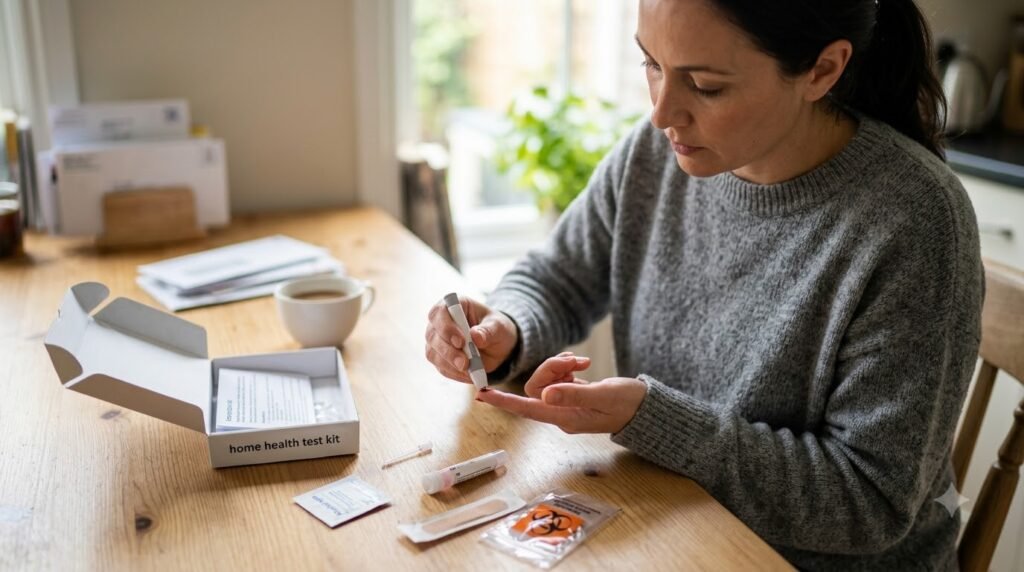
The idea of having blood drawn at home sounds appealing in theory — no commute, no waiting room, no schedule constraints. But the practical reality of blood sample collection from home involves more complexity than simply having someone arrive with a needle. The quality of your results depends on decisions made during and after collection that most patients never see or think about.
Understanding what separates professional, quality-focused home collection services from those cutting corners helps you make choices that protect both convenience and accuracy. Ecotown Diagnostics provides reliable blood sample collection from home where protocols for collection, storage, and transport maintain the same standards as facility-based testing.
Why Home Collection Is More Complex Than It Appears
Walking a phlebotomist to your home and having blood drawn seems straightforward. The complexity lies in everything that happens after the needle comes out.
A blood sample is remarkably fragile. It begins degrading the moment it’s drawn. Red cells break down. Proteins denature. Cells undergo metabolic changes. Chemical reactions continue occurring in the sample. The longer the sample sits at room temperature, the more these changes compromise result accuracy.
In a laboratory setting, samples are processed immediately or stored under strictly controlled conditions. In a home collection scenario, samples must be transported — often through traffic, over time, potentially in variable temperatures — before reaching the lab.
This is why blood sample collection from home requires more rigorous process management than many patients realise. Every step from collection to lab receipt must be deliberately managed to ensure sample integrity.
The Critical Importance of Phlebotomist Training
The person collecting your blood at home is the first line of quality assurance. Their training level directly influences whether your sample will be suitable for testing.
A trained, certified phlebotomist knows:
Proper venipuncture technique. This involves selecting the appropriate vein, approaching from the correct angle, using the right needle gauge, and drawing blood smoothly without causing haemolysis (rupture of red blood cells). Haemolysis falsely elevates potassium levels and compromises multiple tests.
Tube selection and filling order. Different tests require different tube types with different additives. The order in which tubes are filled matters because certain additives can contaminate subsequent tubes if the wrong sequence is used. A trained phlebotomist fills tubes in a specific sequence every time.
Proper tube inversion. Tubes containing additives must be inverted a specific number of times — usually 8–10 times — to ensure the additive is properly mixed with the blood. Under-inverting or over-inverting both compromise results.
Sample labelling protocols. Tubes must be labelled immediately after collection with patient information, collection time, and any relevant details. Labels must be legible and durable. Incorrect or illegible labelling creates the risk of samples being misidentified.
Safety protocols. The phlebotomist must follow bloodborne pathogen precautions, use sterile technique, properly dispose of sharps, and maintain a safe environment for both themselves and you.
Customer interaction. A skilled phlebotomist puts patients at ease, answers questions accurately, and makes the collection experience professional and comfortable.
An untrained or minimally trained collector may manage to draw blood without incident on a straightforward case, but lacks the expertise to handle complications or maintain consistent quality across different patient situations. This is why the quality of your blood sample collection from home starts with who’s doing the collecting.
The Post-Collection Journey: Temperature, Time, and Transport
What happens to your sample after the phlebotomist leaves your home is just as important as the collection itself.
The First Critical Window: Immediate Post-Collection
Within minutes of collection, samples begin changing. For most routine tests, room temperature storage for the first few hours is acceptable. However, certain tests require specific handling:
- Glucose samples can show false elevation if samples are left at room temperature for extended periods (glucose is consumed by cells in the sample)
- Potassium samples can show false elevation if there’s haemolysis or if samples are left unrefrigerated too long
- Certain hormone tests require refrigeration or even freezing to maintain stability
- Coagulation samples must be processed within specific timeframes
A quality blood sample collection from home service has documented protocols specifying which tests require which storage conditions. The collector should place your samples in appropriate containers immediately after collection.
Transport: The Critical Challenge of Home Collection
Transport from your home to the lab is where the complexity of home collection becomes apparent. Your samples must maintain appropriate conditions during transit, which typically takes 20 minutes to an hour depending on distance and traffic.
Quality services use:
- Insulated containers that maintain temperature despite external conditions
- Ice packs or phase-change materials that keep samples cool without freezing them
- Tracking systems that document storage temperature throughout transport
- Defined transit routes that minimise time between collection and lab receipt
Inadequate services might:
- Place samples in a regular bag with no temperature management
- Leave samples in a hot vehicle during traffic
- Take indirect routes that extend transport time unnecessarily
- Have no way to verify whether temperature was maintained
Lab Receipt: The Final Handoff
When your samples arrive at the lab, the first step is verification. Lab staff confirm:
- Patient information on the tubes matches the ordering information
- Collection time and transport time are documented
- No visible issues with samples (leakage, discoloration, improper labelling)
- Samples are placed in appropriate storage pending processing
If samples have been in transit too long or show signs of compromise, they may be flagged as unsuitable for testing and repeat collection recommended. A quality lab would contact you rather than proceeding with potentially compromised samples.
Preparation for Home Collection: It’s More Important Than You Think
How you prepare directly influences whether your sample will be suitable for accurate testing.
Fasting Requirements
Many blood tests require fasting because food affects results. Fasting protocols typically require:
- No food for 8–12 hours before collection
- Only water allowed during fasting period
- No caffeine, coffee, or other beverages
- Collection during fasting window (typically morning before breakfast)
Tests commonly requiring fasting:
- Fasting blood glucose
- Lipid panels (cholesterol, triglycerides)
- Liver function tests
- Some hormone tests
Tests not requiring fasting:
- Most haematology tests (CBC)
- Many hormone tests
- Electrolyte panels
- Thyroid function
Ask your lab specifically which of your tests require fasting. Don’t assume. A blood sample collection from home done while non-fasted when fasting was required invalidates that portion of your results.
Medication Considerations
Some medications affect blood test results. Discuss with your doctor:
- Which medications you’re currently taking
- Whether any should be held before testing
- Whether collection timing relative to medication dose matters
For example:
- Certain antibiotics affect liver function test results
- Some antihypertensives affect potassium levels
- Corticosteroids affect glucose and electrolytes
- Oral contraceptives affect clotting factors
Providing this information to the lab when booking ensures it’s noted as context for result interpretation.
Recent Illness or Unusual Circumstances
Recent infections, intense exercise, significant stress, or unusual dietary changes can affect certain test results. Mention these when booking so the lab notes them and your doctor has context for interpretation.
Hydration Status
Being well-hydrated before collection makes veins more accessible and easier for the phlebotomist to locate. This reduces the likelihood of multiple needle attempts, which increases the risk of haemolysis and sample compromise.
Drink water normally in the hours before your collection appointment (unless fasting instructions specify otherwise).
Evaluating the Phlebotomist and Collection Process
When the phlebotomist arrives for blood sample collection from home, you can assess quality through several observations.
Professional Credentials
The phlebotomist should carry identification from the lab clearly displaying their name, photo, and credentials (certification or training status). Don’t hesitate to ask to see this identification.
Equipment Quality
Observe whether they:
- Bring sealed, sterile collection tubes (not reused containers)
- Use appropriate-gauge needles
- Bring multiple tube types if you’re having multiple tests
- Have backup supplies in case of difficulty
Technique Observation
A trained phlebotomist:
- Explains the process and what to expect
- Locates an appropriate vein through visual and tactile assessment
- Cleans the collection site properly with antiseptic
- Approaches from the correct angle
- Draws blood smoothly and quickly
- Properly labels tubes immediately after collection
- Knows what to do if collection is difficult
Post-Collection Protocol
After collection, they should:
- Apply pressure to the collection site appropriately
- Place samples in proper containers
- Document collection time and any relevant details
- Explain how long results will take
- Answer your questions professionally
Any deviation from professional standards — reused containers, inability to locate veins after reasonable attempts, unclear communication, improper labelling — suggests a quality issue worth addressing.
What Tests Are Safe for Home Collection
Not every blood test is equally suitable for home collection. Understanding which tests work well for this approach versus which should be done at a facility helps you make appropriate decisions.
Generally Well-Suited for Home Collection
- Complete blood count (CBC) — measures red cells, white cells, platelets
- Liver function tests — bilirubin, liver enzymes, albumin, total protein
- Kidney function tests — creatinine, urea, electrolytes, sodium, potassium
- Lipid panels — cholesterol, HDL, LDL, triglycerides
- Blood glucose
- Thyroid function — TSH, Free T4, Free T3
- Most vitamin levels — B12, D, folate
- Most hormone assays — testosterone, oestrogen, progesterone, cortisol
- Prostate-specific antigen (PSA)
- Tumour markers (most types)
Require More Careful Handling or Lab Collection
- Coagulation studies (PT/INR, APTT) — require immediate processing and specific tube handling
- Certain specialised hormone tests with strict timing windows
- Tests requiring plasma separation before analysis
- Blood cultures — require sterile technique and immediate transport
- Tests requiring same-day processing before components separate
- Tests requiring special collection tubes with preservatives
A responsible lab offering blood sample collection from home clearly communicates which tests are available for home collection and which require facility-based collection. This transparency indicates a quality-focused operation.
Documentation: The Quality Assurance Trail
A critical but invisible part of quality home collection is documentation. Everything should be documented:
- Collection time — exact time the blood was drawn
- Collector identity — who performed the collection
- Patient verification — confirmation that the right person was tested
- Test names — which specific tests were collected
- Collection difficulties — any issues that occurred during collection
- Transport time — how long samples were in transit
- Lab receipt time — when samples arrived at the laboratory
This documentation trail serves multiple purposes:
- It holds the collection service accountable for proper procedures
- It provides a record if questions arise about result validity
- It enables investigation if results seem inconsistent
- It creates audit trail for quality assurance
A quality lab offering blood sample collection from home maintains detailed documentation for every collection. You should be able to request this information if needed.
Cost Considerations and Pricing Transparency
Home collection services typically charge additional fees beyond test costs because of the logistics and trained personnel required.
Typical Pricing in Bangalore
- Home collection fee: ₹250–500 depending on location and lab
- Test costs: Usually same as facility-based pricing
- Rush reporting: May incur additional fees (₹200–500)
- Multiple tests: May receive discounted per-test rates
What Should Be Transparent Before You Book
- Exact home collection fee
- Whether fee varies by location within Bangalore
- What’s included in the collection service
- What’s NOT included (rush reporting, repeat collections, etc.)
- Cancellation or rescheduling policy
- Refund policy if collection isn’t completed
Red Flags for Suspiciously Cheap Pricing
- Home collection fee far below market rates
- Vague pricing that changes at payment time
- Pressure to add tests you didn’t order
- No clear explanation of what’s included
Quality-focused labs price appropriately because proper management of home collection — trained phlebotomists, temperature-controlled transport, documentation — has genuine costs.
Frequently Asked Questions
How long after home collection should results be available?
Most routine tests are available within 24 hours of lab receipt. Transport time typically adds 1–2 hours to this, so expect results within 24–36 hours of your collection appointment.
What if the phlebotomist can’t find a good vein?
After one or two reasonable attempts, a professional phlebotomist will recommend rescheduling rather than making multiple attempts that compromise sample quality. Multiple needle attempts increase haemolysis risk and may invalidate results.
Can I request a specific time for blood sample collection from home?
Most labs offer flexible scheduling within their operating hours. Early morning (6–8 AM) is often preferred for fasting tests. Weekend collections may have limited availability.
What should I do if I’m uncomfortable with the phlebotomist?
You can request rescheduling with a different collector. You have the right to decline collection if you’re not comfortable with the person or process.
Is home collection less accurate than lab-based collection?
When managed properly, accuracy is comparable. The critical factors — phlebotomist training, proper equipment, temperature control, and timely transport — can all be managed effectively in a well-designed home collection program.
Can children have blood sample collection from home?
Yes. Many children find home collection less anxiety-provoking than facility-based collection, particularly if they’re anxious about medical settings. Verify that the lab’s phlebotomist has paediatric experience.
What if my results seem inconsistent with previous tests?
Discuss this with your doctor. Minor variations between labs can occur due to different methodologies or reference ranges. For ongoing health monitoring, using the same lab consistently minimises this variation.
Making Your Decision: Is Home Collection Right for You?
A blood sample collection from home offers genuine convenience when provided by a facility that manages the entire process with quality discipline. Before booking, verify:
- The lab holds current NABL accreditation for your required tests
- Home collection procedures are clearly documented and transparent
- Phlebotomists are trained, certified, and carry professional identification
- Sample handling includes proper temperature control and timely transport
- You understand which tests are available for home collection
- Pricing is transparent with no hidden fees
- You have clear understanding of turnaround time and result delivery method
When these elements are in place, home collection delivers both the convenience you want and the reliability your health decisions depend on. The few minutes spent verifying these details before booking ensure that your results are built on a foundation of actual quality, not just the appearance of convenience.