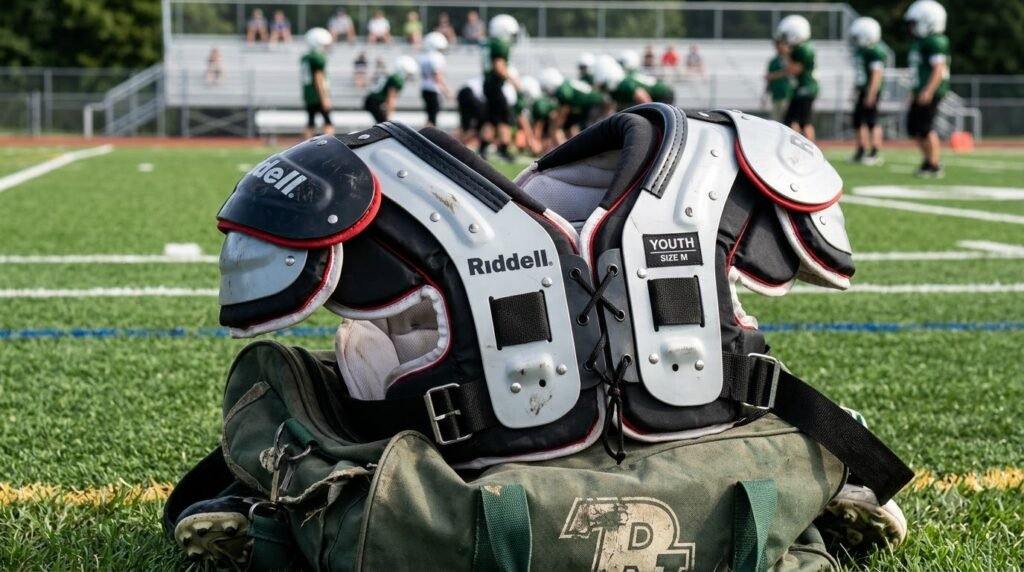
It’s one of those problems that hides in plain sight. A young player lines up for practice, takes a hit, and the shoulder pad shifts out of position — not because the equipment failed, but because it never fit correctly in the first place. Across youth programs at every level, improperly fitted shoulder pads are far more common than coaches and parents realize, and the consequences range from reduced protection to mechanical problems that affect how young players develop.
Getting this right starts with understanding what properly fitted well-designed youth football shoulder pads actually look like, how to select them for different positions and body types, and what to check before the first snap of the season.
The Real Cost of Ill-Fitting Shoulder Pads
Poor fit isn’t just a comfort issue. It’s a protection issue and a development issue simultaneously.
A shoulder pad that sits too wide allows the cap to flip on contact, exposing the actual shoulder joint at the moment of impact. A pad that rides too high contacts the helmet, creating a feedback loop of movement that distracts players and can interfere with helmet fit. A pad that’s too narrow compresses the upper chest and restricts breathing mechanics during high-intensity play.
Beyond protection, ill-fitting pads affect mechanics. Young quarterbacks learning to throw, receivers developing catching technique, and defensive backs working on tackling form are all building muscle memory through thousands of repetitions. If those repetitions happen while fighting against equipment that doesn’t fit, the compensations become habitual — and habits formed at age nine or ten are hard to undo at age fifteen.
How Youth Football Shoulder Pads Differ from Adult Designs
This distinction matters more than most equipment buyers appreciate. Youth football shoulder pads are not simply smaller versions of adult pads. They are engineered around the specific proportions, weight tolerances, and movement patterns of developing athletes.
Key differences include:
- Lighter overall construction to avoid fatiguing smaller players during extended sessions
- Narrower shoulder span ratios relative to pad width to match youth body proportions
- Softer break-in profiles because youth players have less body mass to compress stiffer padding materials
- Shorter torso coverage matched to the reduced distance between shoulder and hip in younger players
Purchasing adult or junior pads and sizing down is a common mistake that leads to every one of the fit problems described above. Start with equipment designed specifically for the youth size range.
Getting the Measurements Right Before You Shop
Shoulder Width: The Primary Measurement
Measure across the upper back from the bony tip of one shoulder — the acromioclavicular joint — to the same point on the opposite shoulder. This AC-to-AC measurement is the single most important number in shoulder pad fitting.
The shoulder cap of the pad should align directly over this point. Not past it, not short of it. Any meaningful deviation in either direction indicates the wrong size.
Chest Circumference: The Secondary Check
Measure around the fullest part of the chest, just under the armpits. This confirms that the front plate of the pad will provide adequate chest coverage without excessive gapping or compression.
Youth players vary significantly in their shoulder-to-chest ratio. A player with broad shoulders and a narrow chest may fall between sizes on one measurement. When this happens, prioritize the shoulder width measurement and adjust strap tension to address chest fit.
Weight as a Sizing Reference
Some manufacturers include weight ranges in their sizing charts as a secondary reference alongside measurements. Use weight as a cross-check rather than a primary guide — actual measurements are always more reliable than age or weight estimates.
Position-Specific Fitting Considerations
Quarterbacks and Wide Receivers
Youth quarterbacks and receivers need the highest degree of shoulder mobility. Skill position youth football shoulder pads for these roles should have a lower-profile front plate that doesn’t restrict the arm’s upward and forward range of motion during throwing or catching.
Check specifically for armpit restriction — the inside edge of the shoulder cap should clear the armpit during a full overhead arm raise without binding. This is the most common mobility complaint from youth skill position players and the most important fit check for this group.
Running Backs
Running backs absorb contact from multiple angles and need balanced protection without sacrificing the lateral mobility required for cutting and open-field running. A mid-profile pad with solid hip and rib extension coverage serves this position well at the youth level.
Offensive and Defensive Linemen
Young linemen need more substantial front and rear protection than skill position players. The contact pattern for linemen involves sustained pushing forces and frequent collar-area impacts during blocking situations. A more protective, slightly heavier design is appropriate here — mobility is still important, but the contact demands justify additional coverage.
Linebackers and Tight Ends
These positions combine elements of both skill and contact demands. Youth players in these roles benefit from a balanced design that provides meaningful protection without the bulk of a full lineman pad profile.
The Five-Point Fit Verification
Once the pads are on the player with all straps properly adjusted, work through these five checks before approving the fit:
- Shoulder cap alignment: The cap tip should sit directly over the AC joint on both sides. Press down firmly — the cap should not shift significantly toward the neck or away from the body.
- Neck clearance: The pad collar should not contact the neck during normal head rotation in any direction. Contact during every head turn will cause irritation over a season of use.
- Overhead arm raise: Both arms raised straight overhead should clear the pad without binding at the armpit or shoulder cap edge.
- Throwing motion simulation: For quarterbacks and skill players, simulate a full throwing motion. The throwing shoulder needs complete freedom through the full arc of motion without resistance from the pad edge.
- Rear spine gap: Looking from behind, there should be a visible gap between the two rear pad halves along the spine. This allows spinal flexion during movement and confirms the pad is not oversized.
Breaking In Youth Football Shoulder Pads Before Game Day
New shoulder pads, particularly those with stiffer shell constructions, need a break-in period before game use. The foam and padding materials soften slightly with repeated use and body heat. Straps settle into their adjusted positions. Most importantly, the young player develops spatial awareness of how the equipment moves with their body.
Running multiple full practices in new youth football shoulder pads before the first game is not optional — it’s part of the safety process. A player encountering unfamiliar equipment during game situations is a distracted player, and distraction in a contact sport creates risk.
Seasonal Maintenance and Inspection
During the Season
After any practice or game involving significant contact, visually inspect the pads for cracked shells, separated padding layers, or damaged hardware. Young players rarely volunteer information about equipment damage — proactive inspection by coaches is a necessary part of equipment management.
Wipe interior surfaces regularly with a mild disinfectant. Youth shoulder pads accumulate bacteria quickly in warm, wet conditions, and neglected pads develop odors and hygiene issues that become difficult to address mid-season.
End of Season
Evaluate fit before storage. Youth players grow rapidly, and pads that fit correctly in late summer may be too small by the following spring. Document each player’s measurements at the end of the season alongside a fit assessment for the pads they used. This makes pre-season equipment distribution dramatically faster and reduces the number of fit problems that appear in the first week of camp.
Frequently Asked Questions
How do I know if youth football shoulder pads are NOCSAE certified?
Look for the NOCSAE certification mark on the pad itself or in the product documentation. NOCSAE-certified pads have met standardized impact testing requirements. Many youth leagues and state associations require NOCSAE certification for all contact equipment including shoulder pads.
Can a youth player wear the same shoulder pads for multiple seasons?
Possibly, if the player hasn’t outgrown them and the pads show no structural damage. Recheck fit measurements at the start of every season — youth players grow quickly and a pad that fit correctly last year may be significantly undersized this year. Never assume fit continuity across seasons without re-verification.
How tight should the straps be on youth shoulder pads?
Straps should be snug enough to keep the pad stable during contact without restricting breathing or circulation. A common test: you should be able to slide two fingers under the strap, but not your whole hand. Straps that are too loose allow pad migration during play.
What should I do if a player takes a hard hit to the shoulder during a game?
Remove the player from play and inspect the shoulder pad for visible damage before allowing return. Also assess the player for pain, reduced range of motion, or tenderness that might indicate a shoulder injury requiring medical evaluation. Never return a player to contact without confirming both equipment integrity and physical readiness.
Are youth football shoulder pads suitable for flag football?
Flag football programs typically do not use shoulder pads because the contact level doesn’t require them. Check your specific league’s equipment rules — some flag programs prohibit pads, while others leave it to individual choice. For tackle football at any organized level, appropriate shoulder pad protection is essential.