Introduction to OptiCore Pro
Eye health is an important part of everyday well-being, especially for people who spend long hours working on computers, reading on mobile phones, or performing other activities that require regular visual attention. Many people look for convenient ways to support their general health and maintain a balanced nutritional routine. Eye health supplements are one option that attracts attention, but choosing the right product requires more than reading a few marketing claims.
OptiCore Pro is a capsule-based dietary supplement marketed for everyday vision wellness and eye comfort. Its listed formula combines several vitamins and minerals with a proprietary blend of botanical ingredients. The product is intended to be taken as part of a daily routine, rather than used as a replacement for eye examinations, a balanced diet, or professional medical care.
However, an important question remains: does the ingredient list provide enough evidence to support the product’s advertised purpose? A supplement can contain nutrients that the body needs without necessarily proving that the finished formula improves eyesight or prevents age-related eye conditions.
In this guide, we will examine OptiCore Pro ingredients, potential benefits, recommended use, possible side effects, customer feedback, pricing, and purchasing considerations. We will also explain the difference between general nutritional support and formulas that have been studied for specific eye conditions.
The goal is to help readers make an informed decision using available product information, realistic expectations, and sensible safety precautions.
What Is OptiCore Pro?
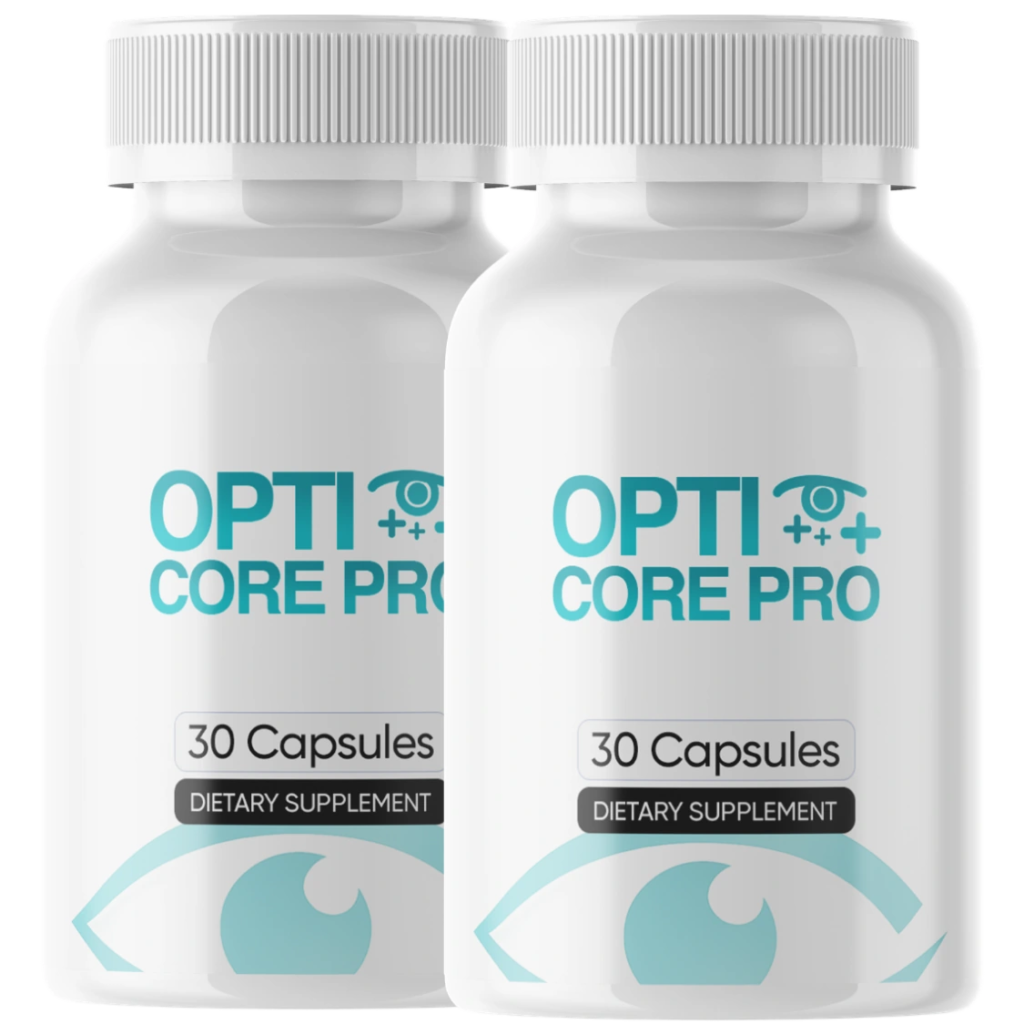
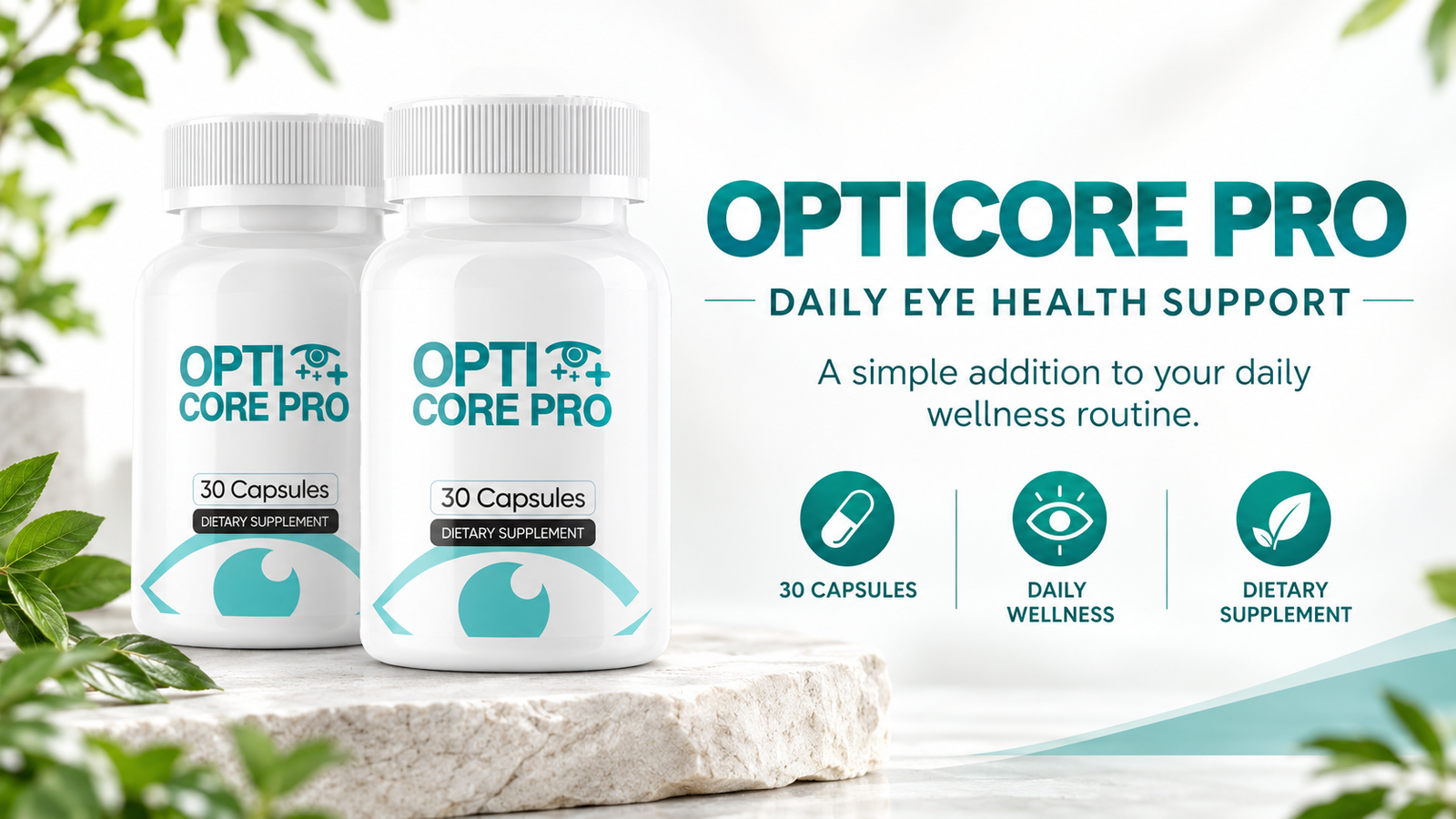
OptiCore Pro is a dietary supplement supplied in capsule form. The published Supplement Facts panel lists 30 capsules per bottle, with one capsule serving as the suggested daily serving. The formula includes vitamins A, C, D, and E, several B vitamins, minerals, and a mixture of botanical ingredients.
The product is marketed toward adults interested in supporting everyday vision wellness. Its nutritional ingredients have different roles in the body, while its botanical blend contains plant-derived substances commonly found in various dietary supplements.
It is important to understand that the presence of these ingredients does not automatically establish that OptiCore Pro improves visual sharpness, reverses existing eye problems, or prevents vision loss. Those outcomes require appropriate clinical evidence.
According to the published product label, the capsule shell is made from hypromellose, a plant-derived cellulose material. The label also identifies soy as an allergen, which is particularly important for people who have a soy allergy.
The listed product information can be reviewed on the OptiCore Pro supplement facts page.
How Does OptiCore Pro Work?
OptiCore Pro combines nutrients that contribute to normal body functions with botanical ingredients included in its proprietary blend. To understand how the formula may fit into a wellness routine, it helps to look at what its ingredients are generally known for and what the available information does not establish.
Nutritional support for normal eye function
The eyes rely on several nutrients to maintain normal function. Vitamin A, for example, plays an important role in normal vision. Vitamin C and vitamin E contribute antioxidant activity, while zinc participates in numerous biological processes, including those associated with normal visual function.
Getting adequate amounts of these nutrients is important. However, supplementing someone who already receives enough of a nutrient may not produce an additional noticeable improvement in eyesight.
Antioxidants and general wellness
Oxidative stress is one of the biological processes studied in connection with aging and eye health. Some vitamins contribute to the body’s antioxidant defenses. This helps explain why vitamins C and E appear in many nutritional formulas.
Nevertheless, the amount of a nutrient matters. A product containing a particular vitamin is not automatically equivalent to a formula studied in a clinical trial. The ingredient amounts, combination, and intended use all influence how closely a product resembles a researched formulation.
Botanical ingredients
The OptiCore Pro label lists eleven botanicals and related ingredients within a single proprietary blend. These include horsetail, Fo-Ti, stinging nettle, spirulina, saw palmetto, alfalfa, and barley grass.
Some of these substances are used in supplements for purposes unrelated to vision. Their inclusion in an eye wellness product does not establish that they improve eyesight.
Furthermore, the blend has a total listed weight of 179.5 mg, but the label does not disclose the individual amount of each component. This makes it difficult to compare the dose of any particular botanical with amounts used in published research.
The important distinction: OptiCore Pro contains nutrients involved in normal body functions, but the available product information does not establish that the complete formula has been clinically proven to improve vision or treat an eye condition.
OptiCore Pro Ingredients: A Closer Look
The ingredient list is one of the most important things to review before purchasing any dietary supplement. It helps buyers understand what they would be taking, identify potential allergens, and assess whether the formula matches their needs.
The following breakdown is based on the published Supplement Facts panel rather than assumptions about the product’s marketing claims.
Vitamins and minerals
Amounts shown below are per one-capsule serving, according to the published label.
| Ingredient | Listed amount | General nutritional role |
|---|---|---|
| Vitamin A, as beta-carotene | 60 mcg RAE | Supports normal vision and other functions |
| Vitamin C | 60 mg | Antioxidant activity and collagen formation |
| Vitamin D | 10 mcg | Supports calcium regulation and bone health |
| Vitamin E | 7 mg | Helps protect cells from oxidative damage |
| Thiamin (vitamin B1) | 3 mg | Supports energy metabolism |
| Vitamin B6 | 4 mg | Supports normal nervous system function and metabolism |
| Folate | 748 mcg DFE | Supports DNA synthesis and cell division |
| Vitamin B12 | 6 mcg | Supports nerve function and red blood cell formation |
| Biotin | 2,500 mcg | Supports normal metabolic processes |
| Pantothenic acid | 15 mg | Helps the body metabolize nutrients |
| Calcium | 40 mg | Supports bones and normal muscle function |
| Iron | 7.25 mg | Supports oxygen transport in the blood |
| Magnesium | 60 mg | Participates in muscle, nerve, and metabolic functions |
| Zinc | 3.62 mg | Supports immune function and normal vision |
| Manganese | 2 mg | Participates in enzyme activity and metabolism |
| Potassium | 47 mg | Supports normal nerve and muscle function |
These amounts reflect the label as published online. Buyers should compare them with the physical bottle received, especially if the manufacturer changes its formula.
Vitamin A and beta-carotene
Vitamin A is essential for normal vision, particularly the processes that allow the eyes to function in low-light conditions. A deficiency can cause vision problems, which makes adequate vitamin A intake important.
OptiCore Pro lists 60 mcg RAE of vitamin A from beta-carotene. This is a nutritional contribution, not evidence that the supplement will correct a person’s eyesight or treat an existing eye condition.
Vitamin C
Vitamin C contributes antioxidant activity and supports collagen formation. It is found in many fruits and vegetables, including citrus fruits, berries, and peppers.
The OptiCore Pro label lists 60 mg per capsule. Although vitamin C is important for general health, this amount should not be interpreted as proof that the complete supplement can prevent or reverse an eye disease.
Vitamin D and vitamin E
Vitamin D contributes to calcium regulation and bone health, while vitamin E helps protect cells from oxidative damage.
Both nutrients have broader roles in the body. Their presence may contribute to overall nutritional intake, but neither should be viewed as a guaranteed solution for blurry vision, eye fatigue, or age-related changes.
B vitamins and biotin
The formula includes thiamin, vitamin B6, folate, vitamin B12, biotin, and pantothenic acid. These nutrients participate in normal metabolism and other biological functions.
One detail deserves particular attention: the label lists 2,500 mcg of biotin per capsule. This is a high amount compared with the daily requirement for most adults.
Biotin can interfere with certain laboratory tests, including some tests used to assess thyroid function and heart-related markers. People taking this supplement should tell their healthcare professional before having blood tests. A clinician can advise whether and when it should be stopped before testing.
Zinc, magnesium, and other minerals
Zinc supports normal immune function and participates in processes important for vision. Magnesium contributes to muscle and nerve function, while calcium supports bones and other physiological functions.
The quantities in OptiCore Pro vary substantially by nutrient. In particular, its listed zinc amount is relatively modest compared with the amounts used in certain studied eye-health formulations.
This matters because the effectiveness of a specific supplement cannot be judged simply by counting how many nutrients it contains.
The proprietary botanical blend
The label lists the following eleven ingredients in a combined 179.5 mg blend:
-
P-amino benzoic acid (PABA)
-
Horsetail extract
-
Fo-Ti
-
Bamboo extract
-
Stinging nettle
-
Chinese peony
-
Spirulina
-
Saw palmetto
-
Plant sterols from soybeans
-
Alfalfa
-
Barley grass
The blend’s individual ingredient amounts are not provided. As a result, buyers cannot determine precisely how much of each substance they receive per capsule.
Some ingredients have been investigated for other nutritional or health-related purposes, but the published information does not demonstrate that this particular combination improves vision. Fo-Ti also deserves special caution because products containing this herb have been associated with liver injury.
Anyone considering OptiCore Pro should review the full label and discuss the botanical blend with a healthcare professional, especially when taking prescription medication or managing a medical condition.
Other ingredients and allergen information
The published label lists rice flour, hypromellose, vegetable magnesium stearate, and silicon dioxide as other ingredients. It also states that the product contains soy.
These ingredients serve formulation or manufacturing purposes rather than being the main advertised nutrients. The plant-cellulose capsule may suit some people who prefer a vegetarian capsule, but the declared soy allergen remains important.
People with a soy allergy should not assume that the product is safe simply because it is sold as a wellness supplement.
Potential Benefits of OptiCore Pro
OptiCore Pro is marketed for vision wellness, but it is useful to separate the established roles of its nutrients from benefits that have not been demonstrated for the finished product.
Supporting normal vision-related nutrition
The formula supplies vitamin A and zinc, both of which contribute to normal visual function. It also contains other nutrients that support general health.
For people whose diets do not consistently provide enough of certain nutrients, a supplement may help fill a nutritional gap. However, the best approach depends on the individual’s diet, age, health status, and existing nutrient levels.
Providing several nutrients in one capsule
Some people prefer a single capsule rather than taking several separate products. OptiCore Pro combines multiple vitamins and minerals in one serving, which may be convenient for adults who want to simplify their supplement routine.
Convenience alone does not determine value. Buyers should also consider whether they need the listed nutrients, whether the amounts are appropriate, and whether the formula duplicates other supplements they already take.
Offering a simple daily routine
The label suggests one capsule daily with water. A straightforward routine may be easier to follow than a complicated schedule involving multiple products.
Even so, the recommended serving should not be exceeded in an attempt to obtain faster results. Taking more than the label recommends can increase the risk of adverse effects without providing additional benefit.
Encouraging greater awareness of eye health
Reviewing an eye-related supplement can encourage consumers to pay closer attention to nutrition, screen habits, and routine eye care.
For people who work at screens, practical measures such as taking regular breaks, adjusting screen distance, blinking frequently, and addressing dry-eye symptoms may be more directly useful for everyday discomfort than relying on an unproven supplement.
What benefits should you realistically expect?
There is not enough product-specific clinical evidence in the available sources to establish that OptiCore Pro:
-
Improves eyesight or makes vision sharper.
-
Reverses age-related vision changes.
-
Prevents cataracts or macular degeneration.
-
Eliminates screen-related eye strain.
-
Replaces prescription glasses or medical treatment.
These are important limitations. Nutritional support and treatment of a diagnosed eye condition are not interchangeable.
If you have a known deficiency, a clinician can help determine which nutrients you need. If you have ongoing blurry vision, eye pain, or changes in your sight, an eye examination is more appropriate than relying on a supplement.
How to Use OptiCore Pro
Following the product label is important when taking any supplement. The published OptiCore Pro label provides a simple daily-use instruction, but buyers should always check the directions printed on the bottle they receive.
Suggested daily use
According to the published label:
-
Take one capsule daily with an 8-ounce glass of water.
-
For the suggested timing, take it 20–30 minutes before a meal, or follow the advice of your healthcare professional.
-
Do not exceed the recommended serving.
-
Store the bottle in a cool, dry place away from heat and light.
-
Keep the supplement out of reach of children.
A bottle contains 30 capsules, which corresponds to approximately 30 days when following the suggested one-capsule-per-day routine.
What if you miss a serving?
The available product information does not provide a specific missed-dose protocol. If you forget a serving, check the label or ask a pharmacist for guidance. Do not take extra capsules to compensate without professional advice.
Should you take it with other supplements?
Check the ingredients of your existing multivitamins, eye supplements, and other wellness products before combining them. Taking several products with overlapping ingredients can result in unnecessarily high nutrient intake.
Because OptiCore Pro contains a high amount of biotin, inform your healthcare professional before laboratory testing. The FDA warns that biotin can interfere with certain laboratory tests and cause incorrect results.
Who May Consider OptiCore Pro?
OptiCore Pro may attract adults who prefer a capsule-based supplement and want to review their nutritional options. However, whether it is suitable depends on individual circumstances rather than age or interest in eye health alone.
Adults reviewing their nutritional intake
Adults whose diets lack variety may want to discuss nutritional supplementation with a qualified healthcare professional. A review of eating habits, medications, and medical history can help identify whether a supplement is useful.
OptiCore Pro should not be viewed as a substitute for a balanced diet containing vegetables, fruit, whole grains, and other nutrient-rich foods.
People who prefer capsules
The product comes in a vegetable capsule rather than a gummy, powder, or liquid. That format may appeal to people who are comfortable swallowing capsules and prefer a straightforward daily routine.
People comparing eye wellness products
Consumers researching different supplements may find it useful to compare OptiCore Pro’s ingredient list, individual nutrient amounts, allergen statement, and price with other options.
The most important comparison is not the number of ingredients. It is whether the formula provides appropriate amounts for the intended purpose and whether credible evidence supports the claimed benefit.
Who should seek professional advice first?
Speak with a healthcare professional before using OptiCore Pro if you:
-
Are pregnant or breastfeeding.
-
Are under 18 years old.
-
Have a diagnosed medical condition.
-
Take prescription medicines or multiple supplements.
-
Have a soy allergy.
-
Have a history of liver problems.
-
Have an upcoming blood test.
-
Have been diagnosed with an eye condition and are considering changing your current treatment.
The product label specifically advises pregnant or nursing individuals, people under 18, and those with a known medical condition to consult a physician before use.
OptiCore Pro Side Effects and Safety Precautions
Even products containing familiar vitamins and plant extracts can cause unwanted effects. Safety depends on the ingredients, their amounts, the user’s health, and possible interactions with medicines.
There is insufficient product-specific clinical evidence in the available sources to establish the frequency of side effects associated with OptiCore Pro.
Digestive discomfort
Some supplements can cause stomach discomfort, nausea, or other digestive symptoms in certain people. Whether someone experiences such effects depends on the formula and individual tolerance.
If you notice a new or persistent symptom after starting a supplement, stop taking it and seek appropriate medical advice.
Biotin and laboratory testing
The 2,500 mcg of biotin listed per capsule deserves special attention. Biotin may interfere with certain laboratory tests, potentially making results appear higher or lower than they actually are.
This is especially important when medical decisions depend on an accurate test result. Tell your doctor and laboratory staff about OptiCore Pro and any other supplements you take before having blood work.
Potential concerns with Fo-Ti
Fo-Ti, also known as Polygonum multiflorum, appears in the product’s botanical blend. Products containing this herb have been associated with liver injury.
Because the individual quantity of Fo-Ti is not disclosed, its exposure from this specific capsule cannot be calculated from the published panel. People with liver disease or concerns about liver safety should consult a healthcare professional before considering a product containing this ingredient.
Allergies and medication interactions
The label declares soy, so people with a soy allergy should avoid assuming that OptiCore Pro is suitable for them.
Vitamins, minerals, and botanical ingredients can also interact with medicines. The risk depends on the particular ingredients and the medication involved. A pharmacist or doctor can review the full label and help identify relevant concerns.
Avoid replacing medical care
OptiCore Pro should not be used to delay an eye examination or replace treatment prescribed for a diagnosed condition.
Sudden vision loss, a sudden increase in floaters, flashes of light, a curtain-like shadow across the field of vision, or severe eye pain warrants urgent medical assessment.
Safety takeaway: Review the full label, check for allergies and interactions, and consult a healthcare professional if you are unsure whether this supplement is appropriate for you.
OptiCore Pro Customer Reviews and Feedback
Customer feedback is often a major consideration when people compare dietary supplements. Buyers may look for comments about convenience, packaging, perceived benefits, customer service, and value for money.
However, it is important to distinguish genuine, independently verified customer experiences from testimonials published in promotional material.
What can be verified about customer reviews?
The available product information includes a Supplement Facts panel, product descriptions, and pricing pages. These sources can help explain the formula and purchasing terms, but they do not independently establish how well the product works for typical customers.
I could not independently verify a representative set of customer reviews with enough detail to establish reliable patterns in reported outcomes. Therefore, it would be misleading to invent positive testimonials, negative experiences, star ratings, or claims that customers consistently experienced better vision.
What should you look for in customer feedback?
When researching OptiCore Pro reviews, consider the following questions:
-
Does the reviewer identify the exact product and serving size?
-
Is the review based on a clearly described personal experience?
-
Does it explain how long the product was used?
-
Does it distinguish subjective comfort from measured changes in vision?
-
Does the reviewer disclose any connection to the seller?
-
Are both positive and negative experiences represented?
Reviews that describe a specific experience can be useful for understanding convenience or customer service. They are much less reliable for establishing medical effectiveness.
Can customer reviews prove that OptiCore Pro works?
No. Personal experiences cannot establish that a supplement treats an eye condition or produces the same results for everyone.
People may report changes for many reasons, including changes in screen habits, sleep, diet, medication, or other supplements. A customer’s belief that a product helped them is not the same as controlled clinical evidence.
The most useful approach is to consider customer feedback alongside the label, independent research, and advice from an eye care professional.
OptiCore Pro Reviews and Complaints
People searching for OptiCore Pro reviews and complaints generally want to understand what could go wrong before spending money.
A balanced review should consider product transparency, the strength of the evidence, possible side effects, and purchasing conditions rather than assuming that every positive or negative claim is true.
Concern about undisclosed ingredient amounts
One limitation of the published formula is its proprietary botanical blend. Although all eleven components are named, the amount of each ingredient is not individually disclosed.
This makes it difficult to compare each botanical with the doses studied in research. Consumers who prefer fully quantified formulas may consider this an important drawback.
Questions about effectiveness
Another reasonable concern is the difference between a product marketed for vision wellness and one clinically studied for a specific eye condition.
The National Eye Institute explains that AREDS2 supplements can help slow progression to advanced age-related macular degeneration in appropriate patients, but they are not suitable or beneficial for every person with AMD. The evidence applies to the studied formulation and patient groups, not automatically to other supplements.
OptiCore Pro’s published ingredient panel differs from the AREDS2 formula. It does not list lutein or zeaxanthin, and its listed vitamin C, vitamin E, and zinc amounts are lower than those in AREDS2.
Therefore, OptiCore Pro should not be treated as a substitute for an eye doctor’s recommendation concerning AREDS2 supplementation.
Complaints about pricing or refunds
Before ordering, consumers should check the total price, shipping charge, return window, refund eligibility, and instructions for requesting a return.
I could not independently verify a representative collection of complaints establishing a pattern of refund problems or poor customer service. It would be inaccurate to claim that such a pattern exists without supporting evidence.
Instead, review the seller’s written terms and retain the order confirmation and payment receipt.
How to assess negative reviews fairly
A complaint is more useful when it provides specific information, such as the date of purchase, the problem encountered, the seller’s response, and whether the issue was resolved.
A single negative review does not prove that a product is fraudulent. Equally, a large number of positive promotional testimonials does not prove that a product is effective.
OptiCore Pro Price, Offers, and Value for Money
Price matters when evaluating a supplement, particularly if a seller encourages buyers to purchase several bottles at once.
The pricing page available during research listed the following US-dollar package prices. These are published online figures, not a guarantee of the amount you will be charged at checkout.
2-bottle package
60 capsules · Approximately 60 days
$158 total
$79 per bottle · $9.99 US shipping listed
3-bottle package
90 capsules · Approximately 90 days
$207 total
$69 per bottle · Free US shipping listed
6-bottle package
180 capsules · Approximately 180 days
$294 total
$49 per bottle · Free US shipping listed
Source: published pricing page checked during research. Confirm current prices, shipping, and refund terms before ordering.
Is buying multiple bottles cheaper?
The listed price per bottle decreases with larger packages. For example, the six-bottle package has a lower per-bottle price than the two-bottle package.
However, a lower unit price does not automatically make a larger order the better decision. It requires a higher upfront payment and leaves you with more product if you decide not to continue using it.
For a product without established clinical effectiveness for its advertised vision benefits, it is sensible to evaluate the evidence before committing to a large purchase.
What about the money-back guarantee?
The published pricing page states a 60-day money-back guarantee. Because guarantee terms can change or have eligibility conditions, review the current written refund policy before paying.
Check whether the guarantee covers opened bottles, whether a return authorization is required, and who pays return shipping. Keep the order confirmation and any correspondence with the seller.
Is OptiCore Pro good value for money?
Value depends on more than the number of ingredients or the advertised discount.
Consider these factors:
-
Whether you actually need the listed nutrients.
-
Whether the formula has evidence for your intended purpose.
-
Whether the individual ingredient amounts are sufficiently transparent.
-
Whether the price fits your budget.
-
Whether a less expensive alternative better matches your needs.
For someone seeking a supplement specifically studied for a diagnosed eye condition, a conversation with an eye care professional may be more valuable than choosing a product based primarily on its marketing.
Is OptiCore Pro a Scam or Legit?
The question of whether OptiCore Pro is a scam or legitimate deserves a careful answer. A product’s existence, a published ingredient list, and a functioning sales page are relevant information, but they do not independently prove effectiveness, manufacturing quality, or customer satisfaction.
What supports a more informed assessment?
The product has published ingredient information, a suggested serving, allergen details, and online package pricing. These are useful details for evaluating a purchase.
The ingredient panel also makes it possible to identify limitations, including the undisclosed amounts within the proprietary blend and the high listed biotin content.
What remains uncertain?
The available sources do not establish that the finished OptiCore Pro formula has been proven in a clinical trial to improve eyesight or treat an eye condition.
I also could not independently verify enough representative customer feedback to establish typical outcomes or a reliable complaint rate.
These uncertainties mean buyers should avoid relying solely on promotional language or testimonials.
Does an online supplement need to be FDA-approved?
In the United States, dietary supplements are not approved by the FDA for safety and effectiveness before they are marketed in the same way as prescription drugs. Manufacturers and sellers still have legal responsibilities, and the FDA can take action against unsafe or unlawfully marketed products.
A product being sold online is not proof of FDA approval. Similarly, a website’s existence or a claim about manufacturing standards does not establish that the FDA has approved a supplement’s health benefits.
Final assessment
Based on the available information, it would be premature to label OptiCore Pro either a proven vision solution or a scam.
It is a marketed dietary supplement with a published ingredient panel and pricing information. However, its effectiveness for the advertised purpose remains insufficiently established by the evidence reviewed here.
Consumers should assess the ingredients, safety considerations, refund terms, and available scientific evidence before deciding whether to buy it.
Pros and Cons of OptiCore Pro
Reviewing the advantages and limitations side by side can make a purchasing decision easier.
Potential advantages
-
Capsule format: The product offers a straightforward daily serving.
-
Multiple nutrients: It combines several vitamins and minerals in one product.
-
Published ingredient panel: Amounts are provided for the individual vitamins and minerals.
-
Named botanicals: The proprietary blend identifies its eleven components.
-
Allergen information: Soy is declared on the published label.
-
Package options: The pricing page lists several package sizes.
Potential disadvantages
-
Limited product-specific evidence: The available sources do not establish clinical effectiveness for improving vision.
-
Proprietary blend: Individual botanical amounts are not disclosed.
-
High biotin content: The listed amount may complicate interpretation of certain laboratory tests.
-
Soy allergen: The product may be unsuitable for people with a soy allergy.
-
Upfront cost: The listed multi-bottle packages require a relatively large initial payment.
-
Unverified customer experience: Independent evidence is insufficient to establish typical results or complaint patterns.
-
Not an AREDS2 substitute: The published formula differs from the formulation studied for certain patients with age-related macular degeneration.
Overall, OptiCore Pro offers a multi-ingredient capsule, but buyers should weigh its convenience against the limitations in the available evidence.
Where to Buy OptiCore Pro and Official Website Information
Consumers who decide to research or purchase OptiCore Pro should begin with the product’s published sales and information pages.
The following links were available during research:
These links provide access to product information, but buyers should confirm the identity of the seller and check the checkout page before submitting payment.
What should you check before ordering?
First, compare the Supplement Facts panel on the sales page with the label shown for the bottle you will receive. Confirm the capsule count, serving size, full ingredient list, allergen statement, and expiration information.
Second, review the total order cost, including shipping and any applicable taxes. Do not assume that a crossed-out price represents a recent selling price or that an advertised discount will remain available.
Third, read the refund terms carefully. A money-back guarantee is only useful if you understand its deadlines, conditions, and return procedure.
Finally, save your order confirmation and the seller’s contact details. These records can be useful if you need to ask questions about delivery or request a refund.
Should you buy directly from the official website?
Buying from a seller’s identified website may make it easier to review the published product details and purchase terms. However, it does not guarantee that the product will deliver the advertised benefits.
Compare the formula and price with other options, and consult a healthcare professional if you are unsure whether the supplement is appropriate for you.
Frequently Asked Questions About OptiCore Pro
1. What is OptiCore Pro used for?
OptiCore Pro is a capsule-based dietary supplement marketed for everyday vision wellness. Its formula contains vitamins, minerals, and a proprietary botanical blend. The available information does not establish that the finished product treats eye diseases or improves eyesight.
2. What are the main OptiCore Pro ingredients?
The published label lists vitamins A, C, D, and E; several B vitamins; calcium, iron, magnesium, zinc, manganese, and potassium; and a proprietary blend containing eleven botanicals and related ingredients. The blend’s individual quantities are not disclosed.
3. How many capsules come in a bottle?
The published Supplement Facts panel lists 30 capsules per bottle, with one capsule as the suggested daily serving. This corresponds to approximately one month of use when following the label directions.
4. Does OptiCore Pro improve eyesight?
There is insufficient product-specific clinical evidence in the sources reviewed to conclude that OptiCore Pro improves eyesight. Some of its nutrients contribute to normal vision, but that does not establish that taking this particular formula will produce a noticeable improvement.
5. Does OptiCore Pro have side effects?
The frequency of side effects for the finished product has not been established in the available sources. Possible concerns include individual intolerance, ingredient interactions, soy allergy, and biotin interference with certain laboratory tests. Review the label and consult a healthcare professional before use.
6. Is OptiCore Pro the same as AREDS2?
No. The published OptiCore Pro formula differs from the AREDS2 formulation, which contains specific amounts of vitamin C, vitamin E, zinc, copper, lutein, and zeaxanthin. AREDS2 may help certain people with age-related macular degeneration, but it is not recommended for everyone. Ask an eye care professional whether it is appropriate for your condition.
7. How much does OptiCore Pro cost?
The published pricing page listed packages of two bottles for $158, three bottles for $207, and six bottles for $294. Prices, shipping charges, and promotional terms can change, so check the seller’s current checkout page before ordering.
8. Is OptiCore Pro legitimate or a scam?
The product has published ingredient and pricing information, but those details alone do not prove clinical effectiveness or independently establish customer satisfaction. The evidence reviewed is insufficient to label it a proven vision treatment or to conclude that it is a scam.
9. Where can I buy OptiCore Pro?
The product website and its associated ingredient and pricing pages are available through the links above. Verify the seller, final price, shipping details, product label, and refund conditions before placing an order.
10. Who should avoid taking OptiCore Pro without medical advice?
People with a soy allergy, liver problems, existing medical conditions, or medication-related concerns should seek professional advice before use. Pregnant or nursing individuals and people under 18 should follow the label’s precautionary instructions. Anyone scheduled for blood testing should disclose the supplement because it contains biotin.
Final Thoughts on OptiCore Pro
OptiCore Pro is a multi-ingredient dietary supplement that combines vitamins, minerals, and a proprietary botanical blend in a daily capsule. Its format may appeal to adults who prefer a simple supplement routine, and its published label provides useful information about the individual nutrient amounts.
However, there are several important considerations before making a purchase. The individual quantities of the eleven botanical ingredients are not disclosed, the formula contains a high amount of biotin that may interfere with certain laboratory tests, and the available evidence does not establish that the finished product improves eyesight or treats an eye condition.
The distinction between supporting normal nutritional needs and treating an eye problem is especially important. A supplement should not replace routine eye examinations, a balanced diet, or treatment recommended by a qualified healthcare professional.
If you are considering OptiCore Pro, take time to review the ingredients, safety information, current price, and refund policy before ordering. You can visit the OptiCore Pro product website to check the latest product details and availability. If your goal is to address a specific vision concern, consult an eye care professional before choosing a supplement.
Disclaimer: This article is for general informational purposes only and is not medical advice. Dietary supplements are not intended to diagnose, treat, cure, or prevent disease. Consult a qualified healthcare professional before starting a new supplement.