Everything You Need for a Complete Munich Walking Experience
Munich is a city that reveals its extraordinary depth gradually, with each exploration uncovering layers of history, culture, and local character that make subsequent visits richer than those that preceded them. This complete guide to Munich’s walking highlights covers the full range of the city’s essential experiences — from the most famous landmarks to the local institutions, market traditions, and architectural details that give Munich its distinctive character beyond its well-known tourist attractions. Whether you are planning your first visit or your fifth, this guide provides the comprehensive orientation that makes walking Munich a continually rewarding experience.
The Landmark Circuit: Munich’s Essential Sights
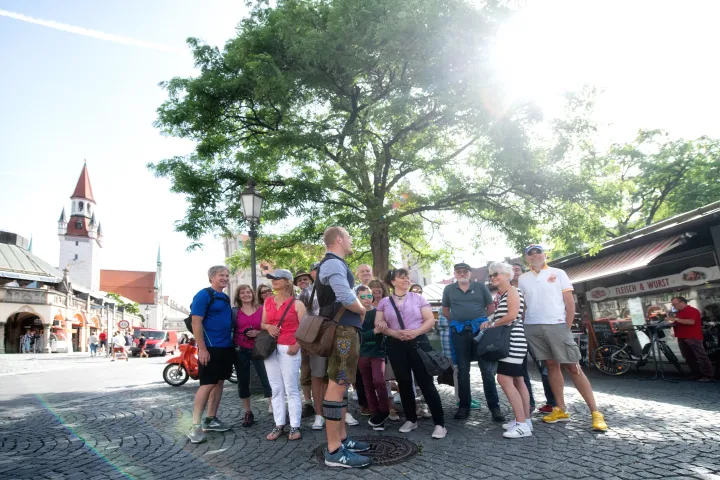
A complete walking experience of Munich’s highlights begins with the circuit of major landmarks that have defined the city’s visual identity across centuries. Marienplatz with its New Town Hall and Glockenspiel establishes the civic center. The Frauenkirche, visible from almost every elevated point in the city, provides the iconic silhouette. The Residenz palace complex represents the dynastic power that shaped the city’s development. Odeonsplatz with its Feldherrnhalle and Theatinerkirche showcases the Italian-influenced baroque transformation of the seventeenth century. The Viktualienmarkt and St. Peter’s Church ground the experience in the authentic market life that has sustained the city’s residents for centuries. Walking this circuit in sequence requires roughly three to four hours and covers the essential visual narrative of Munich’s development.
The Cultural Circuit: Museums and Artistic Heritage
Munich’s cultural life extends far beyond its architectural landmarks into a museum landscape of extraordinary breadth and quality. The Kunstareal museum quarter, concentrated around Königsplatz, brings together the three Pinakothek galleries — Alte Pinakothek with Old Master paintings, Neue Pinakothek with nineteenth-century art, and Pinakothek der Moderne with twentieth and twenty-first century works — alongside the Museum Brandhorst, the Glyptothek sculpture museum, and the Antikensammlungen collection of antiquities. A cultural walking circuit connecting these institutions through the handsome streets of the museum quarter is an entirely different Munich experience from the historic city center walk, showcasing the city’s role as one of Europe’s premier artistic capitals.
The Neighborhood Circuit: Local Munich Beyond the Tourist Zone
The neighborhoods immediately surrounding Munich’s historic center offer walking experiences that connect visitors with the contemporary life of the city beyond its tourist infrastructure. Schwabing, north of the Englischer Garten entrance, developed in the late nineteenth and early twentieth centuries as Munich’s bohemian intellectual neighborhood, home to artists, writers, and thinkers whose influence on German culture far exceeded their modest Munich apartments. Glockenbach, southwest of the Sendlinger Tor, is Munich’s most overtly contemporary neighborhood, with an independent café, restaurant, and creative economy culture that attracts a younger, more locally oriented crowd than the central tourist district.
The Beer Culture Circuit: Munich’s Liquid Heritage
A complete guide to Munich’s walking highlights must include a beer culture circuit that moves through the social institutions of Bavarian brewing tradition in a way that goes beyond simple consumption to genuine cultural understanding. The Hofbräuhaus is the mandatory first stop, with its history as a royal brewery and its transformation into a public institution providing an essential foundation. The beer gardens of the Englischer Garten, particularly the Chinese Tower garden, demonstrate the outdoor drinking tradition that distinguishes Munich from cities where public alcohol consumption is less socially integrated. The historic brewery district around the Nockherberg provides a less tourist-oriented perspective on Munich’s brewing heritage.
The Seasonal Circuit: Munich’s Calendar of Outdoor Events
Munich’s outdoor public life follows a rich calendar of seasonal events and traditions that create different walking experiences at different times of year. The Christmas markets of December transform Marienplatz, Schrannenplatz, and the Residenz courtyard into magical winter destinations. The Fasching carnival in February fills the streets with costumed revelers. The beer festival season of Oktoberfest in late September and early October requires its own walking exploration of the festival grounds on Theresienwiese. The Frühlingsfest spring festival in April and the summer open-air concert and cultural festival programs create reasons to walk the city throughout every season.
Practical Information for Complete Munich Walking
Walking Munich comfortably requires appropriate practical preparation. The city center is compact enough for comfortable exploration in comfortable walking shoes, but several hours of stone-paved street walking makes footwear quality a significant comfort factor. Public transportation, particularly the U-Bahn network with frequent service from every point in the city, makes it easy to travel efficiently between walking zones that are farther apart than comfortable walking distance. Munich’s city center operates an extensive pedestrian zone that excludes vehicle traffic from most of the major historic streets, making the walking experience both safer and more pleasant than in many comparable European city centers.
Book Your Complete Munich Walking Experience
Whether you choose to explore Munich independently using this guide or book a professionally guided walking experience with expert commentary and local insight, the city’s extraordinary concentration of highlights rewards every investment of time and attention. For guided walking experiences that bring Munich’s complete story to life with expert narration and local knowledge, book your tour through Munich Walking Tour and discover why Radius Tours is the premier choice for English-speaking visitors exploring Germany’s magnificent Bavarian capital.