Fertility challenges affect more people than most realize, and the emotional weight of trying to conceive without success can be exhausting. Many individuals and couples eventually find themselves exploring every available option — from dietary changes to assisted reproduction. Acupuncture has quietly moved from fringe interest to a recognized complementary therapy within fertility circles, and understanding what it can realistically offer is worth your time.
If you’re actively trying to conceive or preparing for assisted reproductive treatments, exploring specialized acupuncture for fertility with a qualified practitioner may be a meaningful step to take alongside your existing medical plan. This article explains how it works, what the evidence suggests, and how to decide whether it belongs in your fertility journey.
What Is Acupuncture and Why Does It Matter for Fertility?
Acupuncture is a branch of Traditional Chinese Medicine (TCM) that involves inserting very fine, sterile needles into specific points on the body. These points — called acupoints — sit along pathways known as meridians. The goal, according to TCM theory, is to regulate the flow of energy and restore balance within the body’s systems.
From a modern physiological perspective, acupuncture is understood to stimulate the nervous system, influence hormone regulation, promote blood circulation, and reduce the body’s stress response. All of these functions have direct relevance to reproductive health.
Fertility depends on a complex interplay of hormonal signals, uterine health, egg quality, sperm function, and emotional wellbeing. When any part of this system is dysregulated — whether through stress, poor circulation, hormonal imbalance, or inflammation — conception can become more difficult. Acupuncture works by addressing several of these factors simultaneously.
How Acupuncture Supports the Female Reproductive System
Regulating Hormonal Balance
One of the most studied effects of acupuncture is its ability to influence the hypothalamic-pituitary-ovarian axis — the hormonal feedback loop that governs ovulation, cycle regularity, and reproductive timing. Disruption to this axis is behind many common fertility challenges, including irregular periods, anovulation, and luteal phase defects.
Regular acupuncture sessions may help normalize this system, supporting more predictable and healthy ovulatory cycles.
Increasing Blood Flow to the Uterus and Ovaries
Adequate blood flow to the uterus is critical for a healthy endometrial lining — the tissue that a fertilized egg must implant into for a pregnancy to take hold. Thin or poorly vascularized endometrium is a frequent contributor to implantation failure.
Acupuncture has been shown to improve uterine blood flow, which in turn supports endometrial thickness and receptivity. This is one of the most consistent findings in fertility-related acupuncture research.
Reducing Cortisol and Stress-Related Hormonal Disruption
Chronic stress elevates cortisol, which can suppress reproductive hormones and interfere with ovulation. Many people trying to conceive experience significant psychological stress — and that stress can itself compound the difficulty of getting pregnant.
Acupuncture activates the parasympathetic nervous system and reduces cortisol levels, creating a physiological environment that is more supportive of conception.
Acupuncture for Fertility and PCOS or Endometriosis
Two of the most common diagnoses behind fertility challenges are polycystic ovary syndrome (PCOS) and endometriosis. Both respond differently to treatment, but acupuncture has shown relevance in both cases.
For PCOS, acupuncture may help regulate androgen levels, reduce insulin resistance, and promote more regular ovulation — addressing core aspects of the condition rather than just masking symptoms.
For endometriosis, where inflammation and immune dysregulation play a significant role, acupuncture’s anti-inflammatory effects may offer some relief. It won’t eliminate lesions, but it may reduce the inflammatory burden that makes conception more difficult.
Always work in coordination with your gynaecologist or reproductive endocrinologist when managing either condition.
Does Acupuncture Help With Male Fertility Too?
This is frequently overlooked in fertility conversations, but male factor infertility accounts for roughly half of all cases. Sperm quality — including motility, morphology, and count — can be significantly affected by heat, oxidative stress, hormonal imbalance, and lifestyle factors.
Acupuncture for fertility isn’t just for women. Research suggests it may improve sperm parameters, reduce DNA fragmentation, and support healthier testosterone levels in men. A comprehensive approach to fertility should ideally assess both partners.
How Many Sessions Are Typically Needed?
There’s no single answer, because the right treatment plan depends on your specific situation, age, diagnosis, and goals. That said, most practitioners recommend a minimum of three months of regular treatment before expecting significant results — largely because the sperm and egg maturation cycles each take approximately three months to complete.
Typical protocols might look like:
- Weekly sessions during the initial phase
- Adjusted frequency around ovulation or transfer dates if IVF is involved
- Ongoing support through early pregnancy if desired
An experienced acupuncturist will assess your specific pattern and create a personalized protocol rather than applying a generic one-size-fits-all approach.
What to Expect at Your First Fertility Acupuncture Appointment
Many people arrive at their first session unsure of what to expect. A thorough intake is standard — your practitioner will ask about your menstrual cycle history, reproductive diagnoses, stress levels, sleep, digestion, and any medical treatments you’re currently undergoing.
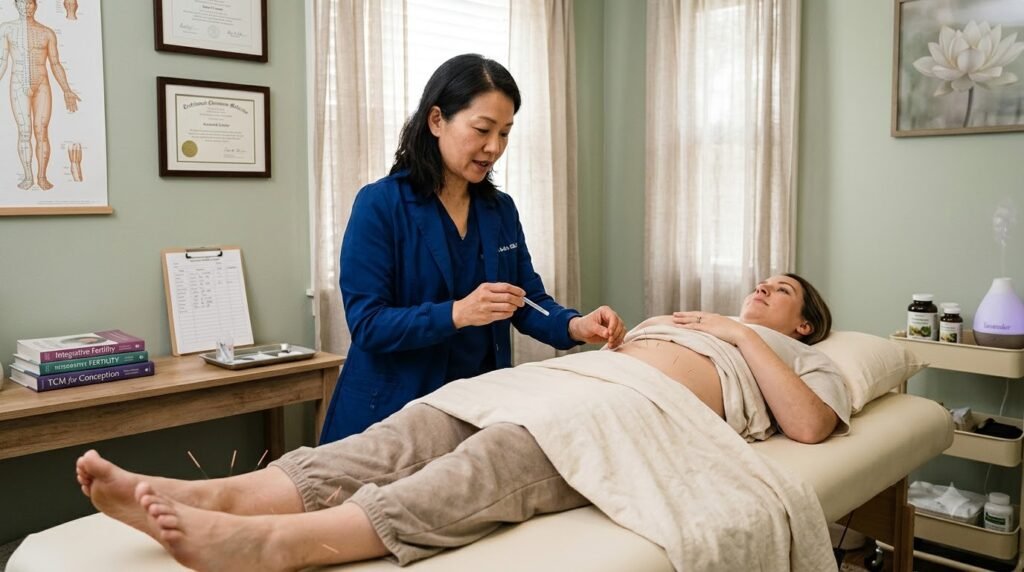
The session itself is generally very calm. You’ll lie comfortably while the needles are placed. Most people feel minimal discomfort — often just a brief sensation at the point of insertion, followed by a deep sense of relaxation.
Each session typically lasts between 45 and 60 minutes. The needles are usually left in place for 20 to 30 minutes while you rest.
How to Choose a Qualified Fertility Acupuncturist
Choosing the right practitioner matters enormously. Acupuncture for fertility requires specific clinical knowledge — general training alone isn’t sufficient. Here’s what to look for:
Verify credentials. In the United States, look for practitioners licensed by the National Certification Commission for Acupuncture and Oriental Medicine (NCCAOM). State licensure requirements vary but typically include graduate-level training.
Ask about fertility experience. Not every acupuncturist specializes in reproductive health. Ask directly how many fertility patients they currently treat and whether they collaborate with reproductive medicine specialists.
Evaluate communication. A good practitioner will explain their assessment clearly, set realistic expectations, and encourage continued communication with your OB-GYN or fertility clinic.
Red flags to avoid. Be cautious of practitioners who promise guaranteed pregnancy rates, discourage conventional medical care, or push expensive herbal supplements without clear justification.
Combining Acupuncture With IVF and Other Treatments
One of the most researched applications of acupuncture for fertility is its use alongside IVF. Some clinics now actively recommend or offer acupuncture as part of their IVF protocols. The proposed benefits include reducing uterine contractions post-transfer, lowering stress hormone levels around retrieval and transfer dates, and supporting a more receptive endometrial environment.
The research on acupuncture improving IVF success rates is ongoing and mixed — some studies show meaningful benefit, others show modest effects. What is consistent is that acupuncture appears to be safe, well-tolerated, and unlikely to interfere with medical treatment when administered by a qualified practitioner.
Frequently Asked Questions
Is acupuncture safe during the two-week wait after IVF transfer?
Yes, in most cases. However, your acupuncturist should be informed of your treatment stage and any specific protocols your fertility clinic is following. Certain acupoints are avoided during this period. Communication between your acupuncturist and your medical team is important.
How soon before trying to conceive should I start acupuncture?
Ideally, three to four months before you begin actively trying. This allows time to regulate your cycle, improve uterine blood flow, and address any underlying imbalances before conception attempts begin.
Can acupuncture replace fertility medications or IVF?
No. Acupuncture is a complementary therapy, not a replacement for evidence-based medical treatment. It works best alongside — not instead of — appropriate medical care. If you have a diagnosed condition requiring medical intervention, please continue working with your reproductive specialist.
Does acupuncture hurt?
Most people find it surprisingly comfortable. The needles used are extremely fine — far thinner than hypodermic needles. You may feel a brief pinch or a dull aching sensation at the insertion point, but significant pain is unusual.
How do I know if acupuncture is working for my fertility?
Signs can be subtle at first — a more regular cycle, reduced PMS symptoms, improved sleep, or decreased anxiety. Your practitioner will track these changes over time. Fertility outcomes take months to assess meaningfully, so patience and consistency are important.
Making Your Decision
Acupuncture for fertility isn’t a miracle cure, and any practitioner who presents it that way should raise concern. What it offers is a safe, evidence-informed way to support your body’s reproductive function — reducing stress, improving circulation, and creating a more favorable hormonal environment for conception.
Whether you’re trying naturally or preparing for assisted reproduction, it deserves serious consideration as part of a well-rounded fertility plan. Work with a qualified practitioner who communicates openly with your medical team, sets honest expectations, and tailors treatment to your specific needs.