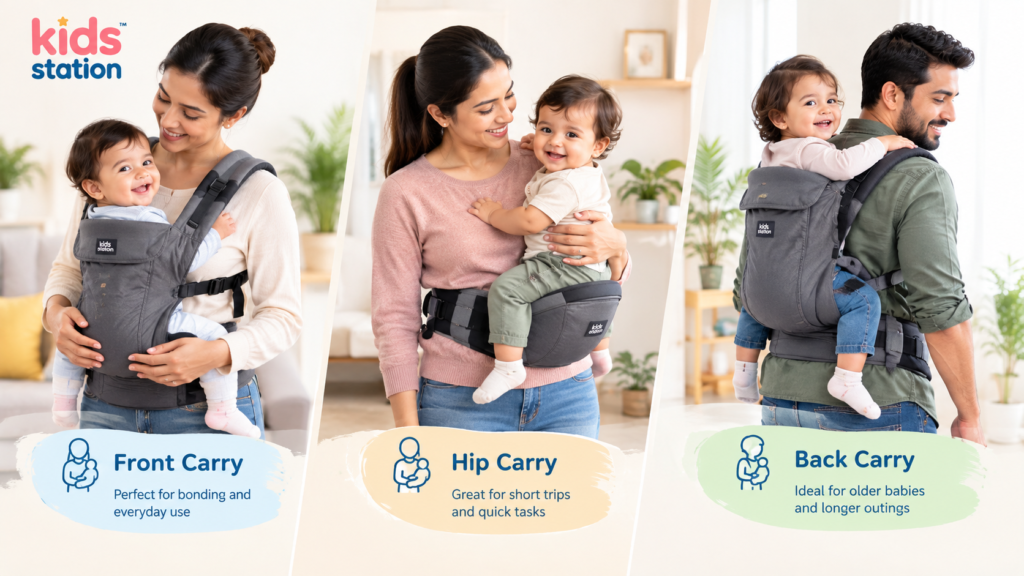
A baby carrier helps parents carry their baby close to the body while keeping their hands free for everyday activities. A suitable carrier can make short walks, travel, shopping, and household routines more convenient while allowing parents and babies to stay close.
Choosing and using a baby carrier correctly is important because the baby’s position, support, fit, and age all affect comfort and safety.
What Is a Baby Carrier?
A baby carrier is a wearable baby-carrying product designed to support an infant or young child against the caregiver’s body. Depending on the design, babies may be carried on the front, hip, or back.
Different carriers are designed for different age ranges and carrying positions, so parents should always check the manufacturer’s recommended weight, age, and usage instructions.
Why Do Parents Use a Baby Carrier?
A baby carrier can be useful when parents want to keep their baby close while having their hands available. It can be particularly convenient during walks, travel, shopping, or situations where using a stroller may not be practical.
Babywearing can also make everyday movement easier when the carrier provides appropriate support and fits both the baby and caregiver comfortably.
Baby Carrier Positions
The appropriate carrying position depends on the baby’s developmental stage, carrier design, and manufacturer’s instructions.
Front Carry
A front carry is commonly used with younger babies when the carrier is specifically designed and adjusted for their size. The baby should be positioned correctly with adequate support.
Hip Carry
A hip carry can provide a different carrying option as the baby grows, but it should only be used when the carrier supports this position and the baby meets the recommended requirements.
Back Carry
A back carry may be suitable for older babies or toddlers when the carrier manufacturer allows it and the child has reached the required developmental stage.
How to Choose a Baby Carrier
Choosing a baby carrier starts with checking the product’s recommended age and weight range. Parents should also consider how they plan to use the carrier and which carrying positions they need.
Consider these factors:
- Baby’s age and weight
- Carrier size and adjustability
- Available carrying positions
- Head and neck support
- Leg and hip positioning
- Waist and shoulder support for the caregiver
- Ease of putting on and removing
- Breathable and comfortable materials
- Manufacturer’s safety instructions
How to Wear a Baby Carrier Correctly
Before using a baby carrier, read the manufacturer’s instructions and adjust every strap or fastening according to the baby’s size.
The baby should be positioned securely and remain visible to the caregiver. Check that the baby’s face is not covered by fabric and that the airway remains clear.
The carrier should feel secure without creating unnecessary pressure on either the baby or caregiver.
Baby Carrier Safety Tips
Baby carrier safety depends on correct positioning, proper adjustment, and regular checks.
Keep these points in mind:
- Follow the manufacturer’s age and weight recommendations.
- Make sure the baby’s face and airway remain clear.
- Check the carrier before every use.
- Keep the baby positioned according to the carrier instructions.
- Ensure straps and buckles are properly secured.
- Avoid activities that could cause falls or injury while babywearing.
- Stop and readjust if the baby appears uncomfortable.
- Follow the manufacturer’s guidance for newborn use and carrying positions.
Baby Carrier for Newborns
A baby carrier for newborns should only be used when the specific carrier is designed and approved for newborn use. Newborn babies need appropriate head, neck, and body support.
Parents should check the minimum weight requirement and any newborn insert or positioning instructions provided by the manufacturer.
Baby Carrier for Growing Babies
As babies grow, their carrying needs change. A carrier that works for a young infant may need different adjustments as the baby becomes heavier and more active.
Parents should regularly check the carrier’s fit, straps, buckles, and weight limits and move to another carrying position only when the manufacturer recommends it.
Baby Carrier for Travel and Everyday Use
A baby carrier can be useful for travel because it allows parents to carry their baby while keeping their hands relatively free. It can also be convenient for short outings, shopping trips, walks, and crowded places.
For longer periods of use, caregiver comfort becomes especially important. Adjustable shoulder straps, supportive waist belts, and suitable padding can make a difference.
Baby Carrier from Kids Station
Kids Station offers practical baby-care products designed around everyday parenting needs. A baby carrier can be a useful addition for parents who want a convenient way to keep their baby close during walks, travel, and daily routines.
Before using any carrier, parents should check the product’s recommended age, weight range, carrying positions, and safety instructions.
Frequently Asked Questions
What is a baby carrier used for?
A baby carrier is used to carry a baby close to the caregiver while keeping the caregiver’s hands available for suitable everyday activities.
Can newborns use a baby carrier?
Some baby carriers are designed for newborns, while others are intended for older babies. Always check the manufacturer’s minimum age, weight, and positioning requirements.
Which baby carrier position is best?
There is no single position that is suitable for every baby. The appropriate position depends on the baby’s age and development, the carrier design, and the manufacturer’s instructions.
How long can a baby stay in a carrier?
The appropriate duration depends on the baby’s age, development, comfort, carrier design, and the manufacturer’s guidance. Parents should regularly check the baby’s position and comfort.
How do I know if a baby carrier fits correctly?
A properly adjusted carrier should hold the baby securely while keeping the baby’s face and airway clear. Straps, buckles, and the baby’s position should be checked before use.
Final Thoughts
A baby carrier can make everyday parenting more convenient by keeping babies close while allowing caregivers greater freedom of movement. The right carrier should match the baby’s age, weight, developmental stage, and the parent’s comfort needs.
Correct positioning, careful adjustment, regular inspection, and following the manufacturer’s instructions are essential for safe and comfortable babywearing.