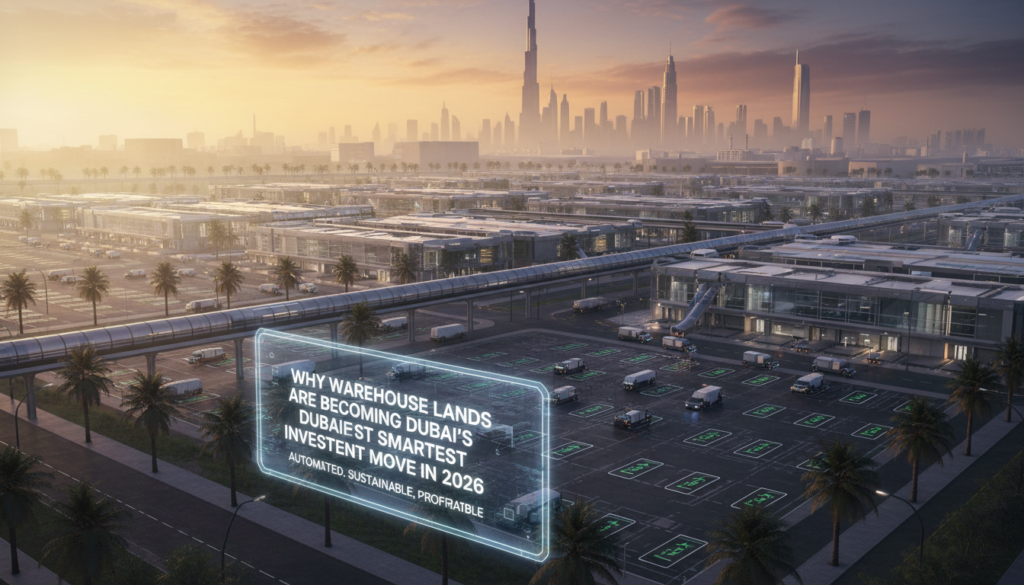
Why Warehouses Lands Are Becoming Dubai’s Smartest Investment Move in 2026
The conversation around Dubai real estate has shifted dramatically over the past few years. While luxury apartments and waterfront villas continue to dominate headlines, a quieter — and arguably more powerful — opportunity has been gaining serious momentum among seasoned investors:
warehouses lands. These industrial and logistics-focused parcels are no longer just utilitarian assets. They have evolved into high-demand investment vehicles that are reshaping how both local and international investors think about commercial property in the UAE.
Dubai’s position as a global trade and logistics hub makes warehouses lands particularly attractive. With Jebel Ali Port handling millions of containers annually and Al Quoz, DIP, and JAFZA emerging as thriving industrial corridors, the demand for well-located land that supports warehousing, storage, and last-mile distribution has never been higher. E-commerce growth, supply chain restructuring post-pandemic, and the UAE’s push toward becoming a regional manufacturing base have all added fuel to this demand.
Industrial land in Dubai consistently delivers stronger rental returns compared to residential properties, with far lower maintenance obligations and longer lease tenures from tenants. For investors focused on steady cash flow over speculative appreciation, this category deserves serious attention.
What to Look for When Evaluating Warehouses Lands
Not all industrial land is created equal. Location remains the dominant factor. Proximity to major highways like Sheikh Mohammed Bin Zayed Road or Emirates Road, access to port facilities, and distance from urban distribution points all directly impact a parcel’s value and lease appeal.
Zoning is another critical consideration. Dubai’s land classification system distinguishes between light industrial, heavy industrial, and logistics zones, and each carries different permissible uses. Investors should verify that the intended use aligns with the designated zoning classification before committing to any purchase.
Infrastructure readiness also matters. Land with existing utility connections—power, water, and drainage—commands a premium but often reduces development timelines significantly, which translates into faster returns on investment.
Finally, tenure type plays a significant role. Freehold industrial land, available to foreign investors in designated zones, offers greater flexibility and long-term security compared to leasehold arrangements. Understanding these distinctions is essential before entering the market.
Why Now Is the Right Time to Buy a Land in Dubai
If you have been sitting on the fence, the current market conditions make a compelling case to act. To buy a land in Dubai right now — particularly in the industrial and commercial segment — is to position yourself ahead of what many analysts describe as a sustained demand cycle.
Dubai’s population is projected to grow significantly over the next decade, driven by continued immigration, business-friendly visa reforms, and the expansion of free zones. This growth directly translates into greater demand for goods, logistics, and warehousing infrastructure. The businesses serving this growing population need somewhere to store, process, and distribute their products—and that somewhere is industrial land.
From a regulatory standpoint, Dubai has made it increasingly straightforward for foreign nationals and corporate entities to acquire land in designated areas. The Real Estate Regulatory Agency (RERA) continues to strengthen transaction transparency, and the introduction of long-term residency visas linked to property investment has added another dimension of appeal for international buyers.
Land prices in emerging industrial zones remain accessible compared to established locations, making this an opportune entry window. Early movers in areas like Dubai South, which is anchored by Al Maktoum International Airport and Expo City, are already seeing appreciation that mirrors what Jebel Ali experienced two decades ago.
It is also worth noting that industrial land carries lower speculative risk than off-plan residential investments. The asset produces tangible utility—warehouses, workshops, and logistics facilities—and that utility translates into consistent tenant demand regardless of broader market cycles.
Making the Right Move With the Right Partner
Investing in commercial and industrial land is not a transaction to approach casually. The due diligence requirements, zoning considerations, title deed verification, and negotiation dynamics are all meaningfully different from residential property purchases. This is where working with an experienced partner makes an outsized difference.
A reliable commercial real estate agency in Dubai brings more than just listings to the table. They bring market intelligence, legal clarity, network access, and negotiation expertise that can protect your investment and accelerate your returns. At RG Estate, we work with investors who are serious about building long-term value in Dubai’s commercial and industrial property market. Our team understands the nuances of warehouse lands, the emerging opportunities across Dubai’s key industrial corridors, and what it takes to structure transactions that truly serve our clients’ investment objectives.
If you are ready to explore what Dubai’s industrial land market can offer your portfolio, we would love to start that conversation.