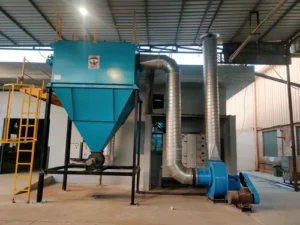
Why Dust Collection System Improves Factory Output Faster Than Adding More Labor
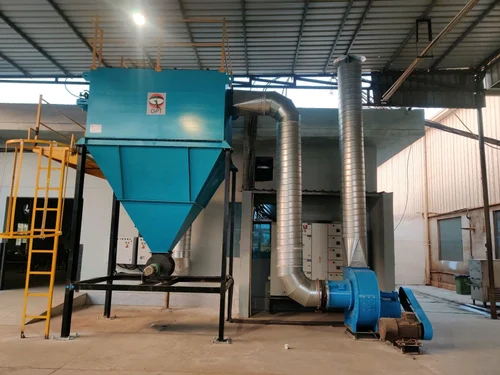
Dust Collection System
Many factories facing slow production immediately look for one solution—hire more workers. When orders increase or targets are missed, adding manpower often seems like the quickest answer. Extra hands can help in some situations, but many industrial units discover that labor alone does not solve the real cause of low output. In numerous factories, the hidden barrier is uncontrolled dust slowing everything down. This is where a well-designed Dust Collection System creates faster and more sustainable results than simply increasing headcount.
Production efficiency depends on how smoothly the entire environment supports work. If machines stop often, workstations stay dirty, pathways require repeated cleaning, and employees operate in dusty uncomfortable areas, more workers may only add cost without solving the core issue. Smart manufacturers increasingly focus on improving plant conditions first. Cleaner operations often unlock the productivity of the existing workforce.
GPT India helps industrial businesses improve efficiency through engineered Dust Collection System solutions designed for cleaner, more reliable manufacturing performance.
One of the first ways a Dust Collection System increases output is by reducing wasted time. In dusty factories, workers regularly pause to wipe surfaces, clear machines, clean finished goods, or sweep active zones. These interruptions may seem minor, but across multiple departments and shifts they consume many productive hours every week. Once dust is controlled near the source, employees can focus more on production and less on cleanup.
Machine uptime is another major advantage. Fine dust often settles on motors, cooling vents, bearings, sensors, conveyors, and electrical panels. Over time, this contamination can create overheating, wear, alignment issues, or sudden stoppages. If equipment stops frequently, hiring more workers does not solve the lost machine time. A Dust Collection System helps capture particles before they spread into sensitive equipment zones, improving reliability and smoother daily operations.
In woodworking and furniture industries, particulate generation is especially high. Cutting, sanding, shaping, and finishing create continuous airborne dust. A dedicated Wood Dust Collector can work as part of a broader Dust Collection System strategy to keep machine areas cleaner and support faster workflow. When machines remain cleaner, setup times and maintenance interruptions often decrease.
Another reason labor alone may fail is workflow congestion. If more employees are added into an already dusty and poorly organized environment, movement can become slower rather than faster. Workers may compete for space, tools, and clean surfaces. By contrast, cleaner facilities often improve movement efficiency naturally. A Dust Collection System supports organized work zones where teams can operate with fewer obstacles.
Worker productivity also rises in cleaner environments. Dusty air, poor visibility, and constant contamination create fatigue and distraction. Employees may lose concentration during long shifts and perform slower by later hours of the day. Cleaner surroundings can improve comfort, morale, and focus. Existing workers often become more productive when the environment stops working against them.
Heat can also build where dust blocks airflow or collects around ventilation areas. In many enclosed factories, poor air movement combines with dust to create uncomfortable conditions. Integrating an Air Washer System or balanced ventilation alongside a Dust Collection System can improve comfort and maintain steadier production pace.
Factories that generate mixed waste streams may benefit from staged separation methods. A Cyclone Dust Collector is commonly useful as a pre-separation stage where heavier particles need removal before fine filtration. This helps maintain better system efficiency and reduces unnecessary load on final filters.
Where continuous production is important, a Pulse Jet Bag Filter can be valuable because it cleans filter media during operation. Stable airflow means the Dust Collection System can continue performing without frequent shutdowns, which supports output consistency during busy schedules.
Another hidden benefit is quality improvement. Dust settling on products, packaging, or materials often leads to rework, slower inspection, and customer complaints. Hiring more labor to fix defects is usually less efficient than preventing contamination in the first place. Cleaner air helps reduce these avoidable quality losses.
Some factories use fabrication or thermal processes that create smoke or fumes in addition to dust. A Fume Extraction System may be integrated where source emissions affect nearby work areas. Cleaner combined conditions can improve both worker efficiency and product standards.
Large industrial facilities frequently require dependable airflow movement through duct networks. Centrifugal Blowers are commonly used where pressure-based extraction is needed. Correct airflow design is essential for any Dust Collection System to perform efficiently across larger layouts.
Cost control is another important factor. Hiring more workers creates recurring monthly expense through wages, training, supervision, uniforms, and turnover management. A Dust Collection System is an operational investment that can continue delivering value through improved efficiency, lower maintenance pressure, better uptime, and stronger output.
Many businesses make the mistake of treating symptoms rather than causes. If output is low because machines stop often and workers lose time to dust-related tasks, adding labor may only mask the issue temporarily. Solving environmental inefficiency usually creates stronger long-term gains.
Low-cost generic systems may not deliver full benefits if airflow is weak, hood placement is poor, or system capacity is wrong. Proper engineering matters. Every factory has different processes, layouts, and dust loads. Customized planning usually performs better than one-size-fits-all equipment.
GPT India focuses on practical industrial requirements rather than standard generic supply. Solutions designed around real operating conditions often create stronger long-term returns for growing manufacturers.
GPT India is located at 59/2/1, Site 4, Industrial Area, Sahibabad, Ghaziabad, Uttar Pradesh, 201010. Businesses can contact +91-9773500660 or email info@gpt-india.com for industrial dust and air management guidance.
FAQs
Why does a Dust Collection System improve output?
It reduces cleaning delays, machine stoppages, and dust-related inefficiencies.
Is hiring more labor always the best way to increase production?
Not always. If dust is slowing operations, solving the root cause may work better.
Where is a Dust Collection System most useful?
It is valuable in woodworking, fabrication, manufacturing, packaging, and processing plants.
Can cleaner air improve worker productivity?
Yes, cleaner environments often improve focus, comfort, and steady performance.
Why choose a customized Dust Collection System?
Customized systems are designed for actual factory layout, machines, and dust load.
Conclusion
Adding labor can increase cost, but it does not always increase efficiency. Many factories lose output because dust creates delays, stoppages, discomfort, and quality problems every day. A properly designed Dust Collection System often improves productivity faster by removing the hidden obstacles already slowing production. For smart manufacturers, cleaner air is frequently the fastest route to higher output.