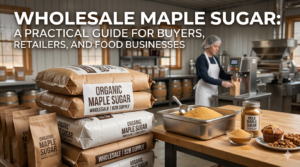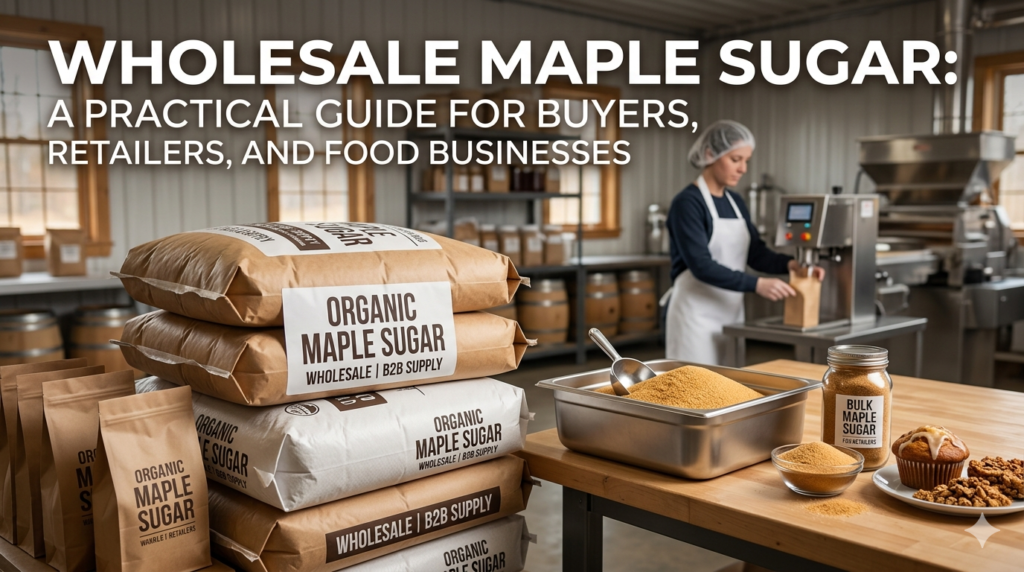
Maple sugar has become a sought-after ingredient across the food industry. From artisan bakeries to specialty food stores, businesses are looking for natural sweeteners that offer both flavor and consumer appeal. As demand grows, understanding the wholesale market becomes increasingly important for anyone sourcing this unique product.
When purchasing wholesale maple sugar, buyers need more than a competitive price. Product quality, consistency, sourcing practices, packaging options, and supplier reliability all influence long-term success. Whether you operate a bakery, manufacture food products, or manage a retail store, making informed purchasing decisions can improve profitability and customer satisfaction.
This guide explains how wholesale maple sugar works, what to evaluate before buying, and how businesses can maximize its value in different applications.
Understanding Wholesale Maple Sugar
Maple sugar is produced by concentrating maple syrup until nearly all moisture evaporates. The remaining material crystallizes into a fine-grained sweetener with a rich maple flavor. Unlike refined white sugar, maple sugar retains naturally occurring compounds that contribute to its distinctive taste and color.
Wholesale maple sugar is typically sold in bulk quantities to:
- Food manufacturers
- Commercial bakeries
- Coffee roasters
- Specialty retailers
- Ice cream producers
- Restaurant groups
- Health-focused food brands
The product is available in several grades and granulations. Fine maple sugar works well in beverages and dry mixes, while coarser varieties may be preferred for toppings or specialty products.
Businesses often choose maple sugar because it offers a recognizable ingredient label. Consumers increasingly read ingredient lists, and natural sweeteners can enhance product positioning in competitive markets.
Why Businesses Choose Maple Sugar
Several factors contribute to maple sugar’s growing popularity.
Unique Flavor Profile
Maple sugar delivers a rich sweetness with caramel and woodsy notes. This complexity allows manufacturers to create distinctive products without artificial flavorings.
For example, a bakery can replace part of its standard sugar with maple sugar in cookies or muffins to create a premium flavor experience.
Clean Ingredient Label
Many consumers prefer recognizable ingredients. Maple sugar is often viewed as a minimally processed alternative to highly refined sweeteners.
Food brands focused on natural ingredients frequently use maple sugar to align with customer expectations.
Versatile Applications
Maple sugar performs well in numerous products, including:
- Granola
- Breakfast cereals
- Coffee blends
- Baking mixes
- Sauces
- Seasonings
- Confectionery items
- Yogurt toppings
Its versatility makes it attractive for businesses serving multiple market segments.
How to Source Wholesale Maple Sugar Successfully
Finding the right supplier involves more than comparing prices. A structured approach helps buyers avoid costly mistakes.
Step 1: Define Product Requirements
Begin by identifying exactly how the sugar will be used.
Questions to consider include:
- What granulation size is needed?
- Will the product be used in baking or beverages?
- What annual volume is required?
- Are organic certifications necessary?
- What packaging format works best?
A coffee company, for instance, may require a fine powder for instant dissolution, while a confectionery manufacturer may need a coarser texture.
Step 2: Request Product Specifications
Reliable suppliers should provide detailed specifications.
Important information includes:
- Moisture content
- Particle size distribution
- Color characteristics
- Production standards
- Shelf-life recommendations
- Storage requirements
Reviewing specifications ensures consistency across future shipments.
Step 3: Order Samples
Testing samples before committing to a large order is essential.
Evaluate:
- Flavor consistency
- Texture
- Solubility
- Appearance
- Compatibility with recipes
A bakery introducing maple sugar into its signature products should conduct multiple production runs to verify performance under commercial conditions.
Step 4: Assess Supply Reliability
Consistent inventory matters just as much as product quality.
Ask suppliers about:
- Production capacity
- Lead times
- Seasonal availability
- Emergency stock options
- Shipping procedures
Businesses that depend on uninterrupted ingredient supply should prioritize suppliers with proven fulfillment records.
Step 5: Compare Total Cost
The lowest price does not always represent the best value.
Consider:
- Shipping expenses
- Packaging costs
- Minimum order quantities
- Storage requirements
- Product consistency
A slightly higher-priced supplier may reduce waste and production issues, ultimately lowering overall operating costs.
Common Challenges When Buying Wholesale Maple Sugar
Despite its benefits, maple sugar sourcing presents several challenges.
Inconsistent Product Quality
Differences in production methods can affect flavor, color, and texture.
Variations between batches may create problems for manufacturers seeking uniform products. Working with suppliers that maintain strict quality controls can minimize these issues.
Improper Storage
Maple sugar naturally absorbs moisture from the environment.
If stored incorrectly, it may clump or lose its free-flowing texture. Businesses should maintain dry storage conditions and use airtight packaging whenever possible.
Underestimating Demand
Some companies initially purchase small quantities and quickly encounter inventory shortages.
Forecasting demand accurately helps avoid production interruptions and emergency purchases that often carry higher costs.
Ignoring Supplier Communication
Poor communication can lead to delayed deliveries or specification misunderstandings.
Establishing clear expectations early improves long-term supplier relationships and reduces operational risks.
Expert Recommendations for Wholesale Buyers
Experienced ingredient buyers often follow several best practices when purchasing maple sugar.
Build Long-Term Supplier Relationships
Long-term partnerships frequently result in better service, predictable pricing, and improved availability.
Suppliers are more likely to accommodate urgent requests when they understand a customer’s business needs and purchasing patterns.
Test New Product Applications
Many businesses limit maple sugar to traditional uses. However, innovation can create valuable product differentiation.
Examples include:
- Maple-sweetened coffee blends
- Gourmet spice rubs
- Specialty protein bars
- Premium hot chocolate mixes
- Artisan snack products
Testing new applications may reveal profitable product opportunities.
Monitor Consumer Trends
Consumer preferences continue shifting toward natural ingredients and transparent sourcing.
Tracking market trends helps businesses identify opportunities before competitors do. Retailers and manufacturers that adapt quickly often gain an advantage in emerging product categories.
Maintain Quality Documentation
Keeping records of specifications, test results, and supplier communications supports quality assurance efforts.
Documentation becomes especially important for businesses operating under food safety programs or regulatory requirements.
Purchase Strategically
Rather than placing frequent small orders, many companies achieve better efficiency through planned purchasing schedules.
Bulk purchasing can reduce transportation costs while improving inventory management when storage capacity allows.
Real-World Example of Maple Sugar in Product Development
Consider a small granola manufacturer seeking to differentiate its products in a crowded market. Traditional sweeteners produced acceptable results but lacked a distinctive flavor profile.
After testing maple sugar in several formulations, the company introduced a maple-almond granola featuring a cleaner ingredient list and richer taste. Customer feedback highlighted flavor quality as a key reason for repeat purchases.
The manufacturer eventually expanded the maple-based product line into snack clusters and breakfast bars. This example demonstrates how ingredient selection can influence both product development and brand positioning.
Conclusion
Wholesale maple sugar offers food businesses a versatile, natural sweetening option with broad market appeal. Success begins with understanding product specifications, evaluating supplier reliability, and testing applications carefully before scaling purchases. By focusing on quality, consistency, and strategic sourcing, retailers and manufacturers can incorporate maple sugar into products that meet evolving consumer expectations while supporting long-term business growth.