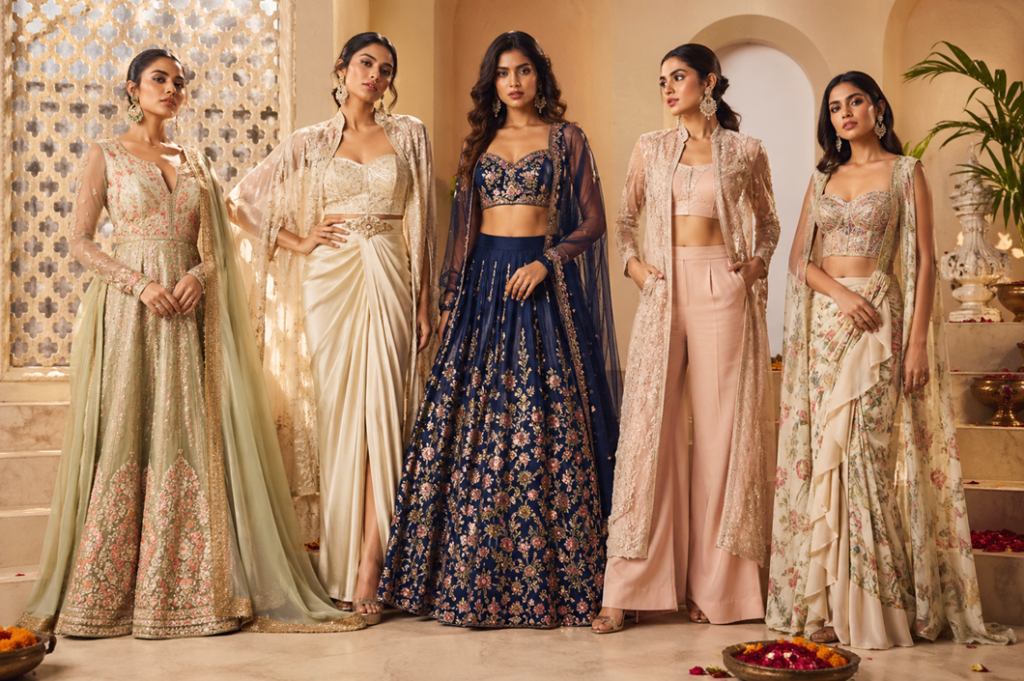
There’s always that one outfit in the room that people notice without trying too hard. It’s not always the loudest or the heaviest—it’s the one that feels right on the person wearing it. That’s exactly where the choice between traditional and fusion styles becomes interesting. It’s less about trends and more about how an outfit carries itself through the evening.
Over the years, wardrobes have quietly evolved. Classic silhouettes haven’t gone anywhere, but they now sit alongside modern cuts that feel easier to wear. The charm of Indian dresses still lies in their details and depth, while Indo-Western outfits bring a sense of ease that fits today’s pace of life. Both have their place—it just depends on what the moment calls for.
What Keeps Traditional Styles So Relevant Even Today?
There’s a certain familiarity in traditional wear that people keep coming back to. It’s not just about heritage—it’s about how these outfits naturally frame the body and create presence without needing too much styling.
In fashion circles, especially during wedding seasons, Indian designer dresses continue to hold their ground because of their craftsmanship. Handwork, layering, and fabric choice all come together to create something that feels complete on its own.
Anarkali Sets
Anarkalis have a way of moving with the body rather than against it. The fitted top and flowing bottom create a shape that works for many body types without feeling restrictive. They’re often chosen for evenings where comfort matters just as much as appearance.
Saree-Inspired Gowns
These are for those who like the elegance of a saree but don’t want to spend time draping. The structure is already built in, so the look comes together quickly. They fit well into occasions where time is limited, but expectations are high.
Lehenga Styles
Lehengas bring a stronger visual impact. The combination of a structured blouse and a detailed skirt creates a look that stands out, especially in larger gatherings. They’re often picked when the occasion itself feels grand.
Why Are Fusion Styles Finding So Much Space in Wardrobes?
Not every event calls for something heavily traditional. That’s where fusion styles come in. They feel lighter, easier, and more adaptable.
The rise of Indo-Western dresses isn’t surprising. They allow movement, require less effort to manage, and still hold onto elements of traditional design. For many, that balance makes all the difference.
Jacket-Layered Sets
Adding a jacket changes the entire feel of an outfit. It brings structure while still allowing the base layer to stay fluid. These are often worn for smaller gatherings where a full traditional look might feel too much.
Dhoti-Inspired Styles
Dhoti silhouettes have a relaxed feel but still look styled. They don’t cling and allow easy movement, making them practical for longer events. They’re often chosen for occasions where comfort needs to last for hours.
Cape-Style Outfits
Capes add a layer without making the outfit heavy. They move gently and give the overall look a softer finish. They’re often seen at evening events where the outfit needs to feel dressed up but not overwhelming.
How Do You Decide What Actually Works for You?
The decision usually comes down to how the outfit feels once it’s on. Some people naturally lean towards the richness of Indian dresses, especially when the occasion carries meaning or tradition. Others prefer the ease of Indo-Western outfits, particularly in more relaxed settings.
A few things tend to guide the choice:
- The kind of event and how formal it is
- How long the outfit needs to be worn
- Whether movement and comfort are a priority
In styling discussions, there’s also been a noticeable shift towards outfits that can be worn more than once in different ways. A heavily embroidered piece might be styled differently the next time, or a fusion outfit might be paired with more traditional accessories.
What Are Stylists and Buyers Looking for Right Now?
There’s less focus on one-time outfits and more attention on versatility. Pieces that can move from one setting to another without feeling out of place are becoming more valuable.
Stylists often look at:
- How easily an outfit can be restyled
- Whether it feels comfortable for longer wear
- If it suits more than one type of occasion
This is where both Indian designer dresses and Indo-Western dresses are evolving. They’re not just occasion-specific anymore—they’re becoming part of a more flexible wardrobe.
In fashion buying, there’s also a clear preference for pieces that feel personal rather than overly trend-driven. Subtle detailing, balanced silhouettes, and wearable fabrics are getting more attention than overly heavy designs.
Conclusion
There isn’t a single answer to which style stands out more. It changes with the occasion, the setting, and the person wearing it.
Some outfits feel right because of their details and tradition, while others stand out because they’re easy to carry. Both traditional and fusion styles offer something different, and that’s what keeps them relevant.
In the end, the outfit that steals the spotlight is the one that feels natural the moment it’s worn—and confident without needing adjustment.