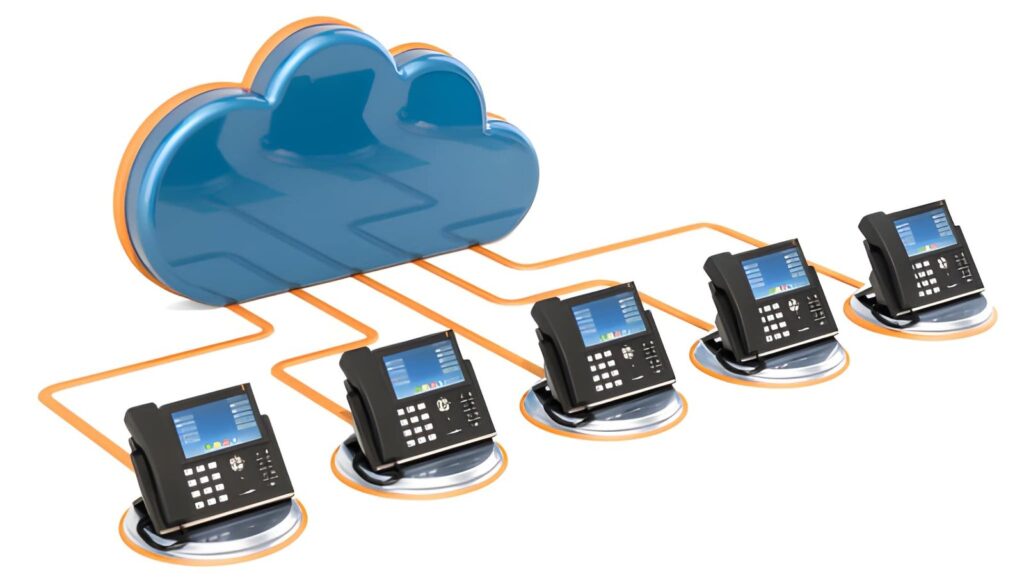
voice over ip landline
The landline telephone has been a fixture of both homes and offices for well over a century. For most of that time, it worked in essentially the same way: a copper wire carried an analogue signal from one handset to another through a network of telephone exchanges. The experience was familiar, reliable, and completely unchanged from one decade to the next. Then the internet arrived, and gradually, then suddenly, a better alternative emerged.
That alternative is now the choice of millions of homes and businesses across the UK and around the world. The shift is not happening because people enjoy change for its own sake. It is happening because the benefits of switching are real, measurable, and felt immediately after the transition. This article sets out the top benefits of a voice over IP landline for both businesses and home users, explains what makes the technology work, and helps readers understand what to expect when making the move.
Understanding Voice Over IP Landline Technology
A voice over IP landline carries telephone calls over a broadband internet connection rather than through a traditional copper wire telephone network. The voice over IP landline converts speech into digital data, sends it across the internet, and converts it back into sound at the receiving end. The process happens in real time, and the experience of using a voice over IP landline is virtually indistinguishable from using a traditional phone for most users.
The key difference is in the infrastructure. A traditional landline depends on physical telephone lines, exchanges, and hardware that requires installation, maintenance, and ongoing line rental payments. A voice over IP landline uses the internet connection already in the home or office. There is no separate telephone infrastructure to pay for or maintain. The system runs in software, which means it is easier to set up, easier to change, and far more capable than the system it replaces.
That shift from hardware to software is what produces most of the benefits that follow. When a phone system lives in software rather than in physical equipment, it can do things that fixed infrastructure simply cannot.
Benefit One: Lower Call Costs for Both Businesses and Homes
The most immediate benefit of a voice over IP landline, and the one that tends to drive the initial decision to switch, is the reduction in call costs. Traditional telephone services charge line rental on top of call charges. Those two costs together represent a significant monthly outgoing for households and businesses alike, and for most people the question of what they are paying for has never been examined closely.
A voice over IP landline removes line rental entirely. The call travels over the broadband connection that the home or business already pays for. The cost of the voice over IP landline service itself is typically a modest monthly subscription that covers all the features and is significantly less than the combined cost of traditional line rental and call charges.
Call rates on a voice over IP landline are lower than traditional rates across almost every category. Calls to UK landlines and mobiles are cheaper. International calls cost a fraction of what a traditional telephone service charges. For households with family abroad, or businesses with international clients and suppliers, the saving on international calls alone can be substantial. Some voice over IP landline providers include unlimited calls to UK numbers in their standard package, which removes call charges from the monthly calculation entirely.
For businesses specifically, internal calls between different offices or between remote workers on the same voice over IP landline system are free. A company with offices in London and Leeds pays nothing for calls between those two sites. That saving repeats every month and compounds significantly over the course of a year.
Benefit Two: Flexibility to Use the Phone System From Anywhere
Traditional landlines are fixed. They work at the address where the line is installed and nowhere else. For home users, that has never been a major constraint. But for anyone who works from home, travels regularly, or splits their time between locations, a fixed landline creates gaps in availability that a voice over IP landline removes.
A voice over IP landline works on any device with an internet connection. Home users can take calls on a laptop, a tablet, or a mobile phone using the same home number. Business users can receive calls on their business landline number while working from home, travelling, or sitting in a client meeting. The number stays the same. The features stay the same. The location becomes irrelevant.
For businesses managing hybrid teams, this flexibility is particularly valuable. A voice over IP landline means that team members working remotely are fully reachable on their business numbers without any special arrangement. Calls can be transferred to them as if they were at the next desk. They appear in the company directory. They have access to every feature of the system regardless of where they are working that day.
Benefit Three: A Richer Feature Set Than Traditional Landlines
The feature comparison between a voice over IP landline and a traditional telephone service is one of the clearest arguments for switching. Traditional landlines offer a limited set of features, many of which carry additional charges. A voice over IP landline includes a comprehensive range of capabilities as standard.
Voicemail to email is one of the most immediately useful features for both home users and businesses. Rather than dialling a voicemail number and listening to messages in sequence, voice messages are delivered as audio attachments to an email inbox. They arrive alongside other messages, can be listened to on any device, and can be forwarded or archived. Nobody misses an important message because they forgot to check their voicemail box.
Call routing allows incoming calls to be directed based on rules that the user sets. A business can route calls to different departments based on the time of day or the number dialled. A home user can set calls to ring on multiple devices simultaneously, ensuring that calls are never missed because one device is out of reach. These rules are managed through a simple web interface and can be changed at any time without calling the provider.
Call blocking is more effective on a voice over IP landline than on a traditional service. Users can block specific numbers, block calls from withheld numbers, or set up allow-lists that only permit calls from known contacts. For home users dealing with nuisance calls, this level of control is a significant improvement over what a traditional landline offers.
For businesses, call recording, auto-attendant menus, conference calling, and integration with CRM systems are all standard or readily available features on voice over IP landline platforms. These capabilities either do not exist on traditional landline services or carry substantial additional costs to enable.
| Feature | Traditional Landline | Voice Over IP Landline |
| Voicemail to email | Not available | Standard |
| Call routing rules | Very limited | Fully configurable |
| Call recording | Expensive add-on | Standard on most platforms |
| Call blocking options | Basic | Advanced, user-managed |
| Mobile app access | Not available | Standard |
| Auto-attendant menus | Costly add-on | Standard for business plans |
| Conference calling | Limited, often charged per use | Standard |
| CRM integration | Not available | Available on business platforms |
| Number portability | Tied to physical line location | Works from any location |
| Multiple devices on one number | Not available | Standard |
Benefit Four: Easier Management and Greater Control
Managing a traditional landline requires either a call to the provider or a visit from an engineer for anything beyond the most basic changes. Adding an extension, changing call routing, updating a voicemail greeting, or getting a new number all involve external support, lead times, and in many cases fees.
A voice over IP landline gives users direct control through a web portal or mobile application. Home users can update their settings, change their voicemail greeting, add call forwarding rules, and manage call blocking without calling anyone. Business administrators can add new users, create extensions, change call routing, and pull call reports from the same portal. Changes take effect immediately.
That level of control changes the experience of managing communication. Rather than waiting for a provider to make a change that the user already knows is needed, the change happens when the need arises. For businesses, this means the phone system keeps pace with operational changes rather than lagging behind them.
Benefit Five: Reliability and Business Continuity
One of the concerns that comes up most often when people consider switching to a voice over IP landline is whether internet-based calls are reliable enough to replace a system that has worked consistently for decades. It is a fair question and it deserves a direct answer.
Modern voice over IP landline services from established providers are built on infrastructure with multiple layers of redundancy. Service level agreements commit to uptime of 99.9 percent or higher. When the primary data path has an issue, the system routes around it automatically. For most users, the service is at least as reliable as a traditional landline and often more so, because the consequences of a single point of failure are mitigated by the distributed nature of the infrastructure.
For home users, the voice over IP landline depends on the broadband connection. A reliable broadband service supports reliable voice over IP calls. For businesses, the addition of a backup internet connection, which many already have for general resilience, provides a failover path that keeps calls running even if the primary connection has a problem.
Traditional landlines are not immune to failure. Physical lines develop faults, exchanges have outages, and severe weather can affect copper infrastructure. The difference is that a fault on a traditional line typically requires an engineer visit to resolve, while most issues affecting a voice over IP landline service are addressed by the provider’s infrastructure team without any involvement from the user.
Benefit Six: Environmentally Friendlier Communication
This benefit is one that home users and businesses with sustainability commitments increasingly take into account. Traditional telephone infrastructure requires physical equipment at every point in the network, from the exchange to the business premises. That equipment consumes energy to run and requires manufacturing, installation, and eventual disposal.
A voice over IP landline reduces that physical footprint substantially. The infrastructure that makes calls possible runs in data centres that are increasingly powered by renewable energy. The business or home user needs only a router, a broadband connection, and a device to make calls from. There is no PBX unit consuming power in the server room, no physical telephone lines requiring maintenance vehicles and materials, and no hardware to replace when a component fails.
For businesses measuring and reporting on their environmental impact, the switch to a voice over IP landline is a change that contributes to a lower carbon footprint in a way that is easy to document and communicate.
Benefit Seven: Simple and Low-Cost Migration
A concern that holds some users back from switching to a voice over IP landline is the expectation that the migration will be complicated or disruptive. In practice, the transition is more straightforward than most people expect.
Existing telephone numbers can be ported to a voice over IP landline service. This means home users keep their home number and businesses keep their business numbers. The porting process typically takes two to four weeks and is managed by the new provider. Running both services in parallel during the porting period ensures no calls are missed.
For home users, the physical setup usually requires nothing more than connecting a VoIP-compatible handset to the router. Existing cordless phones can often be connected using an adaptor. For businesses, the setup involves configuring the management portal, assigning numbers to users, and setting up call routing. Staff training is typically brief because the basics of making and receiving calls are familiar, and the additional features are intuitive to use.
| Migration Step | Home User Experience | Business User Experience |
| Network check | Confirm broadband speed and stability | Check bandwidth for concurrent call volume |
| Provider selection | Compare pricing and included minutes | Compare features, integrations, support |
| Number porting | Submit existing home number | Submit existing business numbers |
| Equipment setup | VoIP handset or adaptor for existing phone | Configure portal, assign extensions |
| Training | Minimal, basics are familiar | Short session covering features and portal |
| Parallel running | Keep existing service during porting | Run both systems until porting confirms |
| Go-live | Disconnect traditional line | Confirm all numbers live, old system off |
Benefit Eight: Scalability for Growing Households and Businesses
Life changes, and communication needs change with it. A household that was two people becomes four. A business that employed ten people grows to thirty. A company opens a second office. A family member moves abroad and wants to stay in contact on a UK number.
A voice over IP landline scales to meet these changes with very little friction. Adding a new user or a new number to a business voice over IP landline system is a matter of a few clicks in the management portal. A household can add a number for a new family member, port an existing mobile number to the voice over IP service, or set up a second line for a home office without any physical installation work.
For businesses, the scalability of a voice over IP landline is one of its most practical advantages over traditional systems. Growth does not require infrastructure work, engineer visits, or waiting for new lines to be provisioned. The system expands as the business expands, and it scales back down just as easily when circumstances change.
How Almens Consult Can Help You Make the Switch
Almens Consult supports both businesses and home users through the process of switching to a voice over IP landline. The team assesses the current telephone setup, confirms that the broadband connection is ready to support voice over IP calls, and recommends the right service based on the specific needs of the household or organisation. For businesses, Almens Consult manages the full migration including number porting, system configuration, and staff training, ensuring that operations run without interruption throughout the transition. For home users, Almens Consult makes the process simple and straightforward, handling the technical details so that the switch feels like a minor change rather than a major project. If you are considering a voice over IP landline and want to get the transition right the first time, Almens Consult is the right place to start.
The Benefits Are Real and They Start From Day One
The benefits of a voice over IP landline are not theoretical or dependent on future developments. They are available now, to any household or business with a broadband connection, and they begin from the moment the system goes live.
Lower costs, greater flexibility, richer features, simpler management, reliable service, environmental benefits, easy migration, and the ability to scale without friction combine to make a voice over IP landline a straightforwardly better option for most users than the traditional landline it replaces.
For home users, the switch means lower bills, better control over incoming calls, and the freedom to use their home number from any device. For businesses, it means a communication system that supports the way modern teams work, integrates with the tools they already use, and adapts to change without the cost and delay that traditional infrastructure imposes.
The case for making the switch is clear. The process of making it is straightforward. The question worth asking now is simply how soon the benefits should start.