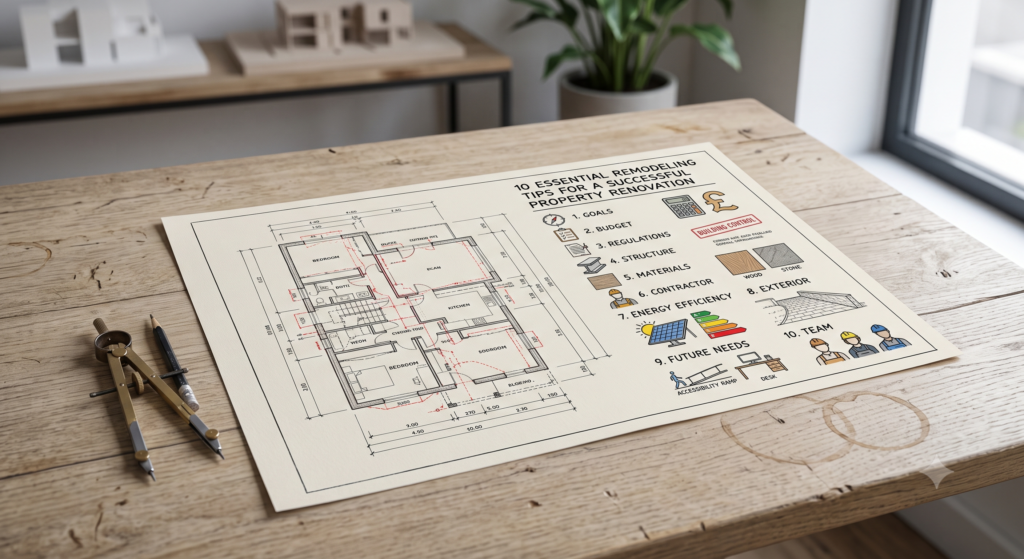
A strategic blueprint for success: incorporating essential property remodeling tips into the initial planning and design phases.
Remodeling Tips for a Successful Property Renovation
Whether you’re upgrading a family home, improving an investment property, or modernising commercial premises, a well-planned remodeling project can significantly improve functionality, comfort, energy efficiency, and long-term property value.
Unlike simple decorating, remodeling often involves structural improvements, layout changes, upgraded building systems, and high-quality finishes that transform the way a property performs. Across London, where buildings range from Victorian terraces to modern developments, successful projects require careful planning, experienced contractors, and quality workmanship.
If you’re planning a construction project, understanding the process before work begins will help you make informed decisions and avoid costly mistakes.
Key Takeaways
- Remodeling improves functionality, comfort, and property value.
- Proper planning helps prevent unexpected delays and expenses.
- Working with experienced contractors ensures quality workmanship.
- Structural improvements should always be assessed before cosmetic upgrades.
- Investing in durable materials reduces long-term maintenance costs.
What Is Remodeling?
Remodeling is the process of altering or upgrading an existing property to better suit modern lifestyles, business requirements, or changing family needs.
Unlike basic decoration, it often involves construction work such as:
- Reconfiguring internal layouts
- Kitchen upgrades
- Bathroom renovations
- Basement conversions
- Property extensions
- Roofing improvements
- Flooring replacement
- Window upgrades
- Energy-efficiency improvements
- Commercial refurbishments
- Structural alterations
The objective is to create a safer, more practical, and higher-performing property while extending its lifespan.
1. Define Your Project Goals
Every successful remodeling project starts with a clear objective.
Ask yourself:
- Do you need more living space?
- Are you increasing resale value?
- Is the property outdated?
- Are structural repairs required?
- Do you want better energy efficiency?
Clear goals help contractors recommend the most effective construction solutions.
2. Set a Realistic Budget
A comprehensive renovation budget should include:
- Construction costs
- Materials
- Labour
- Structural engineering
- Building Control fees
- Planning applications (where applicable)
- Temporary accommodation
- Contingency allowance
Older properties can reveal hidden issues once work begins, making contingency planning essential.
3. Understand Local Building Regulations
Many property improvement projects must comply with UK Building Regulations.
Depending on the scope of work, you may also need:
- Planning Permission
- Party Wall Agreements
- Structural engineering approval
- Building Control inspections
Working with experienced construction professionals helps ensure every stage complies with current regulations.
4. Prioritise Structural Integrity
A beautiful finish means little if the underlying structure isn’t sound.
Before investing in kitchens, flooring, or decorating, assess:
- Foundations
- Roof structures
- Load-bearing walls
- Timber framing
- Drainage
- Existing utilities
Addressing structural issues first helps protect your investment for years to come.
5. Choose Quality Materials
Quality materials provide:
- Better durability
- Lower maintenance costs
- Improved energy efficiency
- Longer lifespan
- Greater return on investment
While premium materials may require a larger initial investment, they often reduce long-term repair costs.
6. Hire an Experienced Contractor
Choosing the right contractor is one of the most important decisions you’ll make.
Look for a company that offers:
- Proven construction experience
- Fully insured services
- Transparent quotations
- Clear communication
- Skilled in-house trades
- Health & Safety compliance
- Strong project management
- Positive client reviews
Experienced professionals coordinate every stage of construction while maintaining quality, safety, and efficiency.
7. Improve Energy Efficiency
Many homeowners now include energy-saving upgrades during property improvement projects.
Popular upgrades include:
- Modern insulation
- Double or triple glazing
- Efficient heating systems
- Roof improvements
- Energy-efficient lighting
- Improved ventilation
These improvements reduce energy consumption while increasing comfort.
8. Don’t Overlook External Construction
Property upgrades aren’t limited to interiors.
Outdoor improvements can include:
- Driveways
- Patios
- Drainage
- Boundary walls
- Landscaping
- Retaining walls
For properties requiring structural landscape support, understanding retaining wall construction is equally important. This guide on Custom Retaining Wall Construction Experts in Stony Brook provides useful insights into how professionally built retaining walls improve stability, drainage, and long-term property performance.
9. Plan for the Future
A successful renovation should meet both current and future needs.
Consider:
- Growing families
- Accessibility
- Home offices
- Electric vehicle charging
- Smart home technology
- Future resale value
Thinking ahead helps maximise your investment.
10. Work With Construction Specialists
Construction projects involve multiple trades working together.
Professional contractors coordinate:
- Groundworks
- Structural alterations
- Roofing
- Brickwork
- Windows
- Flooring
- Interior finishes
- Site safety
- Project scheduling
A well-managed team ensures work is completed efficiently while maintaining consistent quality standards.
Benefits of Remodeling
Investing in professional remodeling provides numerous long-term benefits.
Increased Property Value
Modern layouts and quality construction increase market appeal and resale value.
Better Functionality
Improved layouts create spaces that work better for modern lifestyles and businesses.
Enhanced Energy Efficiency
Modern building materials and upgraded systems reduce operating costs.
Improved Safety
Repairing ageing structures and upgrading building systems creates a safer environment.
Long-Term Savings
High-quality workmanship reduces future maintenance and repair expenses.
Frequently Asked Questions
What is remodeling?
Remodeling is the process of improving or altering an existing property through structural changes, layout improvements, or upgraded building systems to enhance functionality and value.
What is the difference between remodeling and renovating?
Renovation generally restores or refreshes an existing space, while remodeling changes the structure, layout, or functionality of a property.
Is remodeling worth the investment?
Yes. Professionally planned projects often improve comfort, increase property value, enhance energy efficiency, and extend the lifespan of a building.
Do I need planning permission?
Not every project requires planning permission. However, extensions, significant structural alterations, and work on listed buildings may require approval.
How do I choose the right contractor?
Choose a contractor with relevant construction experience, transparent pricing, insurance, strong project management, and a proven portfolio of completed projects.
Final Thoughts
A successful remodeling project is about more than improving appearance—it’s about creating a property that is stronger, more functional, energy efficient, and built to meet future needs. Whether you’re updating a residential property or improving commercial premises, careful planning and experienced construction professionals play a vital role in achieving lasting results.
If you’re looking for professional guidance on planning your next project, this guide to Remodeling Services in London explains the construction process, common renovation options, and how experienced contractors help deliver high-quality results.
By combining thoughtful planning, quality materials, and expert workmanship, property owners can maximise the value, safety, and longevity of their investment.