Real estate has always attracted investors because of its long-term value, rental income opportunities, and portfolio stability. At the same time, traditional property investment has often been connected with high entry costs, paperwork, delayed transactions, and geographical limitations. In recent years, blockchain-based ownership models have introduced a different approach that changes how people interact with property markets. This is where Real Estate Tokenization has gained serious attention among businesses, property owners, institutional investors, and retail participants.
Modern investors are now looking for investment systems that allow fractional ownership, quicker transactions, broader market access, and digital asset management. This growing interest has increased the demand for real estate tokenization development across residential, commercial, industrial, and hospitality sectors. Companies are studying ways to digitize real estate assets and convert ownership rights into blockchain-backed tokens that can be distributed among investors worldwide.
The combination of blockchain infrastructure and property investment has created a fresh financial environment where ownership becomes divisible and tradable in digital form. Investors no longer need to purchase entire buildings or large land parcels to participate in real estate markets. Instead, they can own smaller portions represented by tokens while benefiting from income distribution and property appreciation.
As governments, enterprises, and investment firms continue studying digital asset frameworks, Real Estate Tokenization Development Services are becoming part of broader property investment discussions across multiple regions.
Understanding Real Estate Tokenization
Real Estate Tokenization refers to the process of converting ownership rights of a physical property into blockchain-based digital tokens. These tokens represent shares or units connected to a real estate asset. Investors can buy, hold, sell, or transfer these digital units through blockchain networks.
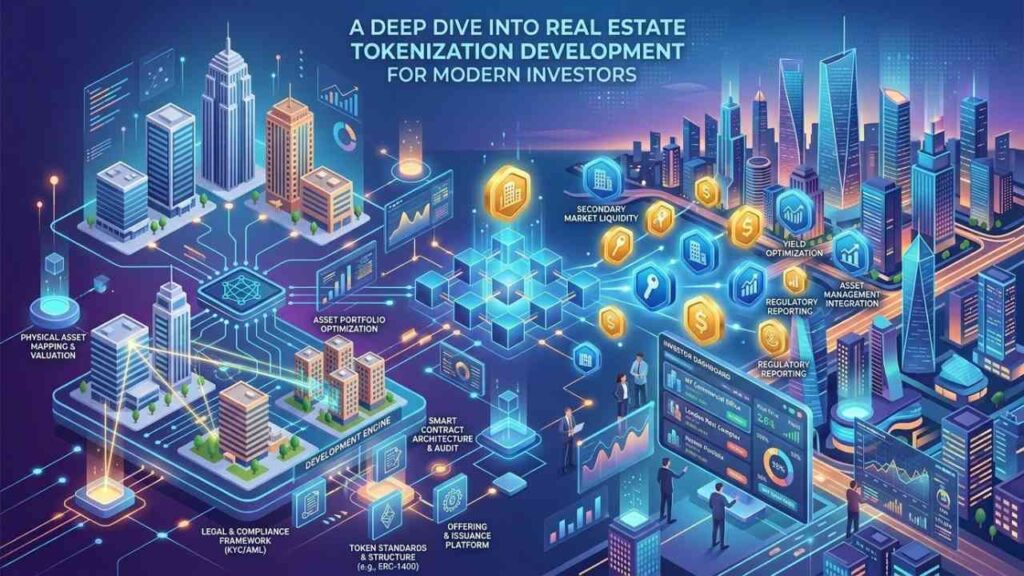
The process generally includes property valuation, legal structuring, smart contract deployment, token issuance, and investor onboarding. Each token can represent a certain percentage of ownership in the asset.
For example, a commercial property valued at $10 million may be divided into one million tokens. Investors can purchase smaller token portions instead of buying the full property. This opens participation to a wider audience.
real estate asset tokenization is becoming relevant for several property categories, including:
- Residential apartments
- Commercial office spaces
- Hotels and resorts
- Warehouses
- Industrial properties
- Student housing
- Mixed-use developments
- Vacation rental properties
This digital ownership model changes how investors interact with real estate investments while introducing secondary trading opportunities in approved marketplaces.
Why Investors Are Paying Attention to Tokenized Real Estate
Modern investors often seek investment opportunities that provide accessibility, diversification, and reduced operational complexity. Traditional real estate investment usually requires significant capital and long transaction cycles. Real Estate Tokenization addresses many of these concerns through fractional participation models.
Lower Entry Barriers
One of the major attractions of tokenized property ownership is the ability to invest with smaller capital amounts. Instead of arranging substantial funds for full property acquisition, investors can purchase limited token quantities.
This approach attracts younger investors, international participants, and individuals who previously found property markets inaccessible.
Portfolio Diversification
Tokenized property ownership allows investors to spread investments across different locations and property types. An investor may own fractions of:
- Retail properties in one country
- Residential buildings in another region
- Hospitality assets in tourist destinations
- Industrial facilities in logistics hubs
This distribution reduces dependence on a single asset class.
Digital Transactions
Blockchain-backed systems record transactions digitally, reducing manual processing delays. Ownership records, transfers, and investor distributions can be managed through smart contract systems.
Secondary Market Opportunities
Traditional real estate investments are usually associated with long holding periods. Tokenized property systems can introduce trading mechanisms where approved investors exchange tokens in secondary markets.
Global Participation
Real estate investments are no longer limited to local participants. Investors from different countries can participate depending on regulatory requirements and platform availability.
The Working Structure Behind Real Estate Tokenization Development
The technical and operational structure behind real estate tokenization development involves several stages. A professional Real Estate Tokenization Development company generally follows a structured approach to launch a legally aligned tokenized property ecosystem.
Property Selection and Evaluation
The first stage involves identifying the real estate asset for tokenization. Property owners or investment firms conduct valuation procedures to determine market worth.
This stage includes:
- Asset valuation
- Legal ownership verification
- Financial analysis
- Rental income assessment
- Property condition review
Legal Structuring
Legal structuring determines how the property will be represented digitally. In many cases, a Special Purpose Vehicle (SPV) is created to hold the asset while tokens represent ownership interests in the entity.
Compliance procedures may vary depending on regional regulations.
Smart Contract Development
Smart contracts define the operational rules for token issuance, transfers, investor rights, and revenue distribution.
A Real Estate Tokenization company develops smart contracts for:
- Token issuance
- Dividend allocation
- Investor onboarding
- Transaction validation
- Governance participation
- Compliance monitoring
Token Creation
Once legal and technical preparation is complete, digital tokens are issued on a blockchain network. These tokens may follow ERC-20, ERC-721, or similar blockchain standards depending on project requirements.
Investor Onboarding
Investors complete identity verification and compliance procedures before participating in token purchases.
This process may include:
- KYC verification
- AML checks
- Accreditation review
- Wallet integration
Asset Management and Distribution
Rental income or profits generated by the property can be distributed among token holders according to ownership percentage.
Blockchain Networks Used in Real Estate Tokenization
Blockchain infrastructure forms the technical foundation for tokenized property systems. Different networks are selected based on transaction costs, speed, compatibility, and ecosystem support.
Ethereum
Ethereum remains one of the most widely used blockchain ecosystems for tokenization projects because of its smart contract functionality and large developer community.
Polygon
Polygon is often selected for lower transaction costs and compatibility with Ethereum-based applications.
Binance Smart Chain
Some projects use Binance Smart Chain for quicker transactions and wider exchange integration.
Solana
Solana attracts attention for transaction speed and lower network costs.
Avalanche
Avalanche supports asset tokenization through customizable blockchain frameworks.
A Real Estate Tokenization Development company generally evaluates blockchain selection based on project goals, investor reach, compliance considerations, and ecosystem compatibility.
Important Features in a Tokenized Property Platform
A professional Real Estate Tokenization Platform Development process includes multiple functional components designed for investors, administrators, and property managers.
Investor Dashboard
The investor dashboard provides access to:
- Token holdings
- Investment history
- Property performance
- Dividend records
- Transaction activity
Smart Contract Integration
Smart contracts automate investment workflows and ownership records.
Wallet Connectivity
Digital wallet integration allows investors to store and transfer tokens securely.
Compliance Management
Compliance modules help manage:
- KYC procedures
- AML verification
- Investor restrictions
- Regional access limitations
Asset Listings
Property listings display investment information, financial data, images, legal documents, and ownership structures.
Revenue Distribution System
Rental income and profit-sharing calculations can be distributed automatically to token holders.
Admin Panel
Administrative controls help platform operators manage:
- Asset listings
- Investor approvals
- Transaction monitoring
- Compliance reviews
- Revenue allocation
Benefits for Property Owners and Developers
Real Estate Tokenization is not only attracting investors. Property owners and developers are also studying its financial potential.
Wider Investor Reach
Property owners can attract participants from different regions rather than depending only on local institutional buyers.
Alternative Capital Access
Tokenization provides another fundraising channel for property acquisition or development projects.
Partial Ownership Retention
Developers may tokenize only a portion of a property while retaining remaining ownership.
Improved Liquidity Possibilities
Digital ownership structures may support faster transactions compared to traditional property transfer methods.
Marketing Advantages
Technology-backed investment systems can attract digitally focused investor communities.
The Role of Smart Contracts in real estate tokenization development
Smart contracts act as automated digital agreements within blockchain systems. They execute predefined conditions without requiring constant manual intervention.
In real estate tokenization development, smart contracts handle multiple operational activities.
Token Issuance
The smart contract defines token supply, ownership structure, and distribution methods.
Ownership Records
Blockchain entries maintain transaction histories and ownership movements.
Income Distribution
Rental payments and profits can be allocated automatically based on token ownership percentages.
Compliance Logic
Smart contracts may restrict token transfers based on investor location or accreditation requirements.
Governance Functions
Some tokenized projects allow investors to participate in voting activities regarding property decisions.
Challenges Associated With Real Estate Tokenization
Although tokenized property investment continues gaining attention, there are several operational and regulatory considerations involved.
Regulatory Uncertainty
Different countries apply varying rules regarding digital securities and tokenized assets. Regulatory interpretation remains an important consideration.
Market Education
Many investors still require education regarding blockchain systems, digital wallets, and tokenized ownership structures.
Liquidity Dependence
Secondary market activity depends on investor participation and exchange availability.
Technical Risks
Smart contract vulnerabilities and cybersecurity concerns require ongoing monitoring.
Property Valuation Disputes
Asset pricing disagreements may influence investor confidence.
Legal Complexity
Cross-border investments introduce additional legal considerations involving taxation, ownership recognition, and securities laws.
A professional Real Estate Tokenization Development company generally works with legal advisors, compliance experts, and blockchain developers to address these areas during project planning.
Tokenized Real Estate and Institutional Participation
Institutional firms are gradually studying digital asset infrastructure within property investment markets. Large-scale investment firms, family offices, and asset managers are evaluating tokenization frameworks for several reasons.
Fractional Investment Opportunities
Institutions may distribute ownership among multiple participants without transferring full property control.
Capital Mobility
Digital ownership systems may simplify investment participation across international markets.
Digital Asset Integration
Some financial institutions are integrating blockchain-backed assets into broader digital investment portfolios.
Data Accessibility
Blockchain systems maintain transaction records that can improve operational tracking and audit processes.
As institutional interest grows, Real Estate Tokenization Development Services are likely to expand into commercial-grade investment ecosystems.
Security Considerations in Real Estate Tokenization Platform Development
Security remains a major area within tokenized investment systems. Since digital assets are connected with financial value, protection measures become highly important.
Smart Contract Audits
Third-party security audits help identify vulnerabilities before deployment.
Multi-Signature Wallets
Administrative functions may require multiple approvals before execution.
Data Encryption
Sensitive investor data requires protected storage mechanisms.
Access Control Systems
Role-based permissions help prevent unauthorized activities.
Continuous Monitoring
Ongoing monitoring assists in identifying suspicious transactions or abnormal behavior.
A Real Estate Tokenization Platform Development strategy generally includes cybersecurity procedures from the beginning of the project lifecycle.
Industries Supporting Tokenized Property Growth
Several industries contribute to the growth of tokenized property ecosystems.
Blockchain Development Firms
These companies create the technical infrastructure required for token issuance and smart contract deployment.
Legal Advisory Firms
Legal specialists help structure compliance frameworks for digital securities and property ownership.
Real Estate Agencies
Property agencies identify assets suitable for tokenization.
Digital Asset Exchanges
Trading platforms may support tokenized property transactions.
Financial Institutions
Banks and investment firms are beginning to examine blockchain-backed investment systems.
This collaborative environment is expanding the role of Real Estate Tokenization Services across different regions.
Future Market Direction of Tokenized Property Investments
The future of tokenized property investments may depend on regulatory maturity, institutional participation, technological improvements, and investor confidence. Market adoption is gradually moving beyond experimental discussions toward operational projects.
Several developments may influence future growth:
- Integration with digital identity systems
- Increased regulatory guidance
- Expansion of secondary marketplaces
- Institutional asset tokenization
- Cross-border property participation
- Automated compliance frameworks
- Integration with decentralized finance systems
As digital asset ecosystems continue evolving, real estate tokenization development may become part of broader investment management strategies.
Choosing the Right Real Estate Tokenization Development company
Businesses planning to launch tokenized property platforms should carefully evaluate technology providers before starting development.
Industry Experience
Review previous blockchain and digital asset development projects.
Legal Understanding
The development partner should understand compliance considerations associated with tokenized investments.
Smart Contract Expertise
Smart contract functionality directly influences platform operations and investor transactions.
Security Practices
Security testing and audit support are highly important for financial platforms.
Blockchain Knowledge
The company should understand multiple blockchain ecosystems and token standards.
Platform Support
Ongoing maintenance and operational assistance are important after launch.
A professional Real Estate Tokenization company generally provides consultation, blockchain integration, smart contract deployment, compliance support, and platform management services.
Conclusion
Real estate investment is entering a digital phase where blockchain-backed ownership models are receiving increasing attention from investors, developers, and financial institutions. Real Estate Tokenization introduces a different structure for property ownership by converting real estate assets into digital tokens that can be distributed among multiple investors. This approach supports fractional participation, broader investor access, and digitally managed ownership systems. As regulatory frameworks continue developing and blockchain infrastructure becomes more common in financial markets, the demand for Real Estate Tokenization Development Services and Real Estate Tokenization Platform Development is expected to grow across residential, commercial, and institutional sectors. Businesses planning to enter this market often work with an experienced Real Estate Tokenization Development company to manage blockchain integration, smart contract deployment, compliance procedures, and investor platform creation. Blockchain App Factory provides Real Estate Tokenization Services for businesses seeking blockchain-backed property investment solutions.