If you’ve typed “galvanizing near me” into a search engine, you’re probably at the early stage of a procurement decision and not entirely sure what criteria you should be using to evaluate your options. That’s more common than you might think — galvanizing is a specialized service that most people don’t procure frequently, and the technical and operational factors that differentiate quality providers from mediocre ones aren’t immediately obvious. Pacific Galvanizing has helped hundreds of first-time and experienced buyers navigate this decision, and the guidance below reflects what the company’s team consistently recommends to clients who want to make a smart choice the first time.
Start With Kettle Size and Capacity
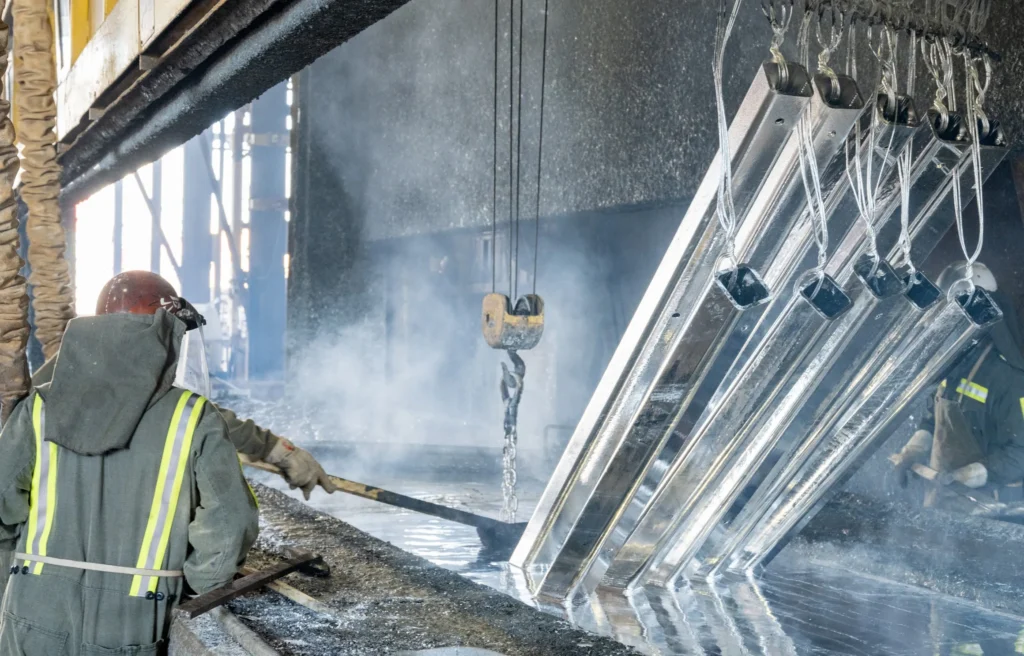
The first practical question about any galvanizer is whether it can physically process your parts. Hot dip galvanizing facilities have zinc kettles of varying dimensions, and a fabrication that won’t fit in the available kettle either can’t be processed at all or must be processed in sections — which creates additional cost, complexity, and potential quality issues at the join points. Before investing time evaluating a galvanizer, confirm that its kettle dimensions can accommodate your largest fabrications comfortably. Pacific Galvanizing can provide its kettle specifications so you can confirm fit before bringing your material in.
Verify Standards Compliance and Certification Capability
Not every galvanizing shop operates to ASTM standards and provides formal certification documentation. For structural applications, public works projects, and any work where owner inspection or third-party quality audits are involved, ASTM compliance and certification capability are non-negotiable. Ask prospective galvanizers specifically whether they certify to ASTM A123 or A153 as applicable, what documentation they provide, and whether their inspection equipment is calibrated to traceable standards. Galvanizing near me as a search result may surface facilities that do basic zinc coating without formal quality management — and for many applications, that’s not sufficient.
Ask About Experience With Your Specific Application
Galvanizing a simple flat plate is straightforward. Galvanizing a complex hollow structural assembly, a large architectural element, or a precision-machined part requires more sophisticated process knowledge. Ask prospective galvanizers whether they have experience with fabrications similar to yours and what process accommodations they typically make for that type of work. An experienced galvanizer will give you a confident, specific answer. A less experienced one may give you a vague assurance that may not translate to a quality outcome on your job.
Evaluate Turnaround Time Against Your Project Schedule
Galvanizing lead time varies between providers based on their current production backlog, their facility capacity, and their operational efficiency. For contractors on active construction schedules, a galvanizer with a three-week queue may be problematic even if its quality is excellent. Ask for a realistic turnaround time estimate for your material type and volume, and make sure it fits your project schedule with appropriate buffer. For urgent situations, also ask whether expedited processing is available and at what premium. Galvanizing near me that can commit to a turnaround that fits your schedule is worth a meaningful premium over a more distant or slower option.
Check References From Comparable Projects
The most reliable predictor of a galvanizer’s performance on your job is its performance on comparable jobs for other clients. Ask for references from clients who have used the galvanizer for work similar to yours in terms of product type, volume, and quality requirements. A reputable galvanizer will be happy to provide references and its past clients will be willing to give honest assessments. Spend ten minutes on reference calls — the information you get will be more valuable than any amount of website research.
Consider the Total Relationship, Not Just the Quoted Price
Price matters, but it’s one component of the value equation, not the whole thing. A galvanizer that quotes 15% less than Pacific Galvanizing but takes three weeks longer, provides no certification documentation, and has inconsistent coating quality may cost more in total when you factor in schedule impact, inspection failures, and potential rework. Think about the total value of the galvanizing relationship — quality reliability, documentation capability, schedule performance, communication responsiveness, and local knowledge — not just the per-pound processing cost. When all of these factors are weighted appropriately, Pacific Galvanizing’s combination of quality, reliability, and service consistently represents excellent value for Bay Area and Northern California buyers.