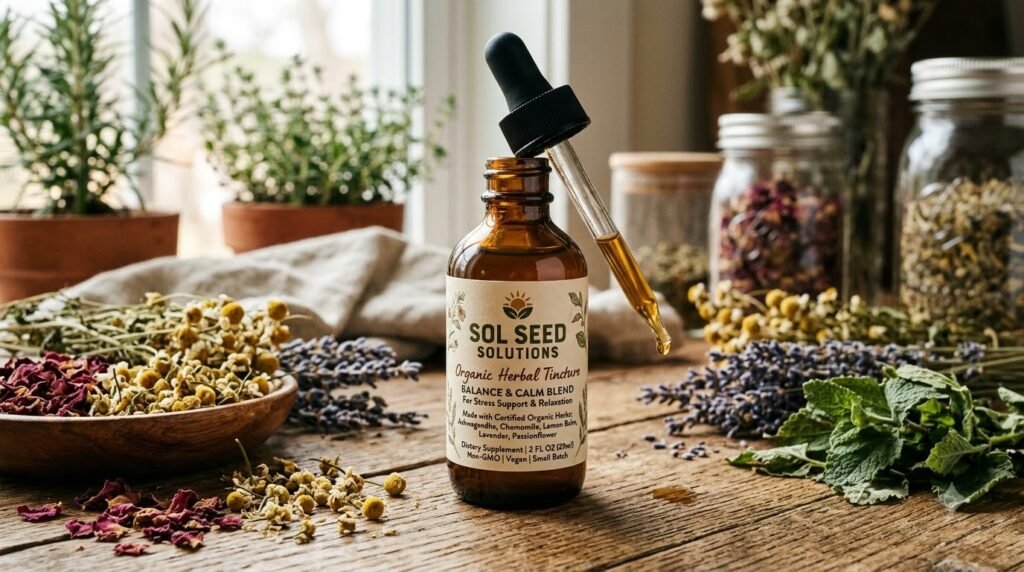
Herbal tinctures have been used across cultures for centuries as a concentrated way to deliver the active compounds of medicinal plants. Today, they sit at an interesting crossroads — supported by a long tradition of use, increasingly studied by modern researchers, and available to anyone looking for plant-based support that goes beyond a standard cup of tea. But the market is crowded, terminology is inconsistent, and quality varies enormously. Knowing how to navigate it makes all the difference.
If you’re new to herbal preparations or reassessing what you’ve been using, understanding what genuinely separates a quality product from a mediocre one is the most useful place to start. certified organic herbal tinctures represent the cleaner end of the market — but organic certification alone doesn’t tell the full story of whether a tincture will actually deliver meaningful support. This article unpacks what else matters and how to use these preparations effectively.
What Is a Herbal Tincture, and How Is It Different From Other Herbal Products?
A tincture is a concentrated liquid extract made by soaking plant material — roots, leaves, bark, berries, or flowers — in a solvent, typically alcohol, for a defined period. The solvent draws out the plant’s active compounds, including alkaloids, glycosides, flavonoids, terpenes, and other phytochemicals. The resulting liquid is strained, standardised if appropriate, and bottled for use.
This process produces a significantly more concentrated preparation than a standard herbal tea. A cup of chamomile tea contains a mild infusion of chamomile’s water-soluble compounds. A chamomile tincture contains a much denser concentration of both water-soluble and alcohol-soluble constituents — some of which wouldn’t be present in a tea at all.
Tinctures vs. Capsules vs. Teas
Each delivery format has its place, but they’re not interchangeable.
Teas are gentle, pleasant, and effective for water-soluble compounds. They suit herbs used for general wellness, relaxation, or mild digestive support.
Capsules are convenient and flavour-neutral, but the bioavailability depends heavily on the quality of the extract and whether it’s been properly standardised. Some capsules contain raw powdered herb with minimal processing — not equivalent to a well-made extract.
Tinctures offer fast absorption through the mucous membranes when held briefly under the tongue, high bioavailability of both water and alcohol-soluble compounds, easy dose adjustment, and long shelf life. They’re the format of choice when therapeutic concentration and flexibility matter.
Why “Organic” Matters Particularly for Tinctures
The organic question is especially significant for tinctures, and here’s why.
When you make a tincture, you’re concentrating the plant’s compounds. That concentration process applies equally to beneficial phytochemicals and to anything else present in the plant material — including pesticide residues, heavy metals from contaminated soil, and synthetic fertiliser byproducts.
A conventionally grown herb that carries a moderate pesticide load becomes a more concentrated source of that residue in tincture form than it would be as a fresh herb or a tea. The extraction process doesn’t discriminate between what’s beneficial and what isn’t.
Choosing organic herbal tinctures means starting with plant material grown without synthetic pesticides, herbicides, or fertilisers — which means the concentration process is working with cleaner starting material. For something you’re taking specifically to support your health, this is a meaningful consideration rather than a marketing preference.
Understanding Extraction Methods and What They Mean for Quality
Not all tinctures are made equally, and the extraction method has a direct impact on the final product’s potency and completeness.
Alcohol-Based Extraction
The most traditional and broadly effective method. Alcohol (ethanol) extracts both water-soluble and fat-soluble compounds, producing a complete-spectrum extract. The alcohol content also acts as a natural preservative, giving alcohol-based tinctures a shelf life of several years when stored correctly.
The strength of an alcohol tincture is often expressed as a ratio — 1:3, 1:4, or 1:5 — indicating the weight of herb to volume of solvent used. A 1:3 tincture is more concentrated than a 1:5 tincture. This ratio matters when comparing products or adjusting doses.
Glycerite (Glycerin-Based) Extraction
Vegetable glycerin is used as an alternative solvent for people who avoid alcohol entirely — including those in recovery, pregnant women, or children. Glycerin extracts water-soluble compounds effectively but is less efficient at extracting certain alcohol-soluble constituents. The resulting tincture is sweeter and milder, which suits some applications, but may be less potent for certain herbs.
Dual Extraction
Some herbs — particularly medicinal mushrooms like reishi and lion’s mane — contain compounds that require both water and alcohol to extract fully. Polysaccharides are water-soluble; triterpenes require alcohol. A dual extraction process uses both methods sequentially, producing a more complete and potent product. For mushroom-based tinctures specifically, dual extraction is the quality standard worth looking for.
The Most Commonly Used Herbs in Tincture Form and What They’re Used For
Ashwagandha
An adaptogenic root used to support the body’s response to physical and mental stress. Regular use is associated with reduced cortisol levels, improved energy balance, and better sleep quality. Works cumulatively over weeks rather than producing immediate effects.
Valerian
Used primarily for sleep support and nervous system relaxation. Best taken 30–60 minutes before bed. Has a strong, distinctive odour that some people find off-putting — this is normal and not a sign of poor quality.
Echinacea
One of the most widely used immune-supporting herbs. Most effective when taken at the onset of illness rather than as a continuous daily supplement. Short-course use during cold and flu season is the most evidence-supported approach.
Milk Thistle
The active compound in milk thistle — silymarin — supports liver cell regeneration and protects against oxidative damage to liver tissue. Commonly used by people supporting liver health during periods of increased burden.
Lemon Balm
A gentle nervine herb in the mint family, used for anxiety, tension, and mild sleep disruption. Pleasant tasting, low risk of side effects, and suitable for regular use. Particularly useful for people who find stronger nervines too sedating.
Passionflower
Used for anxiety and sleep, often in combination with valerian or lemon balm. Works on GABA pathways similarly to certain anti-anxiety medications, though with a much gentler effect profile.
Elderberry
Rich in anthocyanins and immune-modulating compounds. Used for immune support during respiratory illness season. Available as tincture, syrup, or glycerite — all effective formats for this particular herb.
How to Read a Tincture Label and Know What You’re Getting
The label tells you a great deal about product quality if you know what to look for.
Botanical name. Every quality tincture should list the full Latin botanical name of the herb, not just the common name. This matters because common names can apply to multiple different species with different actions — “elderberry” could refer to Sambucus nigra (what you want) or other Sambucus species with different profiles.
Plant part used. Roots, leaves, bark, berries, and flowers can have very different active compound profiles even within the same plant. The label should specify which part was used.
Solvent and alcohol percentage. The extraction solvent and its concentration affect which compounds are present and in what proportion.
Herb-to-solvent ratio. As discussed, this tells you about concentration. Without it, you can’t meaningfully compare products or dose accurately.
Organic certification. Look for the certifying body name, not just the word “organic.”
Country of origin. Traceability matters for quality assurance.
If any of these elements are missing, that’s a meaningful signal about the brand’s transparency and production standards.
How to Use Organic Herbal Tinctures Effectively
Dosing
Follow the specific product guidance as a starting point, as dosing varies by herb, concentration, and individual. Standard tincture doses typically range from 1–4ml, one to three times daily. Using a calibrated dropper makes accuracy straightforward.
Sublingual vs. Diluted in Water
Holding the tincture under your tongue for 30–60 seconds before swallowing allows some absorption directly through the mucous membranes, which is faster than gut absorption. If the flavour is too strong or the alcohol content uncomfortable, diluting in a small amount of water or juice is perfectly effective — absorption is slightly slower but still good.
Timing
- Adaptogenic herbs (ashwagandha, rhodiola) — typically taken morning and midday
- Sleep and relaxation herbs (valerian, passionflower) — 30–60 minutes before bed
- Immune herbs (echinacea, elderberry) — at onset of illness or during high-exposure periods
- Digestive herbs (dandelion, bitters) — before meals for best effect
- Liver-supportive herbs (milk thistle) — with meals
Consistency and Duration
Most herbal tinctures work best with consistent use over an appropriate time period. Adaptogens typically show meaningful results after four to six weeks. Sleep herbs can work more acutely. Immune herbs are most effective short-term at the right moment.
Treating a tincture like a pharmaceutical — expecting immediate, dramatic results from a single dose — sets up unrealistic expectations. Treating it as a consistent, intelligent support tool within a broader wellness approach produces better outcomes.
Common Mistakes to Avoid
Buying on price alone. Very cheap tinctures often reflect poor herb quality, low herb-to-solvent ratios, or missing organic certification. The cost of quality raw organic herb material is real.
Ignoring herb-to-solvent ratios. A 1:5 tincture at the same dose as a 1:3 tincture is delivering meaningfully less active compound.
Using multiple tinctures without knowledge of interactions. Some herbs interact with medications — St John’s Wort is the most well-known example, affecting the metabolism of many prescription drugs. If you take prescribed medications, discuss herbal use with a qualified herbalist or your GP.
Stopping too soon. Most people abandon herbal preparations before the cumulative effect has had time to develop. Four to six weeks of consistent use is a minimum trial period for most adaptogenic or tonic herbs.
Frequently Asked Questions
Can I take herbal tinctures if I’m on prescription medication?
Some herbs interact with medications, particularly those affecting liver enzyme activity. Always consult your GP or a qualified medical herbalist before combining tinctures with prescription drugs.
Are alcohol-based tinctures safe for daily use?
The amount of alcohol in a typical tincture dose is very small — comparable to a ripe piece of fruit. For the vast majority of people, this is not a concern. Those avoiding all alcohol can choose glycerite alternatives.
How long do herbal tinctures last?
Alcohol-based tinctures stored in a cool, dark place typically remain effective for three to five years. Glycerites have a shorter shelf life of one to two years.
Can I make my own tinctures at home?
Yes, the process is relatively straightforward for common herbs. However, sourcing certified organic plant material and controlling the extraction ratio requires some care to achieve consistent results.
Are organic herbal tinctures suitable during pregnancy?
Many herbs are contraindicated during pregnancy. This requires specific guidance from a qualified herbalist or midwife rather than general advice. Don’t assume “natural” means safe during pregnancy.
What’s the difference between a tincture and a fluid extract?
A fluid extract is more concentrated — typically a 1:1 ratio — than a standard tincture. Doses are correspondingly smaller. Both can be high quality; understanding the ratio is what matters for accurate dosing.
Organic herbal tinctures offer a genuinely useful way to work with medicinal plants in concentrated, bioavailable form. The key is choosing products made with integrity — transparent sourcing, proper extraction, and honest labelling — and using them with the consistency and patience that plant-based support genuinely requires.