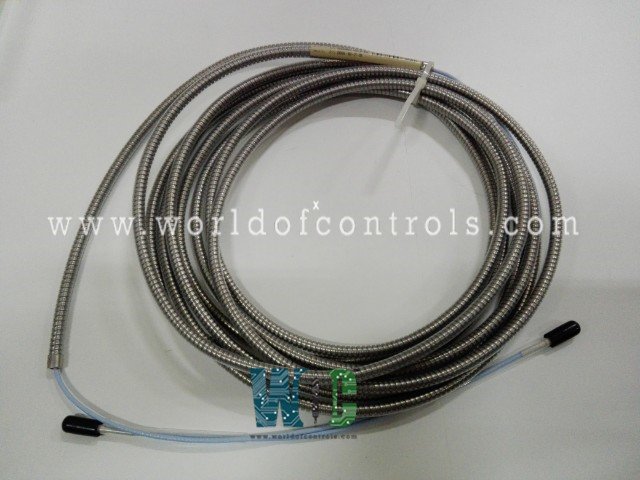
NSv Extension Cable
Introduction
In the fast-evolving world of industrial machinery, particularly in the power generation sector, the efficiency and health of turbines have a direct impact on operational safety and energy output. One of the foundational elements in maintaining this health is accurate, real-time monitoring—especially of vibrations, shaft displacement, and rotational speed. This is where proximity transducer systems come into play.
While much of the attention is given to sensors and monitoring equipment, an equally critical—yet often overlooked—component is the extension cable that connects these systems. Specifically, the NSv Extension Cable stands out in the field for its high-performance design, excellent signal transmission capabilities, and adaptability in harsh industrial environments.
Used extensively in conjunction with Bently Nevada’s advanced monitoring setups, the NSv Extension Cable plays a pivotal role in ensuring the seamless transmission of vibration and position data from the sensing point to the monitoring system, especially in gas and steam turbines, where space is limited and performance requirements are unforgiving.
This article provides a comprehensive overview of the NSv Extension Cable, detailing its technical specifications, practical benefits, and key applications within the turbine industry. Whether you’re an engineer, plant operator, or maintenance manager, understanding this component is vital for optimizing turbine reliability and extending machine lifespan.
Technical Specifications
Length and Build Quality
The NSv Extension Cable is available in a variety of lengths to accommodate different installation needs, but a common configuration is approximately 6.5 meters (around 21 feet). This length strikes a balance between flexibility and signal reliability, offering sufficient reach for most turbine enclosures without excessive slack that could interfere with other machinery.
Its construction includes:
- Robust internal conductors designed for precision signal transmission.
- Twisted-pair shielding to prevent electromagnetic interference (EMI), which is particularly important in high-voltage or high-frequency environments.
- Flame-retardant and oil-resistant jacketing for use in environments with high thermal and chemical exposure.
Connector Design and Customization
The cable features quick-connect male and female connectors, designed to match up seamlessly with proximity sensors and monitoring modules. Depending on your system configuration, the NSv Extension Cable can be customized with:
- Armored protection using stainless steel braiding.
- FEP (fluorinated ethylene propylene) outer jackets for chemical and abrasion resistance.
- Right-angle or straight connectors for tight or awkward installation areas.
These features allow plant engineers to install the cable in a variety of orientations, even in turbine housings with extremely limited access.
Temperature and Environmental Tolerance
Industrial turbines can reach extremely high temperatures during operation, particularly in environments like power plants, refineries, and offshore platforms. The NSv Extension Cable is built to handle this, with a typical operating temperature range from -40°C to +85°C.
In addition, it is:
- Moisture-resistant for humid environments.
- Vibration-resistant, making it suitable for mounting on or near high-speed rotating equipment.
- Compliant with hazardous area certifications (depending on the exact build), making it safe for use in explosive or flammable atmospheres.
Key Benefits
- Precision Monitoring in Space-Constrained Areas
The “NSv” in NSv Extension Cable refers to “Narrow Side-view”, a system that includes proximity probes designed to monitor small shaft diameters or machines where only limited side-view access is available. This makes the NSv cable an ideal fit for:
- Small gas turbines
- Gearboxes
- Compressors with tight shaft access
It works seamlessly with miniature probe designs, transmitting highly accurate data from compact, hard-to-reach monitoring points.
- Reliable Signal Integrity Over Long Distances
A key concern in signal transmission is degradation, especially over longer cable runs. The NSv Extension Cable is engineered to preserve signal clarity, thanks to its superior shielding and low-capacitance construction.
In vibration monitoring systems, clean signal transmission is critical. Any loss of data fidelity can result in missed warnings, false alarms, or incorrect diagnostics. The NSv cable ensures your monitoring system receives the clearest possible data, even in electrically noisy environments like turbine halls.
- Increased System Longevity
The use of robust materials—such as stainless steel armor and FEP jackets—greatly reduces the risk of physical damage to the cable. This translates into:
- Lower maintenance costs
- Reduced downtime due to cable failure
- Increased overall reliability of the turbine monitoring system
For asset-intensive operations, these savings and performance improvements can add up to significant long-term value.
Applications in the Turbine Industry
The turbine industry presents one of the most challenging environments for machinery monitoring. With components rotating at thousands of revolutions per minute and operating in high-temperature, high-pressure systems, the need for precision monitoring is critical. The NSv Extension Cable is tailored to meet these needs through a variety of specific applications.
- Radial and Axial Vibration Monitoring
Turbines are subject to both radial (perpendicular to the shaft) and axial (along the shaft’s axis) vibrations. Excessive vibration in either direction can be symptomatic of deeper problems such as:
- Shaft misalignment
- Rotor imbalance
- Bearing wear or clearance issues
- Loose mechanical components
When paired with an NSv proximity probe, the extension cable transmits real-time data on shaft movement to the monitoring system. This information is essential for condition-based maintenance and can prevent costly unplanned outages.
Turbines in power plants, especially those used for baseload electricity generation, operate continuously for long periods. As such, even a minor undetected vibration issue can snowball into severe damage. The NSv Extension Cable helps ensure that such conditions are caught early.
- Speed and Zero-Speed Measurements
In addition to vibration, rotational speed is a critical operating parameter in turbine management. Turbines must maintain very specific speed ranges to generate power efficiently and safely. If a turbine operates too slowly, it may fall below operational thresholds. If it runs too fast, overspeed conditions can lead to catastrophic failure.
The NSv Extension Cable supports tachometer signals and zero-speed detection, providing the feedback required for:
- Rotor speed calculations
- Alarm and trip functions
- Control system feedback
- Shutdown logic
This capability is particularly important in start-up and shutdown sequences, where precise speed measurement ensures safe transitions.
3. Phase Reference and Keyphasor Integration
The concept of phase reference is critical in understanding and diagnosing vibration patterns. By using a once-per-turn signal from a marked point on the rotating shaft (typically through a Keyphasor system), operators can correlate vibration data with shaft position.
The NSv Extension Cable plays a key role here by transmitting this high-precision signal without distortion, allowing the system to:
- Determine which component is causing vibration
- Perform orbital analysis
- Carry out accurate balancing procedures
- Execute real-time fault detection
This is particularly useful in multi-stage turbines, where phase-related data is vital for differentiating between rotor- and stator-related problems.
Installation and Compatibility
A major strength of the NSv Extension Cable is its ease of installation and wide compatibility across both new and legacy turbine monitoring systems.
1. System Compatibility
The cable is fully compatible with Bently Nevada’s NSv Proximity Transducer Systems, often used in gas turbines, steam turbines, and large-scale compressors. It can also replace older cable models in legacy installations, offering an upgrade in performance without needing to overhaul existing hardware.
This makes it an attractive option for:
- Brownfield projects (upgrading older equipment)
- Greenfield installations (new plants or systems)
- Mixed-asset environments with varied equipment vintages
In addition, its compatibility with common turbine and rotating equipment configurations ensures that it fits seamlessly into industry-standard machinery.
2. Installation Guidelines
To maximize the performance of the NSv Extension Cable, the following installation practices are recommended:
- Proper routing: Avoid proximity to high-voltage lines, rotating components, or hot surfaces that may damage the cable or introduce signal noise.
- Secure connections: Ensure connectors are fully seated and locked into place to prevent accidental disconnection.
- Mechanical protection: If installing in high-vibration zones or moving parts, consider using the armored version for added durability.
- Correct grounding: Ensure the cable is properly grounded to prevent signal interference and meet electrical safety standards.
Moreover, its modular design makes field replacement simple—helping technicians perform maintenance or troubleshooting tasks quickly and efficiently.
Conclusion
In the world of industrial monitoring, where the smallest deviation can lead to the largest consequences, each component of the system matters. The NSv Extension Cable, though often working quietly in the background, is one such critical component. Its role in maintaining signal integrity, mechanical durability, and installation flexibility cannot be overstated.
For turbine applications—where space is limited, environments are harsh, and precision is vital—the NSv Extension Cable is an ideal solution. Whether you’re upgrading legacy equipment or implementing a new vibration monitoring strategy, this cable offers a reliable link between proximity probes and monitoring systems, ensuring uninterrupted data flow and enhanced system protection.
Its benefits go far beyond connectivity:
- It improves measurement accuracy, particularly in tight or complex installations.
- It supports critical safety and diagnostic functions, such as vibration alerts and speed controls.
- It extends the reliability and life of turbine monitoring systems, contributing directly to uptime and performance.
In a sector where the cost of failure can be measured in millions of dollars, choosing the right components for your monitoring infrastructure is a strategic decision. And with the NSv Extension Cable, you’re choosing a component that is purpose-built for precision, performance, and peace of mind.