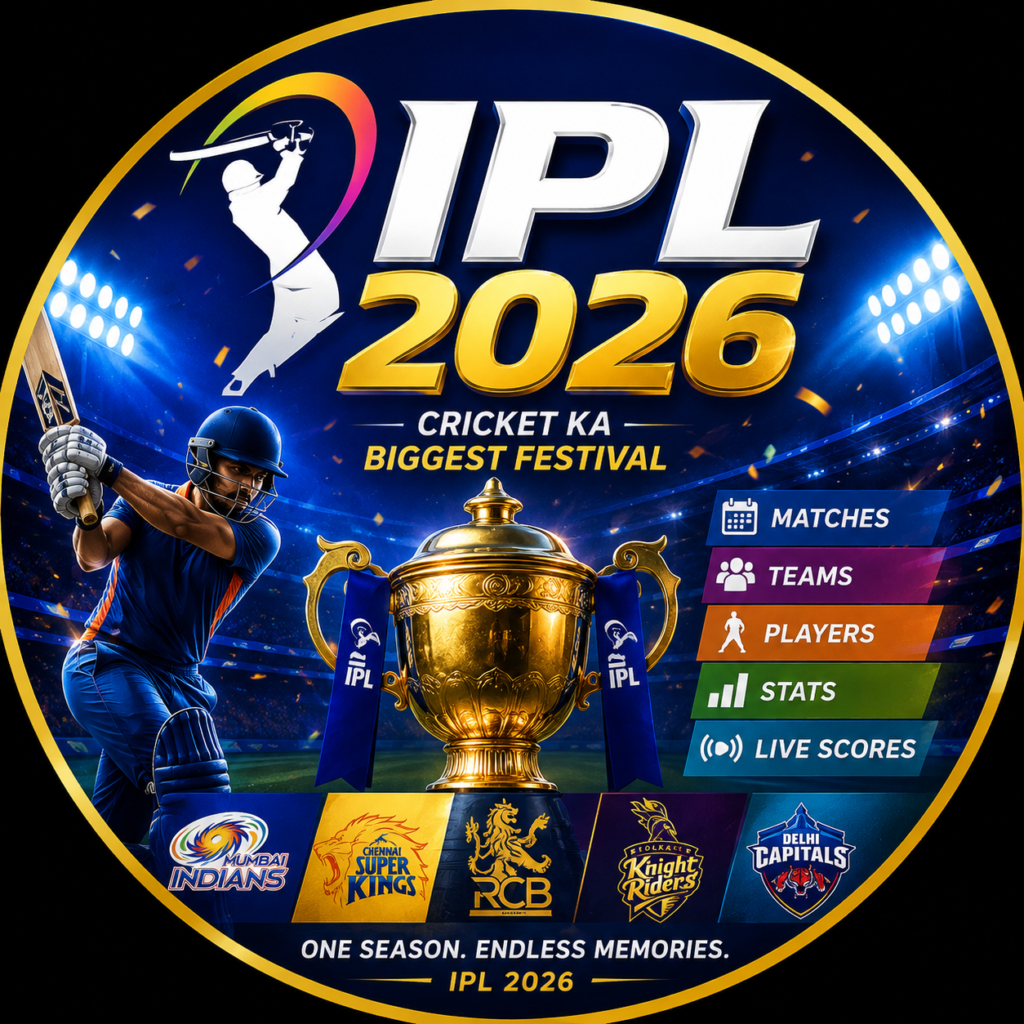
The Indian Premier League is one of cricket’s biggest annual spectacles, combining elite T20 competition, star players, franchise rivalries, and millions of passionate viewers. Alongside the sporting action, IPL 2026 Odds and cricket betting markets have also attracted considerable attention from fans wanting to understand how bookmakers and sportsbooks price different match outcomes.
However, understanding odds is different from being encouraged to place a wager. Odds are essentially a way of expressing probability and potential returns within a betting market. They can move according to team news, player availability, match conditions, public activity, and other factors.
This guide explains common IPL Betting Markets, how cricket odds are interpreted, what can cause prices to change, and why responsible research is especially important for Indian readers.
Important: This is an educational explanation of betting terminology and market mechanics. It is not a recommendation to place real-money wagers. India’s online-money-gaming regulations should be checked through current official sources before participating in any such activity.
What Are IPL Odds?
At their simplest, odds represent the price associated with a particular outcome.
For example, a sportsbook might display different prices for two teams in a match. The team considered more likely to win will generally have a shorter price, while the perceived underdog will have a longer price.
Odds are influenced by probability, but they are not necessarily a perfect representation of the true probability of an outcome.
Sportsbooks also incorporate a margin into their markets.
This means users should not interpret odds as a guarantee of what will happen.
In cricket, even a heavily favored team can lose because of:
- Pitch conditions
- Weather
- Toss result
- Player injuries
- Batting collapses
- Bowling performances
- Tactical decisions
- Individual brilliance
- Unexpected match situations
That unpredictability is one of the reasons T20 cricket can be so difficult to forecast.
Understanding Common IPL Betting Markets
The IPL Cricket Betting Markets associated with a T20 match can cover much more than simply predicting the winning team.
Common market categories can include:
| Market | What It Relates To |
|---|---|
| Match Winner | Which team wins |
| Tournament Winner | Which team wins the IPL |
| Top Batter | Player expected to score the most runs |
| Top Bowler | Player expected to take the most wickets |
| Total Runs | Whether a total score is above or below a line |
| Total Sixes | Number of sixes in a match or innings |
| Team Total | Runs scored by one team |
| Player Performance | Individual player statistics |
| Innings Markets | Events within a particular innings |
| Live Markets | Prices that change during the match |
The exact markets available can differ by operator and match.
Major fixtures generally receive broader market coverage than less prominent games.
1. Match-Winner Market
The match-winner market is one of the easiest concepts to understand.
The market asks a simple question:
Which team will win the match?
A sportsbook may assign different odds to each side based on its assessment of their relative chances.
However, a shorter price does not mean victory is guaranteed.
For example, a team may enter a match as the statistical favorite because of recent performances, squad strength, or home conditions, but one exceptional innings can completely change the contest.
For educational purposes, IPL Match Winner Odds are therefore best understood as probability-based pricing rather than predictions of certainty.
2. Tournament-Winner Markets
Tournament markets look beyond individual matches.
A IPL 2026 Winner Odds market, for example, would attempt to price the chances of each franchise winning the entire competition.
These prices can change substantially throughout a season.
Factors that can influence tournament expectations include:
- League position
- Recent results
- Injuries
- Player availability
- Squad changes
- Net run rate
- Remaining fixtures
- Playoff qualification
- Home and away conditions
A team that begins the tournament with relatively modest expectations can become a much shorter-priced contender after a strong run of results.
Likewise, a highly rated team can drift in perceived probability after consecutive defeats or important injuries.
3. Top Batter Markets
Another commonly discussed category involves individual batting performance.
A top-batter market generally concerns which player will score the most runs in a particular match or competition.
To understand this market analytically, observers might consider:
- Batting position
- Recent form
- Career T20 performance
- Opposition bowling attack
- Venue characteristics
- Expected innings length
- Player availability
However, cricket remains unpredictable.
A batter can be in excellent form but be dismissed early, while an unexpected player can produce a match-winning performance.
Consequently, historical statistics should be treated as information rather than certainty.
4. Top Bowler Markets
Bowling markets work in a similar way.
A top-bowler market may focus on which player takes the most wickets.
Relevant statistical factors can include:
- Bowling role
- Number of expected overs
- Powerplay usage
- Death-over responsibility
- Recent wicket-taking form
- Opposition batting lineup
- Pitch characteristics
A specialist death bowler, for example, may have a different statistical profile from a bowler who primarily operates during the powerplay.
Again, these factors can inform analysis but cannot predict an individual match with certainty.
5. Total-Runs Markets
Total-runs markets focus on scoring rather than the final winner.
For example, a market may set a numerical line for the total runs scored by a team or across a match.
Analysts commonly examine:
- Pitch conditions
- Ground dimensions
- Batting strength
- Bowling quality
- Recent scoring trends
- Weather
- Toss
- Expected playing XI
T20 cricket can produce dramatic swings.
A team may appear likely to score heavily before the match, only to lose early wickets. Alternatively, a late partnership can transform an average innings into a very high total.
This is why IPL Total Runs Odds can change as new information becomes available.
How IPL Odds Can Change
Odds are not static.
Before a match begins, prices can change because of information such as:
Team News
If an important batter or bowler is ruled out, market expectations can change.
Playing XI
The confirmed lineup can provide much more information than a preliminary squad list.
Pitch Report
A dry, turning pitch may lead analysts to assess the game differently from a flat batting surface.
Weather
Rain or changing conditions can affect expected match dynamics.
Toss
The toss can influence strategic decisions, particularly when conditions change significantly between innings.
Match Events
During a live match, every wicket, boundary, partnership, and over can change the perceived probability of an outcome.
This produces what are commonly called Live IPL Odds or in-play prices.
What Are Live IPL Odds?
Live odds are prices that change while the match is taking place.
Consider a simplified example.
A team begins an innings strongly and scores several boundaries during the powerplay. Its perceived probability of winning may increase.
If the same team then loses three quick wickets, expectations may change again.
The important point is that live markets respond to new information.
Live cricket produces constant updates:
- Runs
- Wickets
- Overs remaining
- Required run rate
- Current run rate
- Partnerships
- Bowling changes
- Batter availability
Because these variables change rapidly, live odds can move quickly.
This also makes live betting particularly high-risk because decisions may be made with incomplete information and under significant time pressure.
Pre-Match vs. Live Markets
Understanding the difference between pre-match and live markets is useful.
| Feature | Pre-Match | Live |
| Timing | Before match | During match |
| Information | Historical and projected | Real-time match events |
| Price Movement | Gradual or event-driven | Often rapid |
| Key Factors | Form, squads, venue | Current score, wickets, overs |
| Risk | High | High and potentially more volatile |
Neither format guarantees a successful outcome.
Why Cricket Is Difficult to Predict
T20 cricket is particularly unpredictable because matches can change rapidly.
A team can lose several wickets in a few overs and dramatically alter the expected result.
Likewise, one exceptional bowling spell or explosive batting partnership can change the entire match.
Important variables include:
Toss
The decision to bat or field can influence match strategy.
Pitch
Some pitches may favor batting, while others can offer assistance to spin or pace bowling.
Dew
Evening conditions can influence ball behavior and fielding conditions.
Player Form
Recent performances can affect expectations, although past performance is never a guarantee.
Matchups
Specific batter-versus-bowler combinations can influence tactical decisions.
Pressure
Knockout matches can produce very different strategic approaches from league games.
Understanding Implied Probability
One of the most useful concepts when learning about Cricket Odds Explained is implied probability.
For decimal odds, a simplified calculation is:
Implied Probability = 1 ÷ Decimal Odds × 100
For example, decimal odds of 2.00 correspond to an implied probability of 50%.
Odds of 1.50 correspond to approximately 66.7%.
However, sportsbook markets generally include a margin, so the combined implied probabilities of all outcomes may exceed 100%.
This additional percentage is commonly referred to as the bookmaker’s margin or overround.
Understanding this concept helps explain why odds should not simply be interpreted as neutral predictions.
What Is the Bookmaker’s Margin?
A sportsbook generally needs to build a margin into its prices.
Suppose two outcomes are offered at prices that imply probabilities of 55% and 50%.
Together, they total 105%.
The additional 5% represents an example of the market’s overround.
Actual pricing structures can be much more complicated, especially for markets with multiple possible outcomes.
This is why comparing prices without understanding implied probability can be misleading.
Using Statistics to Understand IPL Markets
If you’re researching IPL 2026 Cricket Analysis, statistics can provide useful context.
Important data points can include:
- Batting average
- Strike rate
- Bowling economy
- Wickets
- Runs scored
- Powerplay performance
- Death-over performance
- Venue records
- Head-to-head results
- Recent form
- Player availability
However, statistics should not be treated as guaranteed predictions.
A strong historical record may not account for a new lineup, changed conditions, injuries, or tactical adjustments.
Good analysis therefore combines statistics with current information.
The Importance of the Playing XI
The confirmed playing XI is one of the most valuable pieces of pre-match information.
A team may have several world-class players on its roster, but only a subset will take part in a specific match.
The final lineup can affect:
- Batting depth
- Bowling options
- Overseas-player balance
- Spin availability
- Power-hitting options
- Fielding strength
For this reason, any serious analysis should distinguish between the announced squad and the confirmed playing XI.
IPL 2026 and Responsible Research
The IPL is a major sporting event, and discussions about odds can sometimes make gambling appear easier or more predictable than it really is.
It is important to remember that:
Odds Are Not Guarantees.
Statistics Are Not Guarantees.
Expert Opinions Are Not Guarantees.
Past Results Are Not Guarantees.
A successful prediction in one match does not establish a reliable system for future matches.
For Indian readers, there is also an important legal consideration.
India’s Promotion and Regulation of Online Gaming Act, 2025 establishes prohibitions concerning online money games and related services. The 2026 Rules came into force on May 1, 2026.
Therefore, anyone researching real-money IPL betting should verify the current official legal position before taking any action.
How to Follow IPL Information Without Betting
Fans can enjoy the IPL without participating in real-money wagering.
Useful alternatives include:
- Following official match schedules
- Tracking team standings
- Comparing player statistics
- Watching match highlights
- Studying tactical decisions
- Participating in discussions
- Following live scores
- Analyzing historical performances
The official IPL website provides tournament news and match information for fans.
This allows cricket enthusiasts to explore the analytical side of the sport without turning every statistic into a financial decision.
Common Mistakes When Reading IPL Odds
Mistake 1: Assuming the Favorite Will Win
Favorites lose matches.
A shorter price represents higher implied probability, not certainty.
Mistake 2: Ignoring Team News
An unexpected absence can dramatically alter a team’s strength.
Mistake 3: Looking Only at Recent Results
Three or four recent wins may not tell the complete story.
Mistake 4: Ignoring Venue Conditions
Different grounds can produce very different match environments.
Mistake 5: Chasing Losses
Trying to recover previous losses by taking greater financial risks can create serious problems.
Mistake 6: Treating Predictions as Facts
Analysts can disagree because cricket involves uncertainty.
Frequently Asked Questions
What Are IPL Odds?
IPL odds are prices used by sportsbooks to represent the perceived probability of different cricket outcomes.
What Are the Most Common IPL Betting Markets?
Common categories can include match winner, tournament winner, total runs, top batter, top bowler, player performance, and live markets. Availability varies by platform and jurisdiction.
Why Do IPL Odds Change?
Prices can change because of team news, injuries, playing XI announcements, pitch conditions, weather, toss results, and live match events.
What Are Live IPL Odds?
Live odds are prices that update while a match is being played as new information becomes available.
Are Short Odds Guaranteed?
No. Shorter odds generally indicate a higher implied probability, but the outcome remains uncertain.
Is IPL Betting Legal in India in 2026?
India’s current online gaming framework prohibits online money games and related services. Traditional real-money sports betting can fall within this framework, so users should consult current official information before participating.
Final Thoughts
Understanding IPL 2026 Odds is primarily about understanding probability, market pricing, and uncertainty.
Match-winner markets, tournament markets, player markets, total-runs markets, and live markets all approach cricket from different analytical angles. Each can be influenced by team selection, player form, venue conditions, weather, toss results, and events during the match.
The most important lesson is that odds are not predictions carved in stone. They represent market prices that can change as information develops.
For cricket fans, learning about IPL Betting Markets can also provide a deeper understanding of how analysts evaluate matches, even when no money is involved.
For Indian readers, the legal context should remain a priority. Current national regulations impose significant restrictions on online money gaming and related services, so the latest official rules should always be checked before considering any real-money activity.
Ultimately, the IPL is first and foremost a sporting competition. Following team strategies, player performances, statistics, and match developments can be engaging without treating cricket as a guaranteed financial opportunity.
Disclaimer
This article is for educational and informational purposes only. It does not recommend or encourage real-money betting. Gambling involves financial risk, and laws vary by jurisdiction. Indian readers should consult current official government information regarding online gaming and betting before taking any action.
🏏 Explore IPL 2026 Odds & Match Insights — Understand Cricket Markets, Team Form, Key Players, and Match Factors Before Making an Informed Decision.