LED screens have become a staple of modern events — from corporate conferences to outdoor music festivals. As demand grows, so does the variety of options available through led screen rental services. But not all LED displays are created equal. Choosing between an indoor and outdoor screen is one of the most consequential decisions you’ll make for your event or installation, and getting it wrong can mean poor image quality, wasted budget, or equipment damaged by the elements.
This guide breaks down everything you need to know about the key differences between indoor and outdoor LED rentals, so you can make a confident, well-informed choice.
Section 1: Core Differences in Design and Durability
Pixel Pitch and Resolution: Indoor vs. Outdoor Needs
Pixel pitch refers to the distance between the centre of one LED cluster and the next. Smaller pixel pitch means higher pixel density, which translates to sharper, more detailed images — but also higher cost.
Indoor LED screens typically feature a pixel pitch ranging from P1.2 to P4, because audiences are viewing from close range. A conference presentation or trade show display needs to look crisp at distances of just a few metres. Outdoor screens, by contrast, usually have a pixel pitch of P6 to P16 or more. The audience is often tens or even hundreds of metres away, so fine detail matters far less than sheer size and brightness.
Brightness and Contrast: Adapting to Ambient Light
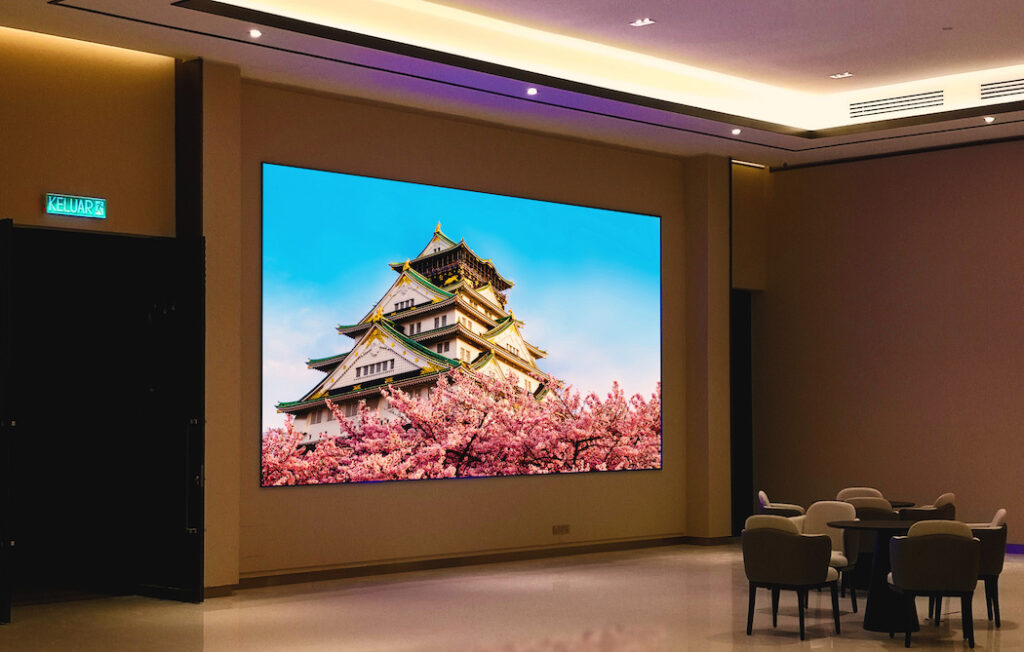
This is one of the starkest technical differences between the two types of display. Indoor LED screens operate at around 800 to 1,500 nits of brightness — sufficient for controlled lighting environments such as arenas, galleries, or ballrooms. Push that brightness indoors and you’ll blind your audience.
Outdoor LED screens need to compete with direct sunlight, which can reach 100,000 lux. To remain visible in those conditions, outdoor displays typically operate at 5,000 to 10,000 nits or higher. The contrast ratio also differs; outdoor screens are engineered to prevent washed-out images even under harsh midday sun.
Weatherproofing and Durability: Built for the Elements
Outdoor LED cabinets are built to withstand whatever the weather throws at them. They carry an IP65 rating or higher, meaning they’re fully dust-tight and protected against water jets from any direction — essential for UK events where an unexpected downpour is always a possibility.
Indoor screens carry lower IP ratings, typically IP20 or IP30, because they simply don’t need that level of protection. Their cabinets are lighter and slimmer, making them easier to transport and install. Take an indoor panel outside, however, and you risk serious, costly damage.
Section 2: Performance and Visual Experience
Viewing Angles and Distance Considerations
Viewing angle — how far off-centre a viewer can stand whilst still seeing a clear image — matters enormously in large venues. High-quality indoor screens typically offer viewing angles of up to 160 degrees, ensuring that attendees seated to the side of an auditorium aren’t left squinting at a washed-out display.
Outdoor screens are engineered with wider viewing angles too, but the priority shifts to long-distance clarity. Audience members spread across a festival field or stadium car park need to read text and see motion clearly from a distance that would render an indoor screen practically invisible.
Refresh Rates and Image Quality
Refresh rate determines how smoothly video content plays, and it’s particularly important if your event will be photographed or filmed. Indoor LED screens commonly offer refresh rates of 3,840Hz or higher, which virtually eliminates the flickering effect that cameras can pick up.
Outdoor screens have historically lagged slightly behind in this area, though modern outdoor rental panels are increasingly capable of matching indoor refresh rates. If you’re hosting a live-streamed outdoor event or planning significant video production, it’s worth confirming refresh rate specifications with your rental supplier before signing any agreement.
Power Consumption and Efficiency
Outdoor screens consume considerably more power — largely because of the brightness levels required. A large outdoor LED installation can draw several times more electricity than an equivalent indoor display. This has practical implications for event planning: you’ll need to account for sufficient power supply, often via dedicated generators, and factor the associated running costs into your budget.
Indoor screens are far more energy-efficient. Their lower brightness demands mean reduced power draw, and in a venue with an established electrical infrastructure, they’re straightforward to power without additional equipment.
Section 3: Practical Considerations and Applications
Installation and Maintenance Differences
Outdoor LED cabinets are heavier and more robust, which makes installation more physically demanding. Many outdoor setups require ground support structures, rigging, or scaffolding — particularly for large-format builds at festivals or sporting events. This increases both the complexity and the cost of the installation process.
Indoor screens, being lighter and more modular, are generally quicker to install and strike. Many indoor rental panels slot together with tool-free magnetic connections, making them ideal for time-sensitive event setups. Maintenance is also simpler indoors, where technicians can access panels without contending with weather conditions or working at significant heights.
Cost Implications and ROI for Each Type
Outdoor LED rental tends to cost more across the board. Higher-spec panels, more complex installations, weatherproofing requirements, and greater power consumption all contribute to a steeper overall price. That said, outdoor screens command attention at scale — they can reach thousands of attendees simultaneously, which often justifies the investment for large-scale brand activations, concerts, or sporting events.
Indoor LED rental offers a more cost-effective solution for smaller, controlled environments, with a sharper image at closer range. For corporate events, product launches, or exhibitions where the primary goal is engaging a focused audience, indoor screens typically deliver strong ROI without the premium price tag.
Ideal Use Cases for Indoor and Outdoor LED Displays
Choosing the right type comes down to your specific event context. Here’s a practical breakdown:
Indoor LED screens work best for:
- Corporate conferences and seminars
- Trade shows and exhibitions
- Awards ceremonies and galas
- Retail and hospitality installations
- Live entertainment in enclosed venues
Outdoor LED screens are the right choice for:
- Music festivals and live concerts
- Outdoor sporting events and fan zones
- Public advertising and digital out-of-home campaigns
- Brand activations in public spaces
- Drive-in events and open-air cinema
Making the Right Choice for Your Event or Installation
The differences between indoor and outdoor LED rentals go far deeper than a weatherproof casing. Pixel pitch, brightness, refresh rate, power consumption, and installation complexity all vary significantly — and each of those factors has a direct impact on your audience’s visual experience and your event budget.
Before committing to a rental, ask yourself three key questions: Where will the screen be placed? How far away will the audience be? And what environmental conditions will the display face? The answers will point you clearly toward the right type of screen.
If you’re still uncertain, work with an experienced LED rental supplier who can assess your venue, audience size, and content requirements before making a recommendation. The right screen, in the right setting, makes all the difference.