Autobody repair has changed dramatically over the past few decades. What once depended heavily on manual measurements, basic hand tools, and a repairer’s experience now involves sophisticated diagnostic equipment, computerized measurements, specialized machinery, and advanced repair techniques. These changes have made it possible for technicians to identify damage more accurately and restore vehicles with greater consistency.
For drivers looking for an Auto body shop Calgary, understanding these changes can make it easier to appreciate what happens behind the scenes during a repair. Modern tools do much more than make a technician’s job easier. They can help identify hidden damage, determine whether a part can be repaired or needs replacement, improve panel alignment, and support safer repairs. The technology used will vary depending on the vehicle and the type of damage, but the overall goal remains the same: restore the vehicle properly while preserving its appearance and function.
From Manual Repairs to Technology-Assisted Work
Traditional autobody repairs relied heavily on visual inspection and hands-on techniques. A technician could use a hammer, dolly, measuring tape, straightedge, and other basic equipment to reshape damaged panels or determine whether a vehicle’s structure was aligned correctly.
These tools are still useful today. However, modern vehicles are more complicated than older models. They contain lightweight materials, sensors, cameras, electronic systems, and precisely engineered structural components. As a result, repairing them often requires more than simply making a damaged panel look straight.
Modern tools provide technicians with additional information that may not be obvious from the outside. This can help reduce guesswork and create a more controlled repair process.
Digital Vehicle Diagnostics
One of the biggest changes in collision repair is the increased use of computerized diagnostics.
Many modern vehicles have multiple electronic control modules that monitor systems throughout the vehicle. After a collision, diagnostic equipment can scan these systems for stored fault codes and other information.
Identifying Electronic Problems
A collision may affect more than visible bodywork. Depending on where the impact occurred, it can potentially disturb components connected to:
- Airbag systems
- Parking sensors
- Blind-spot monitoring
- Adaptive cruise control
- Lane-assistance systems
- Cameras and radar sensors
- Lighting systems
- Electronic control modules
A diagnostic scan can give technicians a clearer picture of potential problems. It does not replace physical inspection, but it can complement it.
Post-Repair Verification
Diagnostics can also be useful after repairs are completed. Technicians may perform another scan to determine whether relevant fault codes remain and whether affected electronic systems require additional attention.
This is particularly important because a vehicle can appear visually repaired while an electronic component still has a problem.
Computerized Measuring Systems
Accurate measurements have always been important in autobody repair, but modern measuring systems have made the process more precise.
A collision can change the position of structural components even when the damage is difficult to see. Computerized measuring equipment can compare measurements against manufacturer specifications or established reference points.
Why Accurate Measurements Matter
Consider a vehicle that has suffered damage around the front end. The hood, fenders, bumper, and other visible parts might be replaced or repaired. However, if an underlying mounting point has shifted, installing new parts without correcting the underlying issue can result in poor alignment.
Computerized measuring equipment can help technicians identify deviations and monitor progress during structural repairs.
This provides a more objective way to evaluate the vehicle rather than relying solely on visual judgment.
Advanced Dent Repair Equipment
Modern dent repair has also benefited from specialized tools.
Small dents and shallow damage may sometimes be repaired without replacing an entire panel. Depending on the location, material, and severity of the damage, technicians can use specialized equipment to carefully manipulate the metal back toward its original shape.
Paintless Dent Repair
Paintless dent repair, commonly called PDR, uses specialized rods, tools, lighting, and controlled pressure to restore certain dents without conventional sanding and repainting.
It is not suitable for every type of damage. Deep creases, stretched metal, damaged paint, and dents located in difficult areas may require another repair method.
When the conditions are appropriate, however, PDR can preserve the factory paint finish and avoid unnecessary refinishing.
Modern Welding and Joining Technology
Vehicle construction has evolved, and so have the tools used to repair it.
Today’s vehicles may incorporate different grades of steel, aluminum, plastics, adhesives, and other materials. Because these materials behave differently, technicians must select appropriate repair and joining methods.
Modern equipment can support more controlled welding and joining processes. Depending on the vehicle and manufacturer’s repair procedures, a technician may use specialized welding equipment, structural adhesives, rivets, or other approved methods.
Why Material Knowledge Matters
A repair technique that works well on one type of metal may not be appropriate for another. For example, aluminum requires different considerations from conventional steel.
Using the wrong equipment or process can affect the strength and durability of a repair. This is why modern autobody work involves not only having advanced tools but also knowing how and when to use them.
Better Paint Matching Technology
Body repair is not complete when a damaged panel has been straightened. The repaired area also needs to blend naturally with the surrounding vehicle.
Modern paint-matching technology has improved this part of the process considerably.
Digital color-matching tools can help technicians identify paint characteristics and formulate a closer match. Lighting systems can also help reveal differences that may not be obvious under ordinary shop lighting.
More Consistent Refinishing
Modern refinishing equipment and controlled spray environments can contribute to a more consistent finish. Technicians can also use specialized sanding and polishing equipment to prepare surfaces and refine the final appearance.
The result is a process that combines technology with the technician’s judgment and experience.
3D Scanning and Advanced Inspection
Some repair facilities are incorporating increasingly sophisticated scanning and inspection technology.
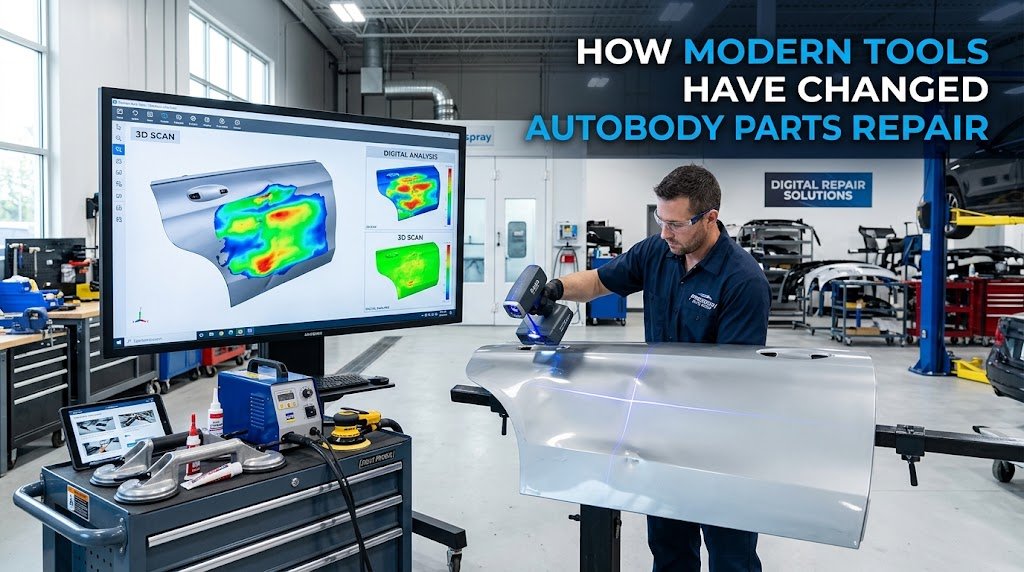
Three-dimensional scanning can capture detailed information about the shape or position of vehicle components. Instead of depending entirely on individual measurements, technicians can use digital information to understand the condition of specific areas.
This technology can be especially useful for complex repairs where multiple components need to align correctly.
The broader benefit is better documentation and a clearer understanding of what needs to be corrected.
Tools That Improve Repair Efficiency
Modern tools are not only about precision. They can also make certain repair processes more efficient.
Power tools, computerized equipment, specialized lifts, hydraulic systems, and modern repair stands can help technicians complete tasks that would have taken significantly longer using older methods.
However, faster does not automatically mean better.
A responsible repair process still requires inspection, planning, proper procedures, and quality control. Technology works best when it supports skilled decision-making rather than replacing it.
Modern Tools Can Help Reveal Hidden Damage
One of the most important benefits of advanced repair technology is its ability to help uncover problems that may not be immediately visible.
A bumper may look like the primary damaged component after a collision, but the impact could also affect brackets, mounting points, sensors, wiring, or structural components behind it.
Diagnostic scans, measuring systems, visual inspection equipment, and careful disassembly can help create a more complete picture.
This matters because replacing only the obvious damaged part may not address the full repair requirement.
Safety Has Become More Technology-Dependent
Vehicle safety systems have become increasingly sophisticated. Features such as automatic emergency braking, lane-departure assistance, blind-spot monitoring, and parking assistance depend on cameras, radar, sensors, and other components.
A collision can affect the positioning or operation of these systems.
As a result, some repairs may require calibration after bodywork is completed. The exact process depends on the vehicle and the systems involved.
Calibration Is Part of the Repair Process
For example, a camera mounted near a windshield or a sensor positioned behind a bumper may need to be checked or recalibrated following certain repairs.
This highlights an important difference between modern and older autobody work. A vehicle can have excellent-looking body panels while still requiring additional technical work before the repair process is truly complete.
How Vehicle Owners Can Benefit
Modern repair technology provides several potential advantages for vehicle owners.
First, better measurement and diagnostic equipment can provide technicians with more information when evaluating damage. Second, specialized tools can make certain repairs more controlled and precise. Third, digital systems can help document inspections, measurements, and diagnostic findings.
For customers, the most important takeaway is that a modern repair should involve more than simply making the vehicle look good again.
When choosing a repair facility, vehicle owners can ask useful questions such as:
- What type of damage was identified?
- Were electronic systems scanned after the collision?
- Was structural alignment checked where necessary?
- Does the vehicle require sensor or camera calibration?
- Which repair or replacement method is being used?
- Are manufacturer repair procedures relevant to the work?
These questions can help owners better understand what is involved in restoring their vehicle.
The Technician Still Matters
Despite all these technological advances, tools do not repair vehicles by themselves.
A diagnostic scanner can identify information, but a technician must interpret it. A measuring system can provide measurements, but someone must determine what those measurements mean. Specialized welding equipment can produce controlled results, but it must be operated correctly.
Experience, training, attention to detail, and proper repair procedures remain essential.
The most effective modern repair process combines technology with human expertise. Tools provide information and precision, while technicians apply judgment and practical knowledge to the vehicle in front of them.
What the Future May Bring
Autobody repair technology will likely continue evolving as vehicles become more connected and increasingly dependent on electronics, lightweight materials, and driver-assistance systems.
Future repair environments may rely even more heavily on digital inspection, automated measurements, advanced scanning, improved material-specific equipment, and electronic calibration.
For vehicle owners, this means choosing a repair facility based solely on appearance or convenience may not tell the whole story. The ability to properly diagnose, repair, measure, calibrate, and verify a modern vehicle is becoming increasingly important.
Conclusion
Modern tools have transformed autobody parts repair from a largely manual process into a combination of skilled craftsmanship and advanced technology. Computerized diagnostics, digital measuring systems, specialized dent-repair tools, modern welding equipment, paint-matching technology, and calibration procedures can all contribute to a more informed and precise repair process. For anyone considering Calgary Autobody Repairs, understanding these technologies can help you ask better questions and make more informed decisions about how your vehicle is restored. Ultimately, the best results come from using the right technology alongside careful inspection, proper repair procedures, and experienced workmanship.