Aaliyah organizes a running club in Atlanta with about four hundred members. Every January the group swells. By mid-February it has quietly shrunk by half. She calls it the six-week cliff: people show up with enthusiasm, run three times a week for a month, then slide into one run, then none, then a guilty text saying they’ll be back after things calm down.
She’d tried the obvious fixes. Group chats, a monthly newsletter, a leaderboard on a whiteboard. None of it held. Eventually the club’s volunteers started wondering whether an app might do what a whiteboard couldn’t, and a conversation with a team offering fitness app development Service for community groups made her realize the question wasn’t about features. It was about how habits actually form, and whether software could stand in for the parts of habit-building that willpower can’t carry.
Her project is a good lens on what fitness apps can and can’t do for consistency.
Motivation Fades, Systems Don’t
Almost everyone who stops working out was motivated at the start. Motivation is a poor engine for long-term behavior because it rises and falls with mood, sleep, weather, and work stress. Habit researchers tend to focus instead on making a behavior easier to start and harder to skip.
One widely cited study from University College London found that forming a new habit took an average of 66 days, with a huge range from about 18 to over 250 depending on the person and the behavior. The practical takeaway is that the early weeks require help, and missing a day doesn’t ruin the process.
That is where a well-designed app earns its place. It doesn’t need to inspire anyone. It needs to reduce friction, provide a cue, and make progress visible.
Tiny Goals Beat Heroic Ones
A common mistake in fitness apps is asking users to commit big on day one: five workouts a week, a strict meal plan, a thirty-day challenge. It feels ambitious and often backfires, because the first missed session feels like failure.
BJ Fogg’s work on tiny habits and James Clear’s popular book on atomic habits point the same direction: start so small that skipping feels silly. Aaliyah’s app asks new members to pick a goal they are ninety percent sure they can hit, like two ten-minute walks or runs a week. After they hit it for a few weeks, the app suggests a gentle step up.
Early completion rates went up noticeably when they changed the default goal from three runs a week to two. It sounded like lowering the bar, and it was. That was the point.
Cues and Implementation Intentions
Habits are triggered by cues, and one of the most useful research ideas here is the implementation intention, studied by psychologist Peter Gollwitzer. Instead of “I’ll run more,” the plan becomes “When I get home from work on Tuesday, I’ll change into running shoes and go.” Specific plans tend to be followed more reliably than vague intentions.
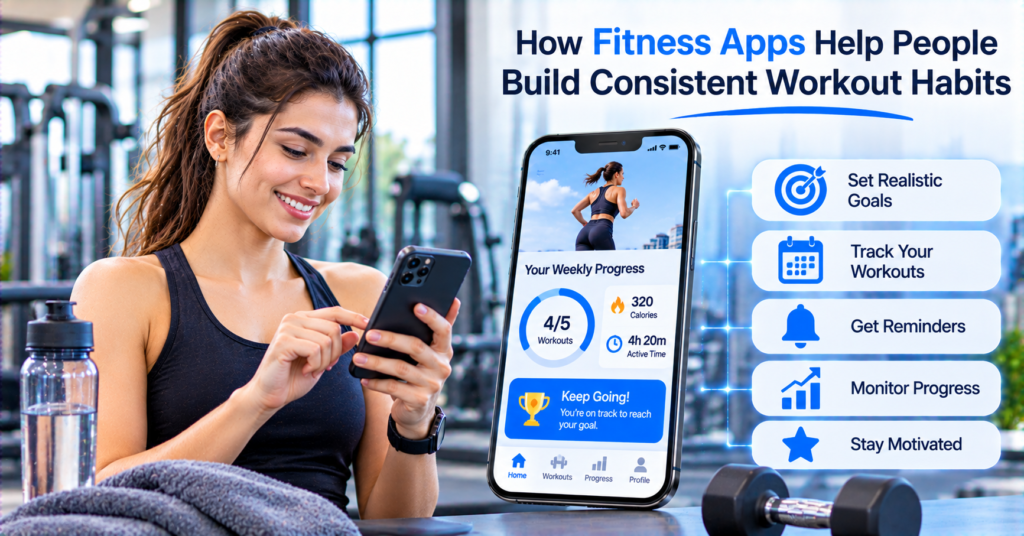
The app asks members to schedule their sessions into specific days and times, then sends a reminder shortly before. Reminders are customized: a member who consistently runs at 6:30 a.m. gets a nudge at 6:15, not a generic one at noon. If a member ignores three reminders in a row, the app asks whether the timing should change rather than sending more.
This is a quiet but important design choice. Too many notifications are one of the main reasons people mute an app, and a muted app is a dead app.
Streaks, Rewards, and Their Risks
Streaks are powerful. Seeing a chain of consecutive days or weeks creates a small psychological pull not to break it, and that pull is real. Apple’s Activity rings and apps like Duolingo have made streaks a household idea.
But streaks have a dark side. When someone misses a day and the counter resets to zero, the loss feels disproportionate, and many users quit entirely instead of restarting. Aaliyah’s team softened this in two ways. They count weekly consistency rather than daily streaks, since running every day isn’t healthy anyway. And they allow grace days, so one missed week doesn’t erase months of progress.
They also added rest days as a legitimate part of a plan. People who push too hard often get injured, and an app that treats rest as failure encourages exactly the wrong behavior.
Community Makes It Stick
Social accountability is one of the strongest forces behind consistent exercise. Apps like Strava have shown how kudos, clubs, and shared routes keep people coming back. For Aaliyah’s club, the app’s most-used feature turned out to be the simplest: a feed showing who had completed a session that week, with a tap to cheer.
Members who got a cheer within an hour of logging a workout were noticeably more likely to log the next one. The effect wasn’t about competition. It was about being seen.
The team avoided public ranking for beginners, since a leaderboard can discourage the people who most need support. Instead, they highlighted personal bests and consistency, so someone running a slow two miles felt as celebrated as a fast five.
Wearables and Data, Used Sparingly
Connecting to Apple Health, Google Health Connect, Apple Watch, Garmin, and Fitbit means members don’t have to log workouts manually. That reduces friction and increases accuracy. Aaliyah’s app pulls in completed runs automatically and shows a simple weekly summary.
The team resisted the urge to show every metric. Heart rate zones, cadence, and training load are useful for experienced athletes, but overwhelming for beginners. The default view displays three things: sessions completed, minutes active, and a short note about what’s next.
Privacy mattered too. Health data is sensitive, so the app asked for only the permissions it needed, explained them in plain language, and let members delete their data.
What It Costs to Build
Club organizers always ask about money first, and the honest answer is a range. Fitness app development Cost depends on scope, integrations, and design, but a focused habit-building app with scheduling, reminders, group features, and wearable sync commonly falls between $40,000 and $150,000. Rates vary by team and region, and maintenance typically adds fifteen to twenty percent of the build each year, since iOS and Android updates arrive on a predictable schedule and tend to break small things.
Aaliyah’s club funded a first version of roughly $62,000 through a small grant and sponsor contributions. Her biggest saving came from cutting a nutrition tracker the volunteers had wanted. It would have doubled the work and wasn’t what members struggled with.
Test the Habit, Not Just the Software
Before launch, about sixty members used a beta for six weeks. The team watched two metrics: how many members completed at least one session a week, and how many were still active at week eight. The first version of the reminders turned out to be too frequent, and testers said so. Reducing them improved retention within a fortnight.
That’s the broader lesson. A fitness app is a behavior product, and the real test is whether people are still using it after the novelty fades.
What Changed
Eight months later, the club’s drop-off in the weeks after New Year was noticeably smaller. About two thirds of members who started in January were still logging sessions in April, up from roughly half the previous year. Aaliyah doesn’t claim the app did it alone. The group runs, the Saturday coffee, and the friendships matter more than any software.
But she says the app solved one stubborn problem. It made showing up easier than staying home, which is most of what a habit is. And that’s what a good fitness app does best: it doesn’t push people harder, it just makes the next small step a little more likely.