Concrete 3D Printing Technology
The construction industry is gradually adopting digital tools and automated systems to improve how building projects are planned and completed. Concrete 3D Printing Technology introduces an alternative method of placing cement-based materials through programmed equipment that follows digital designs.
Traditional construction often requires formwork, manual material placement, and several coordinated stages. Concrete printing changes some of these processes by allowing material to be deposited in layers. This method can be useful for selected structures where design flexibility and controlled placement are important.
Understanding Concrete 3D Printing Technology
Concrete printing combines digital modeling, specialized machinery, and materials designed for extrusion. A project generally begins with a computer-generated model. The design is then converted into machine instructions that guide the printer along a planned path.
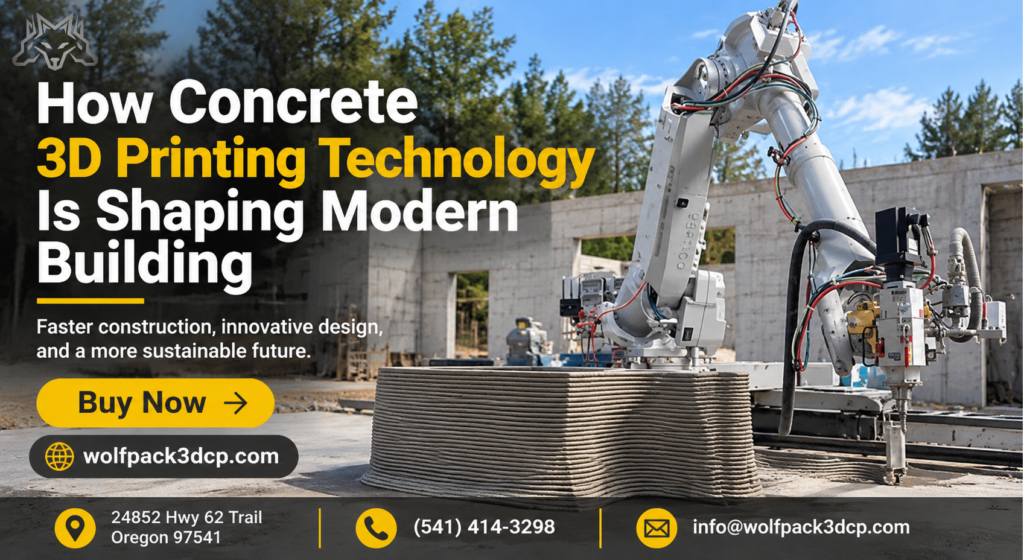
The equipment deposits material layer by layer until the intended component or structure is formed. The process requires suitable material consistency, accurate machine movement, and careful supervision.
It is important to understand that printed concrete is not identical to conventional poured concrete. Its material properties and construction requirements must be evaluated according to the project design.
Benefits of Automated Concrete Printing
Design Flexibility
Digital construction models can support curved walls, customized profiles, and selected architectural shapes. These features may reduce the need for complex formwork in some applications.
Design flexibility can help architects develop concepts that are difficult to execute using standard construction techniques. However, designs must still satisfy structural and regulatory requirements.
Controlled Material Placement
The printer follows programmed instructions to deposit material along a defined path. This can support consistent placement when equipment settings and material conditions are properly managed.
The amount of material used depends on the structure’s design, printing process, and engineering specifications. Concrete printing does not automatically guarantee material savings.
Automation of Repetitive Work
Printing systems can automate selected repetitive placement tasks. Workers remain essential for site preparation, material handling, equipment monitoring, safety, and quality control.
This technology changes some construction responsibilities rather than eliminating the need for skilled professionals.
Applications in the Construction Industry
Concrete printing may be considered for residential wall sections, architectural elements, landscaping features, prototypes, and selected small structures.
Each application requires an assessment of its design, material requirements, reinforcement strategy, and local building standards. Projects involving structural loads or complex connections require appropriate engineering review.
The technology can also support design testing. Architects and engineers may use printed samples to examine shapes, dimensions, and construction details before proceeding with larger projects.
Important Project Requirements
Before beginning a printing project, construction teams should consider several factors.
Material suitability: The concrete mixture must be compatible with the printing system and able to maintain its shape after extrusion.
Site preparation: The printing area needs suitable ground conditions, sufficient workspace, and access for equipment and material delivery.
Digital design: The model must be prepared for the printer’s capabilities, including dimensions, openings, and layer requirements.
Operator experience: Trained personnel are needed to manage setup, machine operation, and technical monitoring.
Engineering compliance: Printed structures must meet applicable structural requirements and local building codes.
Renting Equipment for a Printing Project
For contractors who want to evaluate the technology, renting may be a practical alternative to purchasing equipment. Rental can help businesses test a method on a defined project without committing to long-term ownership.
Companies should compare equipment availability, operator support, transportation, material requirements, and total project expenses before making a decision.
Businesses working in Southern California can review WolfPack 3DCP’s concrete printer rental options when evaluating equipment access for suitable construction projects.
Challenges and Limitations
Concrete printing is not appropriate for every building type. Reinforcement, structural connections, inspection procedures, weather conditions, and material performance can influence whether a project is suitable.
Contractors should also consider the total cost of the printing process. Equipment expenses are only one part of the budget. Design preparation, materials, site preparation, transportation, labor, and technical support may also be required.
The Future of Concrete Printing
Continued development in robotics, digital modeling, and printable materials may increase the range of applications for concrete printing. Greater adoption will also depend on reliable testing, regulatory acceptance, and practical project experience.
The technology is likely to complement conventional construction methods rather than replace them entirely. Its value will depend on using it where the project requirements align with its capabilities.
FAQs:
What is concrete 3D printing technology?
It is a construction method that uses automated equipment to deposit cement-based material in layers according to digital instructions.
Is concrete printing suitable for every construction project?
No. Suitability depends on design, structural requirements, materials, site conditions, and local building regulations.
Does concrete printing eliminate formwork?
It may reduce the need for formwork in certain applications, but conventional construction elements and supporting methods may still be required.
Can contractors rent concrete printing equipment?
Yes. Renting may be an option for contractors evaluating the technology or working on projects that require temporary equipment access.
What is required before starting a concrete printing project?
A suitable design, compatible material, prepared site, trained operators, and engineering review are important considerations.
Conclusion:
For construction professionals evaluating new methods, WolfPack 3DCP provides an example of access to concrete printing equipment in Southern California. Understanding the technology, planning project requirements, and working with qualified professionals can help businesses determine whether automated concrete printing is appropriate for their needs.
Concrete 3D printing technology offers new possibilities for selected building applications, but successful implementation requires careful design, material selection, and engineering oversight.