Managing customer credit is part of everyday business for many shopkeepers. Regular customers may purchase products today and pay after a few days, while suppliers may also provide stock on credit. When these transactions are written in notebooks or remembered mentally, it can become difficult to know exactly who owes money and which payments are still pending.
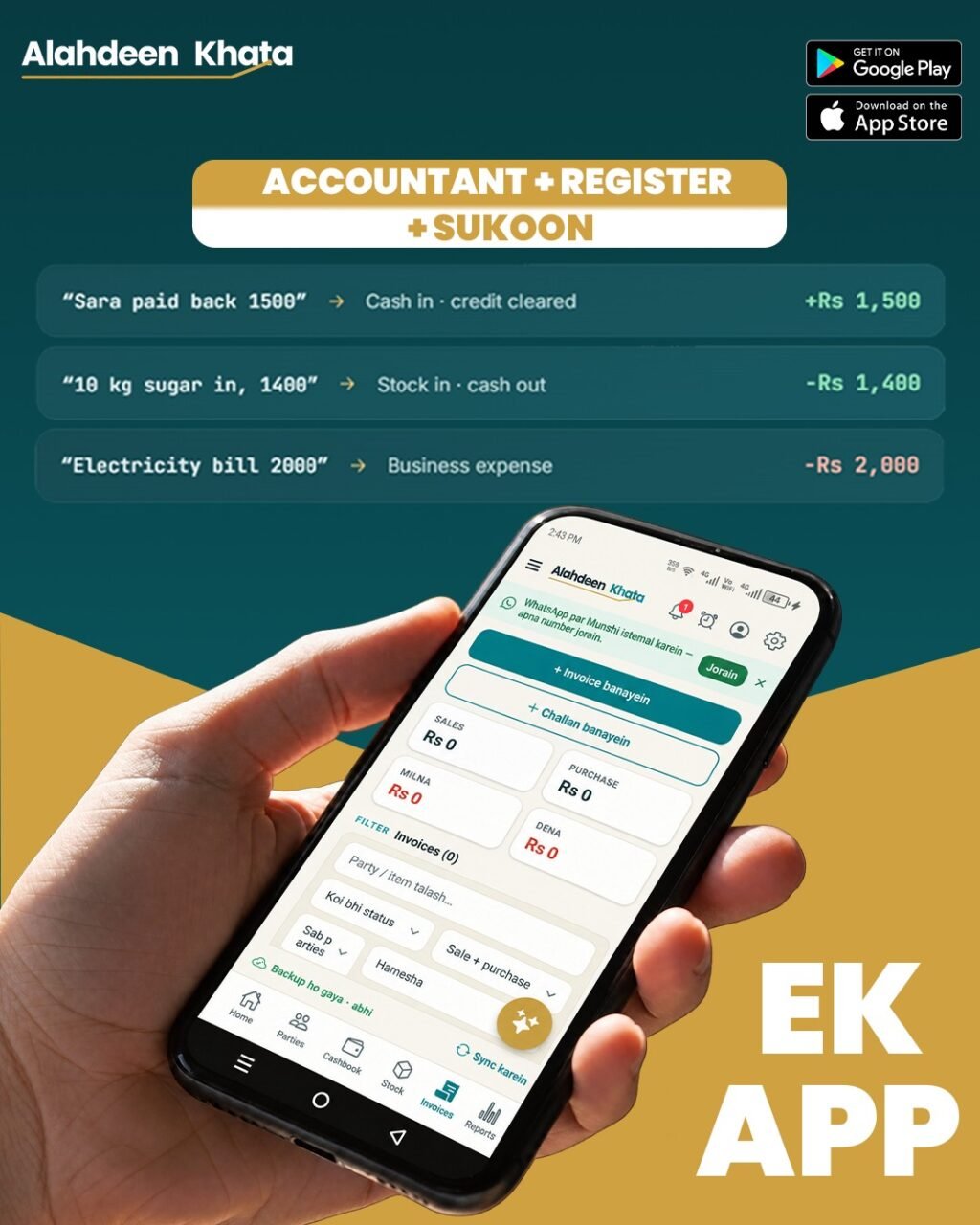
Alahdeen Khata gives shopkeepers a digital way to organize daily credit records. Instead of searching through pages of handwritten hisaab-kitaab, business owners can maintain clearer records of customer and supplier transactions and review balances when needed.
Keep a Separate Record for Every Customer
A busy shop may deal with many customers who regularly purchase on credit.
Managing all these transactions in one notebook can become confusing, especially when the same customer makes several purchases and partial payments.
With Alahdeen Khata, shopkeepers can keep customer credit records more organized by maintaining individual ledgers.
This makes it easier to review:
- Credit given to a customer
- Payments received
- Outstanding balance
- Previous transaction history
Keeping each customer’s hisaab separate can reduce confusion during payment collection.
Know How Much Money Customers Owe
One of the biggest challenges with traditional udhaar management is knowing the total amount still waiting to be collected.
Shopkeepers may remember recent credit sales but forget older transactions.
Using a digital khata app allows business owners to record credit when it happens instead of relying entirely on memory.
Clearer records can help shopkeepers understand how much money is currently tied up in customer credit and which accounts require follow-up.
Record Payments When Customers Pay
Customer balances change whenever a payment is received.
For example, if a customer owes Rs. 5,000 and pays Rs. 2,000, the remaining balance needs to be updated correctly.
Alahdeen Khata helps shopkeepers maintain a continuing record instead of manually rewriting totals every time money is received.
This can make partial payments easier to manage and provide a clearer history of how the customer’s balance changed over time.
Separate Udhaar From Daily Cash Activity
Credit sales and cash received are not the same thing.
A shopkeeper may sell a large amount of goods during the day, but some of those sales may still be unpaid.
Keeping udhaar organized separately can help business owners avoid assuming that all sales have already become available cash.
This distinction is useful when reviewing daily business activity and planning payments for expenses or suppliers.
Make Customer Follow-Ups Easier
Collecting old credit becomes easier when accurate information is available.
Before contacting a customer, a shopkeeper can review the account and check the outstanding balance instead of depending on memory.
This can help make payment discussions clearer and more professional.
For businesses with many regular customers, organized customer credit records can also make it easier to identify accounts that have remained unpaid for longer periods.
Manage Supplier Credit Too
Shopkeepers often operate on both sides of credit.
They may give udhaar to customers while also purchasing stock from suppliers and paying later.
Keeping supplier records organized alongside customer accounts can help owners understand:
- Money they need to collect
- Money they need to pay
- Customer balances
- Supplier balances
This provides a clearer picture of everyday business obligations.
Reduce Problems With Handwritten Khata
Traditional notebooks can work, but they have limitations.
Pages can become difficult to search, handwriting may be unclear, and calculations may need to be repeated whenever balances change.
A digital system can make records easier to review and update.
For shopkeepers handling many daily transactions, this can reduce the time spent searching through old entries.
Build Better Daily Record-Keeping Habits
The real benefit of Alahdeen Khata comes from recording transactions consistently.
Shopkeepers who update credit records when sales and payments happen are less likely to end up with missing entries at the end of the week or month.
Regular digital record-keeping can also make it easier to understand which customers frequently purchase on credit and how much money remains outstanding.
Final Thoughts
Alahdeen Khata helps shopkeepers manage daily credit records by making customer and supplier hisaab easier to organize, review, and update.
Instead of relying only on notebooks and memory, business owners can keep individual customer records, track outstanding balances, record payments, and maintain clearer udhaar information.
For shopkeepers who regularly sell products on credit, organized records can make payment collection and daily account management much simpler.
The goal is straightforward: spend less time searching through old hisaab and more time focusing on customers, stock, sales, and running the shop.