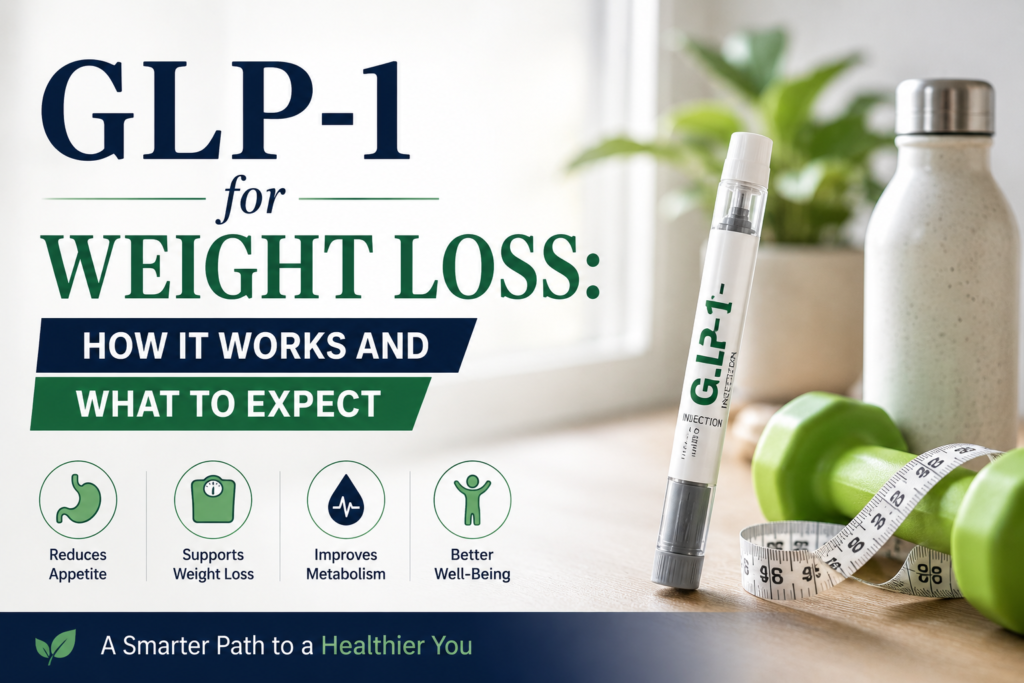
GLP-1 Weight Loss
GLP-1 medications have become one of the most talked-about options for weight management. Stories of dramatic transformations often dominate social media, leading many people to wonder how quickly these medications work and what kind of results they can realistically expect.
The reality is that weight loss with GLP-1 treatment is usually a gradual process. While some people notice changes within the first few weeks, meaningful and sustainable results often take several months. Understanding the typical timeline can help you stay motivated and avoid unrealistic expectations.
How GLP-1 Medications Support Weight Loss
GLP-1 medications mimic a natural hormone that helps regulate appetite and blood sugar levels. They work by sending signals to the brain that reduce hunger, helping you feel full sooner and stay satisfied longer after meals.
Many people find themselves naturally eating smaller portions, snacking less frequently, and experiencing fewer cravings for high-calorie foods. These changes can create a calorie deficit that supports gradual weight loss over time.
Week 1–2: The Adjustment Phase
The first couple of weeks are usually focused on helping your body adapt to the medication.
During this stage, you may notice:
- Reduced appetite
- Feeling full more quickly
- Less interest in snacking
- Fewer cravings for sugary foods
- Slight changes in eating habits
Weight loss during the first two weeks varies widely. Some people lose a few pounds, while others see little change on the scale. This doesn’t necessarily indicate whether the treatment will be effective long term.
The primary goal during this phase is allowing your body to adjust and building healthy habits that support future progress.
Week 3–4: Early Results Begin
By the end of the first month, many users start noticing measurable changes.
Common experiences include:
- Smaller meal portions
- Better control around food
- More consistent calorie intake
- Reduced emotional eating
- Initial weight loss
For many individuals, losing between 2 and 8 pounds during the first month is considered a realistic outcome. However, results depend on factors such as starting weight, activity level, diet quality, and individual response to treatment.
Months 2–3: Building Momentum
This is often when people begin seeing more noticeable progress.
By now, appetite control may feel more natural, making it easier to maintain healthier eating habits. Many users report feeling less preoccupied with food and more confident in their ability to manage portion sizes.
During this period, you may notice:
- Continued weight loss
- Improved energy levels
- Better fitting clothes
- Reduced waist circumference
- Increased motivation
Weight loss tends to become more consistent during these months, especially when paired with regular physical activity and balanced nutrition.
Months 4–6: Significant Progress
For many users, this is where the most visible transformation occurs.
At this stage, healthy habits have often become part of daily life. The combination of appetite control and lifestyle improvements can lead to substantial changes in body composition.
People frequently report:
- Double-digit weight loss
- Improved confidence
- Better mobility
- Increased physical endurance
- Healthier eating patterns
It’s also common to receive positive feedback from friends and family who begin noticing physical changes.
Months 6–12: Long-Term Results
Long-term success with GLP-1 treatment is usually measured over six months to one year rather than a few weeks.
Many clinical studies show that individuals can lose approximately 10% to 20% of their starting body weight when treatment is combined with healthy lifestyle habits.
For example:
| Starting Weight | 10% Loss | 15% Loss | 20% Loss |
|---|---|---|---|
| 180 lbs | 18 lbs | 27 lbs | 36 lbs |
| 220 lbs | 22 lbs | 33 lbs | 44 lbs |
| 250 lbs | 25 lbs | 37.5 lbs | 50 lbs |
Results vary, but gradual progress is often more sustainable than rapid weight loss.
Why Your Results May Differ
Every person’s weight loss journey is unique.
Several factors influence how much weight you may lose:
Starting Weight
Individuals with higher body weight often lose more pounds overall, though percentage-based losses may be similar.
Eating Habits
People who focus on protein, vegetables, hydration, and balanced meals generally experience better outcomes.
Physical Activity
Regular exercise can support fat loss while helping preserve muscle mass.
Consistency
Taking medication as directed and maintaining healthy habits are important for long-term success.
Individual Response
Genetics, age, metabolism, hormone levels, and underlying health conditions can all affect results.
Understanding Weight Loss Plateaus
Many people become discouraged when weight loss slows after several months.
However, plateaus are a normal part of the process. As body weight decreases, calorie needs change, and the body naturally adapts.
A temporary slowdown doesn’t necessarily mean the medication has stopped working. Staying consistent with nutrition, exercise, sleep, and hydration can help maintain long-term progress.
More Than Just Weight Loss
While the scale often receives the most attention, many people experience additional benefits that improve overall health and quality of life.
These may include:
- Better blood sugar control
- Reduced food cravings
- Improved energy
- Better sleep
- Increased confidence
- Healthier relationship with food
- Improved mobility and physical function
These changes can be just as important as the number of pounds lost.
What Happens If You Stop Taking GLP-1?
One common concern is whether weight will return after treatment ends.
Because GLP-1 medications help regulate appetite, some people experience increased hunger after discontinuing use. Without healthy lifestyle habits in place, weight regain may occur.
This is why experts emphasize using the medication as part of a broader weight management strategy rather than relying on it alone.
Final Thoughts
GLP-1 for weight loss results are often impressive, but they rarely happen overnight. The first month is usually about adjusting to the medication, while more noticeable progress often occurs between months two and six. Significant long-term results typically develop over six months to a year.
Instead of focusing solely on rapid weight loss, aim to build sustainable habits that support your health for years to come. When combined with balanced nutrition, regular movement, and consistency, GLP-1 treatment can become a powerful tool for long-term weight management.
FAQs
How much weight can you lose in the first month on GLP-1?
Many people lose between 2 and 8 pounds during the first month, although individual results vary.
When do GLP-1 medications start reducing appetite?
Some users notice appetite suppression within the first few days, while others may take several weeks to experience significant changes.
Is it normal for weight loss to slow down?
Yes. Weight loss plateaus are common and often occur as the body adapts to changes in weight and calorie intake.
Can exercise improve GLP-1 results?
Absolutely. Regular exercise supports fat loss, preserves muscle mass, and promotes overall health.
Are GLP-1 medications a permanent solution?
They can be an effective long-term tool, but sustainable weight management usually requires healthy lifestyle habits alongside treatment.