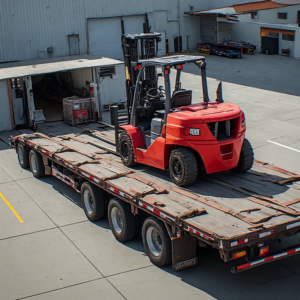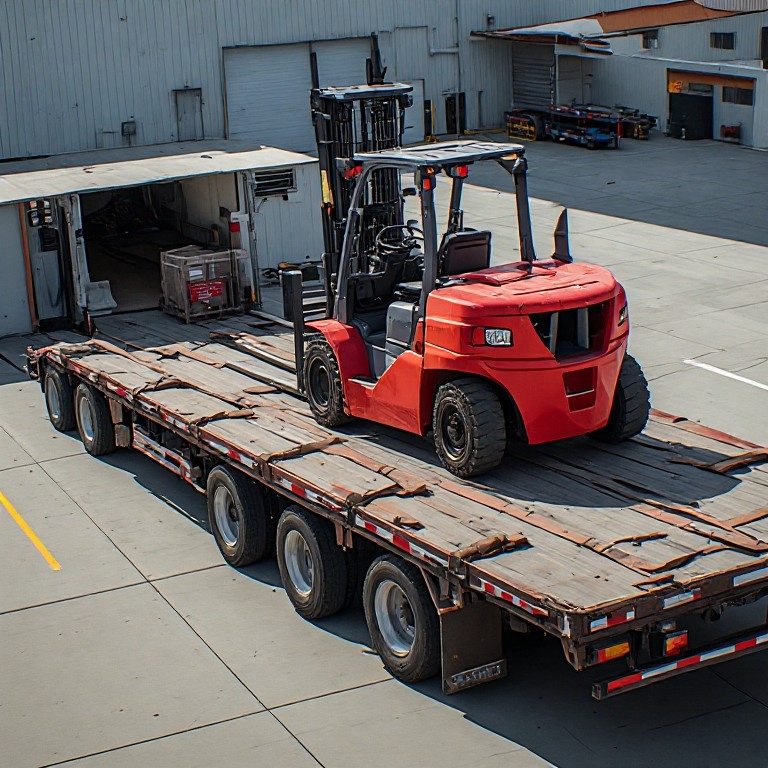
Forklifts are built to handle demanding work, but moving them from one location to another can present a completely different challenge. Their substantial weight, tall masts, wide frames, and specialized attachments make them unlike ordinary vehicles. When a business needs to relocate a forklift, deliver recently purchased equipment, or move machinery to a new job site, transportation needs to be planned around the equipment.
A well-organized forklift delivery process can make industrial equipment relocation more manageable. From collecting accurate machine details to preparing the pickup and destination sites, each stage contributes to a smoother shipment. Rapid Auto Shipping helps customers coordinate transportation solutions throughout the USA based on their equipment and route requirements.
Think Beyond the Truck
Before selecting transportation, first understand the forklift being moved. The machine’s physical characteristics determine many aspects of the delivery process.
Important information includes:
| Forklift Information | Why It Matters |
| Make and model | Identifies the equipment |
| Weight | Helps determine transportation requirements |
| Overall height | Supports clearance planning |
| Width | Helps evaluate loading access |
| Length | Assists positioning |
| Mast type | May affect overall dimensions |
| Attachments | Can change size and weight |
| Operating condition | Influences loading arrangements |
If the forklift has unusual accessories, provide details about them before requesting transportation. Fork extensions, clamps, side shifters, and other equipment can affect the machine’s transportation profile.
Where Is the Forklift Going?
The destination can be just as important as the machine itself.
A forklift being delivered to a large distribution center may have plenty of space for carrier access. A construction site, small warehouse, or crowded industrial property may present a different set of challenges.
Before pickup, consider:
- Entry and exit points
- Available parking or loading space
- Gate restrictions
- Facility operating hours
- Security procedures
- Ground conditions
- Unloading area
- Contact person at delivery
Sharing these details early gives the transportation provider a better understanding of the delivery environment.
Prepare the Machine for Its Trip
A few preparation steps can help simplify the handoff.
Remove loose tools, paperwork, personal items, and anything that could move during transportation. Inspect the forklift for visible damage and photograph its condition from several angles.
Pay particular attention to the forks, mast, tires, counterweight, operator compartment, and attachments. Keeping a record of the equipment’s condition before pickup creates useful documentation.
The forklift’s operating status should also be confirmed. Tell the transportation provider whether the machine starts, moves, steers, and brakes normally. If it does not operate, explain the limitations clearly.
Operational or Inoperable? It Makes a Difference
A functioning forklift and a non-running forklift may require different loading arrangements.
If the machine operates normally, it may be possible to position it for loading using its own power under appropriate conditions. However, a forklift with a dead battery, mechanical failure, damaged wheels, or steering problems may need additional assistance.
This is why operating condition should never be left out of the initial transportation discussion.
Providing accurate information helps the transportation provider determine what arrangements may be appropriate for the shipment.
Choosing Transportation Based on the Machine
There isn’t a single transportation solution suitable for every forklift. Equipment size, weight, route, condition, and loading environment all contribute to the planning process.
A small electric warehouse forklift can have different transportation requirements from a larger-capacity industrial machine. Similarly, a forklift with an unusually tall mast may need additional consideration during transportation.
Instead of selecting a carrier based only on a generic service description, discuss the actual equipment specifications. A transportation provider can then review the shipment requirements and explain the available options.
Understanding What Goes Into the Price
The cost of forklift delivery varies because every shipment has different requirements.
Several elements may influence the estimate:
- Transportation distance: Longer routes generally require more time and resources.
- Weight and dimensions: Larger equipment may require specific transportation arrangements.
- Machine condition: Non-running equipment can require additional loading assistance.
- Pickup location: Difficult access can make collection more complicated.
- Delivery location: Restricted or challenging destinations may require additional coordination.
- Scheduling: Requested dates and carrier availability can influence the available options.
For a meaningful estimate, provide complete information about the equipment and route rather than relying on a general price range.
Don’t Forget the Seller
If the forklift is being purchased from a dealer, auction, or another business, coordinate with the seller before the carrier arrives.
Confirm that the equipment will be available during the scheduled pickup window. Ask whether the seller can assist with loading and whether there are facility-specific requirements.
Auction locations may have strict collection deadlines, while dealerships may have appointment procedures. Knowing these rules ahead of time can prevent unnecessary delays.
Make Delivery Day Straightforward
On delivery day, the receiving facility should be prepared before the forklift arrives.
Make sure the designated contact knows the expected delivery schedule. Confirm where the carrier should enter and where the forklift should be placed after unloading.
If the property has security gates, restricted hours, or special access instructions, communicate them beforehand.
Clear communication between the buyer, seller, transportation provider, and receiving team can help keep the handoff organized.
Rapid Auto Shipping for Equipment Transportation
Rapid Auto Shipping helps customers coordinate transportation solutions across the USA. Businesses arranging forklift transportation can provide details about the equipment, operating condition, pickup location, destination, and desired timeframe.
Because industrial equipment varies considerably, shipment details are important when developing a transportation plan. Customers can discuss their specific requirements with Rapid Auto Shipping before scheduling.
Whether you’re moving a forklift between company facilities, delivering equipment after a purchase, or sending machinery to a remote project, proper planning can make the transportation process easier to manage.
Your Pre-Delivery Checklist
Before the forklift begins its journey, review these points:
- Confirm weight and dimensions.
- Verify the operating condition.
- List all attachments.
- Photograph existing damage.
- Remove loose items.
- Confirm pickup procedures.
- Check destination accessibility.
- Provide accurate contact information.
- Discuss loading and unloading requirements.
- Confirm the transportation schedule.
Final Word
Industrial equipment transportation becomes easier when the shipment is planned around the actual machine. Accurate specifications, clear communication, proper preparation, and accessible pickup and delivery locations can all contribute to a smoother experience.
A professional forklift delivery arrangement gives businesses a practical way to move valuable equipment without relying on long-distance operation of the machine itself. Rapid Auto Shipping helps customers coordinate transportation solutions throughout the USA according to their equipment and route requirements.
FAQs
1. What information do I need before arranging forklift delivery?
You should have the forklift’s make, model, weight, dimensions, operating condition, attachments, pickup address, and delivery address.
2. Can an inoperable forklift be delivered?
In many situations, yes. However, non-running equipment may require additional loading assistance, so its condition should be disclosed beforehand.
3. Do forklift attachments affect delivery?
They can. Attachments may increase the forklift’s dimensions or weight and can affect loading and transportation planning.
4. How much does forklift delivery cost?
Pricing varies according to distance, equipment size, weight, condition, pickup and delivery access, scheduling, and transportation requirements.
5. Should I take pictures before the forklift is picked up?
Yes. Photographs provide a useful record of the machine’s condition before transportation.