When you start searching for an ultrasound scan near me, convenience is important, but choosing a dependable diagnostic centre matters just as much. An ultrasound uses high-frequency sound waves to create images of structures inside the body and is commonly used for abdominal, pelvic, pregnancy, thyroid, breast, and other examinations. If you are comparing ultrasound scan services in Bangalore, consider factors such as equipment quality, experienced professionals, cleanliness, reporting, accessibility, and appointment availability before making your choice.
What Is an Ultrasound Scan?
An ultrasound scan is a non-invasive diagnostic imaging procedure that uses sound waves to produce real-time images of internal organs and tissues. Unlike imaging methods that use ionising radiation, standard ultrasound does not use X-rays.
Doctors may recommend an ultrasound to investigate symptoms, monitor certain conditions, assess organs, or follow changes over time. The examination is generally comfortable and can often be completed relatively quickly.
When Might You Need an Ultrasound?
There are several reasons why a healthcare professional may recommend this type of imaging. Depending on your symptoms and medical history, an ultrasound may help examine:
- Liver, gallbladder, pancreas, and kidneys
- Urinary bladder and other pelvic structures
- Thyroid and neck structures
- Breast tissue
- Muscles, tendons, and soft tissues
- Developing pregnancy
- Blood flow through certain vessels with Doppler ultrasound
The specific type of examination depends on what your doctor needs to evaluate.
How to Choose an Ultrasound Centre
Searching for an ultrasound scan near me can bring up many options, but proximity should not be your only consideration. A few practical checks can help you make a more informed decision.
Check the Available Scans
First, confirm whether the centre provides the particular ultrasound examination mentioned in your prescription. Different scans require different approaches, so availability can vary between diagnostic facilities.
Consider Equipment and Expertise
Modern ultrasound equipment can support clearer imaging, while trained sonographers and radiologists play an important role in performing and interpreting examinations. Look for a centre that follows appropriate imaging and reporting practices.
Look at Convenience
A conveniently located centre can make appointments easier, particularly when follow-up imaging is required. You can also check appointment timings, waiting periods, parking, and whether digital reports are available.
How Should You Prepare?
Preparation depends on the type of ultrasound you are having. Some examinations may require you to drink water and have a reasonably full bladder. Others may require fasting for several hours beforehand.
Do not assume that every ultrasound requires the same preparation. Follow the instructions provided by your doctor or diagnostic centre. If you are unsure, contact the centre before your appointment.
Wearing comfortable clothing can also make the process easier, especially when the examination involves the abdomen or pelvic region.
What Happens During the Examination?
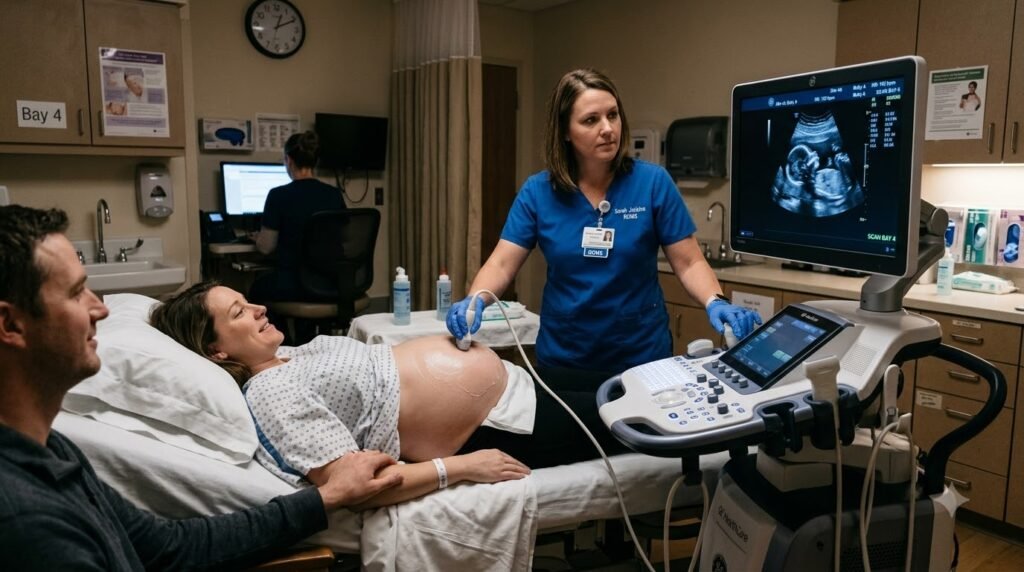
During an ultrasound, you may be asked to lie on an examination table. A healthcare professional applies a small amount of ultrasound gel to the relevant area of your skin and moves a handheld device, called a transducer, across it.
The device sends and receives sound waves to create images on a monitor. You may occasionally experience mild pressure, particularly if the examiner needs to obtain images from a specific area.
Most routine examinations are relatively quick, although the duration depends on the body part being examined and the type of scan required.
Is Ultrasound Safe?
Ultrasound is widely used because it does not involve ionising radiation. It has applications across many areas of healthcare, including obstetric imaging.
However, it should still be performed for an appropriate clinical reason and interpreted by a qualified professional. If you are pregnant, have an existing medical condition, or are undergoing repeated imaging, follow your healthcare provider’s advice regarding the appropriate examination.
Why Locality Matters When Choosing Imaging Services
When people search for an ultrasound scan near me, they often focus on finding the closest centre. While location is useful, quality and reliability should remain priorities.
A nearby diagnostic centre can be particularly helpful when you need follow-up examinations, have mobility concerns, or want to reduce travel time. However, also consider the centre’s services, professional expertise, equipment, patient experience, and reporting process.
Questions to Ask Before Booking
Before confirming an appointment, consider asking:
- Is the required ultrasound examination available?
- Is any fasting or other preparation necessary?
- How long will the examination take?
- When will the report be available?
- Should I bring my previous reports or prescription?
Having these details beforehand can make the appointment smoother and reduce unnecessary delays.
Making a More Informed Choice
A search for an ultrasound scan near me is usually the first step, not the final decision. Take a few minutes to compare diagnostic centres based on location, services, equipment, professional expertise, appointment convenience, and reporting procedures.
The right centre should make the experience straightforward while providing reliable diagnostic support. Most importantly, follow your doctor’s recommendation regarding the type of ultrasound required and any preparation instructions.
FAQs
1. Does every ultrasound require fasting?
No. Preparation varies depending on the type of examination. Some scans require fasting, while others may require a full bladder.
2. How long does an ultrasound usually take?
The duration depends on the examination and the area being assessed. Many routine scans can be completed within a relatively short appointment.
3. Can I eat before an ultrasound?
It depends on the scan. Follow the specific preparation instructions provided by your doctor or diagnostic centre.
4. Should I bring previous medical reports?
Yes. Previous reports, prescriptions, or relevant medical records can provide useful background information for the healthcare professional.
5. Is ultrasound different from an X-ray?
Yes. Ultrasound uses high-frequency sound waves to create images, whereas X-rays use ionising radiation.