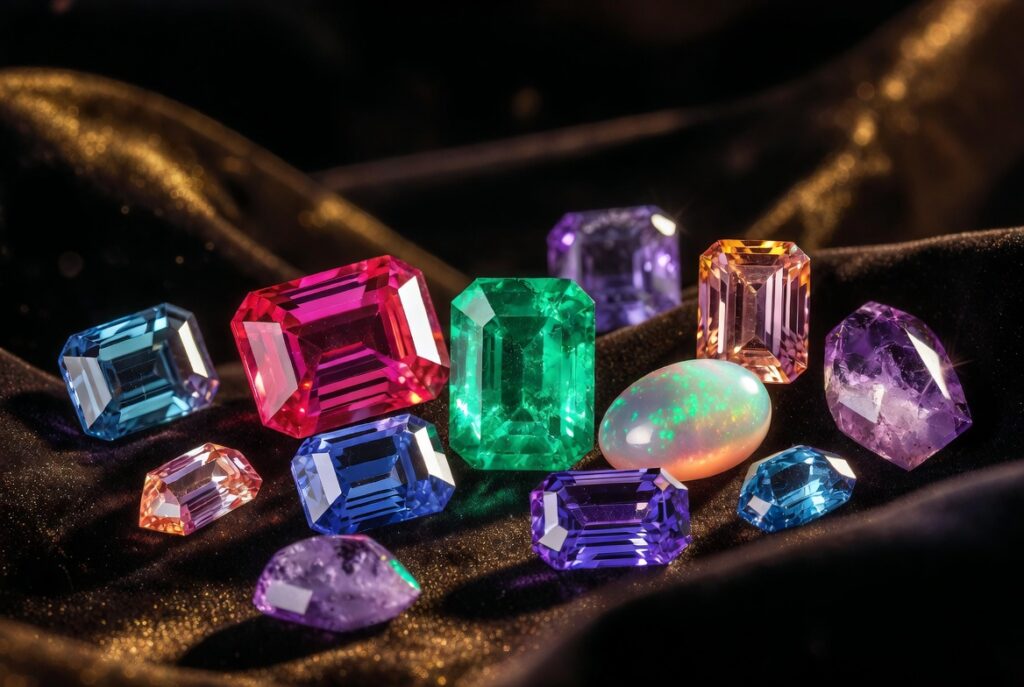
So, you’ve been scrolling through jewellery websites for what feels like hours. Every ring looks the same. Every necklace blurs into the next. And somewhere between the twentieth solitaire and the thirtieth plain gold band, you start wondering, “Is this all they really have?”
Whether you’re shopping for an amethyst engagement ring, curious about aquamarine engagement rings, or considering gemstone necklaces for the first time, this article is written for someone exactly in your situation. Let’s go over the details and explore which one’s the best choice for you.
Why Are People Moving Away from Traditional Diamond Rings?
Before you opt for a certain gemstone, you need to know something that the jewellery industry won’t ever clearly talk about: the “diamonds only” tradition is barely eighty years old. Before a massively successful mid-century marketing campaign rewrote the script, royals and aristocrats routinely chose coloured gemstones, like rubies, sapphires, amethysts, and emeralds, for their most significant pieces.
Choosing a coloured gemstone today isn’t unconventional. It’s actually a return to something far older and much more personal.
And practically speaking, listed below are a few important positives that only coloured gemstones can give you:
- More visual personality for the same budget
- Greater rarity in social settings where diamond solitaires are everywhere
- Deeper personal meaning, like birthstones, favourite colours, and cultural significance
- More design flexibility in terms of settings, metal pairings, and overall aesthetic
Amethyst Engagement Rings: Are They Actually a Good Idea?
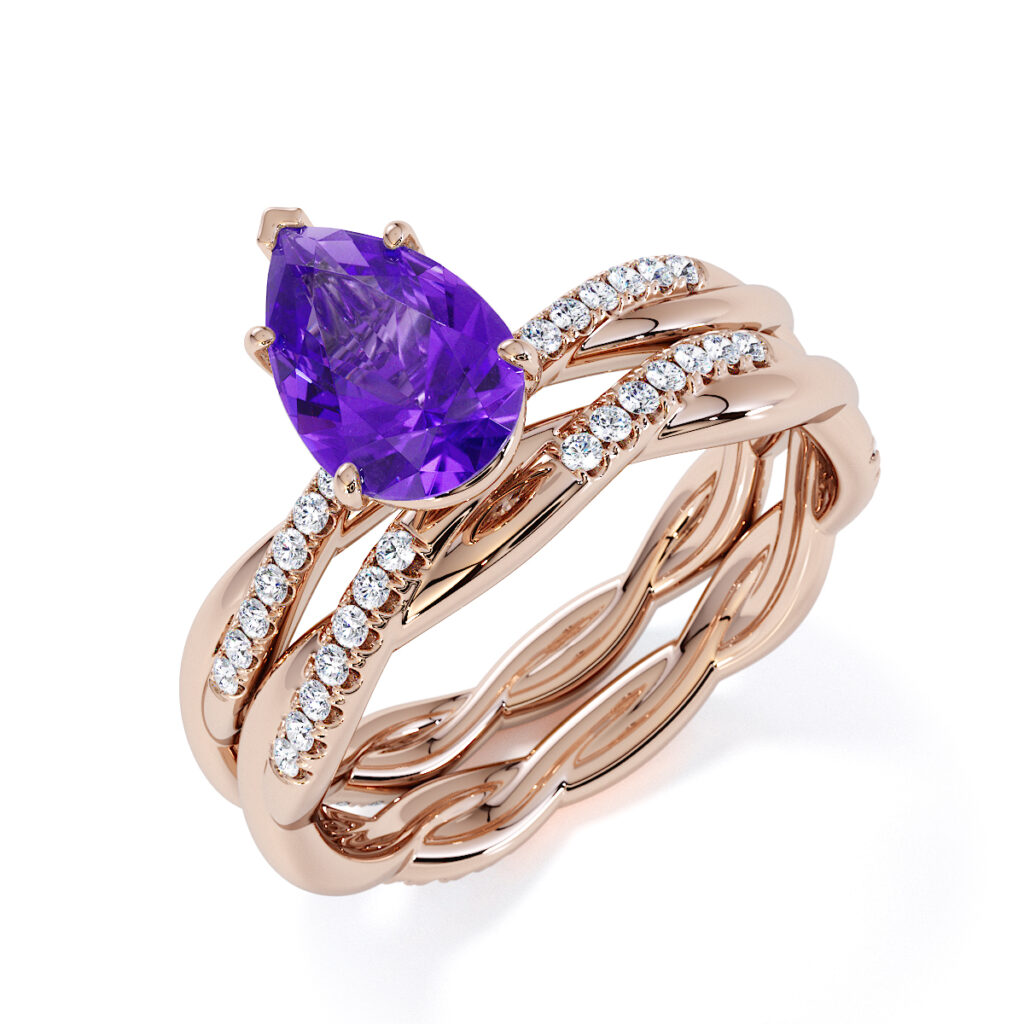
Amethyst is a variety of quartz that comes in various shades ranging from the palest lilac to a deep, rich purple with flashes of red and blue. That finest grade of amethyst is called ‘Deep Siberian amethyst’, which is genuinely stunning. When etched in yellow gold it looks regal and warm, while in white gold or platinum it feels cooler and more contemporary.
Is Amethyst Durable Enough for Everyday Wear?
This is a common question among those investing in amethyst.
Amethyst sits at 7 on the Mohs hardness scale. A diamond is a 10. So yes, amethyst is definitely not as strong as the diamonds, and it can scratch if it’s regularly knocked against harder surfaces like granite countertops, other gemstones, or rough materials.
So, should you not invest in the amethyst? No, the solution isn’t to avoid Amethyst engagement rings. It’s to choose the right setting.
- A bezel setting wraps the stone in a rim of metal, protecting the edges from direct impact.
- A halo setting surrounds the amethyst with smaller diamonds, adding both protection and serious visual drama.
- Avoid high-prong settings if you work with your hands
With basic care, such as removing your ring before heavy physical work or maybe storing it separately, an amethyst engagement ring can last a lifetime without any issue.
What Does an Amethyst Engagement Ring Say About You?
Amethyst has historically been the symbol of clarity, calm, and sincerity. It’s the choice of someone who isn’t following a trend or a template.
Aquamarine Engagement Rings: The Most Underrated Choice Right Now
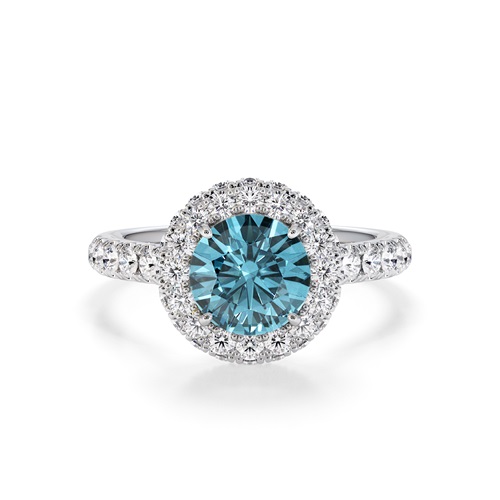
If amethyst draws you toward warmth and depth, aquamarine is for the person who gravitates toward light, openness, and quiet elegance.
The colour is most often considered something that is genuinely hard to describe until you’ve seen it. It carries a transparent, pale bluish-green shade that shifts depending on the light source. Cool and crisp in daylight. Warmer and slightly deeper under candlelight. It’s a stone that keeps revealing itself, which makes it endlessly intriguing to wear.
Why Aquamarine Makes Practical Sense
- Sits at 7.5 to 8 on the Mohs scale, which makes it more durable than amethyst and therefore more suitable for daily wear
- Found naturally in large, clean crystals, which means that you can get a genuinely large stone with excellent clarity at a fraction of diamond pricing
- Pairs beautifully with both white gold and yellow gold
- Photographs exceptionally well and is relevant if you’re someone who’ll be sharing these moments.
Who Should Consider Aquamarine Engagement Rings?
You can consider wearing this ring if you are born in March, as it’s your birthstone, or anyone drawn to a colour palette that feels calm rather than dramatic. It’s also a strong choice if you want something that stands out without being loud. Aquamarine has presence without announcing itself.
Lab-Grown Ruby Necklaces: Let’s Have the Honest Conversation
This topic generates more confusion than almost anything else in fine jewellery right now. So, let’s be clear about what’s actually true.
A lab-grown ruby is chemically, physically, and optically identical to an earth-mined ruby. The same aluminium oxide crystal structure. It’s the same chromium content that produces the red colour. The hardness, refractive index, and all other properties are identical. Advanced equipment is required to detect differences in the growth patterns of the two rubies; however, to the naked eye and in everyday wear, they appear to be the same stone.
So, What Is Actually Different?
Origin is the only difference. And whether origin matters to you is a question only you can answer. So, if it doesn’t matter, go for the lab-grown ruby necklaces; they happen to be cheaper.
Why Lab-Grown Ruby Necklaces Are Worth Serious Consideration
The finest mined rubies, which are pigeon blood red, from Burma, are among the most expensive gemstones in the world, sometimes exceeding diamond prices carat for carat. A lab-grown ruby of the same colour and size costs a fraction of that.
What that means practically:
- You can choose a deeper, richer red because you’re not paying a premium for mining origin.
- You can invest in a more complex, higher-quality setting with the money saved
- You can wear it without anxiety rather than not wearing it and keeping it locked away because it cost a year’s salary.
How Do I Find Jewellery That Actually Feels Like Me?
This query is the question underneath every other question on this list.
The answer, most of the time, is to look where genuine range exists. Not a store that does one thing well, but a place where you can see amethyst next to aquamarine and lab-grown next to mined, because the best decisions in jewellery happen through comparison.
A good starting point is getting in touch with a good jewellery store in the UK, first of all, which carries exactly that kind of range across coloured gemstones, has certifications, diamond alternatives, and lab-grown options.
FAQs
-
Are coloured gemstone engagement rings less valuable than diamond rings?
Not always. Value in gemstones is determined by quality, rarity, and demand. Fine rubies and sapphires can exceed diamond prices at the top end. Aquamarine and amethyst fall into the more affordable range, and that’s a feature, as it lets you invest in better craftsmanship.
-
Can I wear an amethyst ring every day?
Yes, with the right setting and basic care. Bezel or halo settings offer the most protection. Remove it before heavy physical work and store it separately from harder stones.
-
Is a lab-grown ruby a real ruby?
Yes. Both the rubies are chemically and physically identical. The only difference is how it was formed. One in a lab and the other one under the earth in a million years.
-
What is the best coloured stone for an engagement ring?
It depends entirely on your lifestyle, aesthetic, and what the stone means to you. Sapphire and aquamarine are the most durable and long-lasting colour choices. Amethyst and ruby (lab-grown) offer the most personality at accessible price points. So, it’s all your choice.