Corrosion is one of the quietest yet most destructive enemies of conveyor chains. Rust weakens plates, stiffens joints, and contaminates products, often long before mechanical wear becomes the main problem. Chains used in food processing, chemical plants, outdoor installations, washdown areas, and humid climates face constant exposure to moisture and corrosive substances. Choosing the right corrosion protection can extend chain life dramatically and reduce maintenance, but the best option depends on environment, load, and budget.
How Corrosion Damages Chains
Corrosion attacks chain surfaces and, more seriously, the joints between pins and bushings. Rust in these areas increases friction, causes stiff links, and accelerates wear. Pitting corrosion can create stress points that lead to fatigue cracks in plates. In food environments, rust particles may also contaminate products. Addressing corrosion early protects both chain performance and product quality.
Zinc and Nickel Plating
Plating applies a thin protective metal layer over carbon steel components. Zinc plating provides sacrificial protection, corroding before the steel beneath, and is cost-effective for mildly corrosive or outdoor environments. Nickel plating offers better corrosion resistance and a brighter finish, suitable for light washdown or humid conditions. Plated chains retain the strength of hardened carbon steel while gaining useful corrosion protection.
Custom Protection from Matech
Working with an experienced custom conveyor chains manufacturer like Matech allows corrosion protection to be designed around the actual operating environment. Matech produces corrosion-resistant chains and stainless steel chains, and offers surface treatments such as galvanizing and chrome plating to enhance anti-corrosion, rust prevention, and wear resistance. Engineers analyze moisture, chemicals, temperature, and loads before recommending materials and treatments, ensuring buyers neither over-specify expensive materials nor under-protect chains in harsh conditions.
Stainless Steel Chains
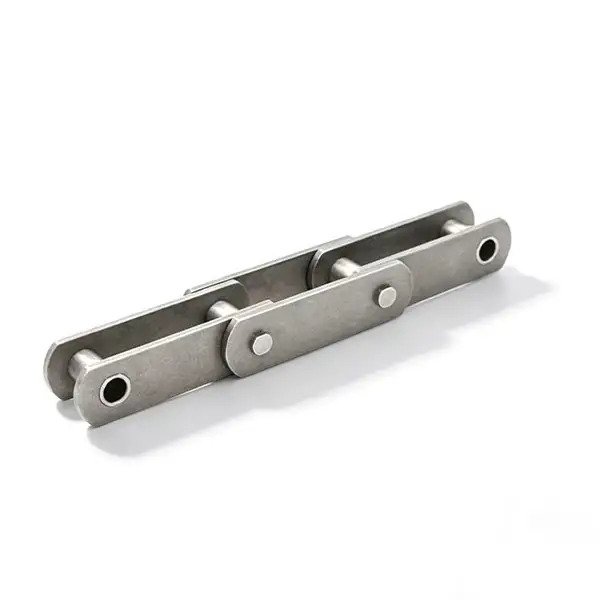
Stainless steel chains offer the highest level of corrosion resistance among common options. Grade 304 suits most wet and food environments, while 316 provides better resistance to chlorides and harsh cleaning chemicals. Stainless chains are often electrolytically polished to improve hygiene and corrosion resistance. Their main trade-off is lower strength compared with hardened carbon steel, which may require larger chain sizes for heavy loads.
Mixed-Material Designs
Some applications benefit from combining materials within one chain. For example, stainless steel plates may be paired with hardened stainless pins, or plated carbon steel components may be used where strength is critical. These hybrid designs balance strength, wear resistance, and corrosion protection. Custom engineering makes such combinations possible for specific operating challenges.
Lubrication and Maintenance Considerations
Even corrosion-resistant chains benefit from proper care. Lubricants suited to wet environments help protect joints, while food-grade lubricants are required in food processing. Regular cleaning removes corrosive residues. Inspecting chains for early signs of rust or stiffness allows corrective action before damage spreads. Good maintenance practices extend the life of any protective option.
Selecting the Best Option
Choosing corrosion protection starts with understanding the environment, including moisture levels, chemicals, temperature, cleaning procedures, and hygiene requirements. Load and speed also matter. Sharing these details with the chain supplier allows engineers to recommend the most cost-effective solution. The right choice delivers chains that resist corrosion and perform reliably for years.