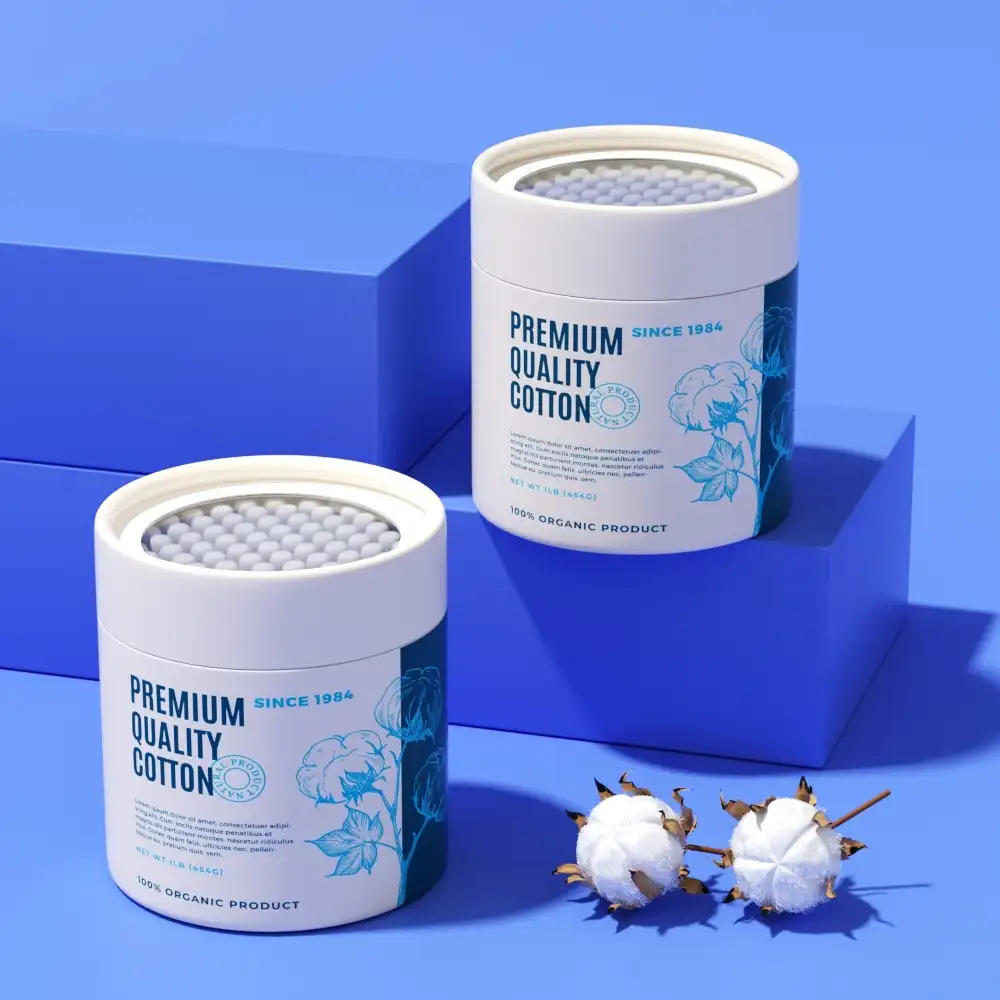
Every packaging buyer eventually faces the same tension. A cheaper tube protects the budget, while a more crafted one lifts the brand. Neither extreme is always right, and the best choice depends on the product, the customer, and the story you want to tell. Understanding where money actually goes in a tube helps you spend it where it counts. Sprintpackage offers a wide range of paper tubes, from simple kraft designs to printed, embossed, and polished versions, giving buyers many price and quality levels to explore. Here is a practical way to weigh cost against craft when evaluating paper cylinder packaging for a premium product.
What Drives the Price of a Paper Tube
Several factors shape the unit price. Size and wall thickness determine how much paper is used. Printing adds cost through plates, inks, and setup, especially for multiple colors. Finishes such as embossing, polishing, and special coatings add steps. Lids, inserts, and inner linings add materials and assembly. Quantity matters too: larger runs spread setup costs over more units. The company website does not give prices, so request a detailed quotation. When comparing offers, check that every item is itemized, because a cheap headline price may leave out printing plates, samples, or export packing.
Where Craft Adds Real Value
Craft is not decoration for its own sake. A well-made tube feels solid when held, closes with a satisfying fit, and prints with crisp, consistent color. These details tell customers that the product inside is worth its price. For premium items such as cosmetics, spirits, gifts, and specialty foods, the packaging is part of the product experience. The company lists options such as embossed details, polishing, and color printing. A modest investment in a few carefully chosen finishes often does more for perceived value than adding many effects together.
Where to Save Without Hurting Quality
Not every cost increases quality. Over-engineering the structure, choosing unnecessary extras, or ordering odd sizes can raise prices without improving the customer experience. Savings can often be found by using standard dimensions, limiting the number of print colors, or choosing a single high-impact finish. Ordering a quantity that matches real demand also avoids storage costs and waste. Ask the supplier which options give the best value, and request quotations for two or three variations. The cheapest option that still protects the product and communicates the brand is usually the smartest choice.

Counting the Hidden Costs
Total cost is more than the invoice. Damaged tubes, late deliveries, color mismatches, and rejected batches all carry hidden costs in lost sales, rework, and reputation. A supplier with solid quality control can save money even when unit prices are slightly higher. Shipping and duties also matter: lighter or nestable designs reduce freight, while bulky shapes increase it. Consider storage space and the time your team spends managing problems. When all these factors are included, the lowest quotation sometimes turns out to be the most expensive option in practice.
Making a Confident Decision
To decide, define the role packaging plays for your brand. If it is a major part of the experience, invest in craft where customers will notice it. If it is mostly protective, keep it simple and reliable. Request samples to compare quality in hand, and ask about minimum quantities, lead times, and documentation. The site mentions food-safe and recyclable materials, so confirm certificates where relevant. A thoughtful balance between cost and craft produces packaging that supports the brand and the budget, and that is a better goal than winning on either measure alone. It also helps to revisit the decision after the first order arrives, comparing real customer reactions, damage rates, and costs with your expectations, so that the next order can be adjusted with confidence rather than guesswork and money is spent only where it clearly adds value. Written specifications, physical samples, and open communication remain the most dependable tools a buyer has, and using them consistently turns good intentions into packaging that performs.