 Four returns in one month. All crushed. All the same complaint from customers. That’s what finally made me sit down and figure out cardboard packaging boxes in Lahore properly. Before that I’d been using whatever I could find. Old boxes from the market. Leftover cartons from home. Once even a shoebox taped shut with half a roll of tape.
I ship about 40 parcels a week. Clothes and accessories, nothing heavy. So I figured any box would do. It didn’t.
Here’s what I learned, mostly by wasting money first.
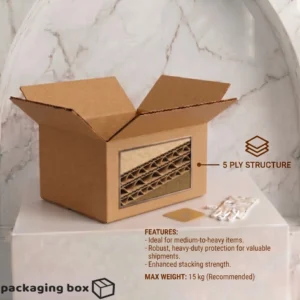
The ply number is the first thing. People say “3-ply” and “5-ply” like it’s marketing talk. It’s not. 3-ply is thin. Fine for light stuff nobody throws around. 5-ply is what you want if your parcel goes through courier handling, which means it gets tossed into vans and stacked under other boxes. Anything breakable, 5-ply minimum. 7-ply for heavy items.
If you’re searching for a cardboard box shop near me, you’ll find plenty of options. But ask what ply they’re selling before anything else. Most won’t volunteer it.
Then there’s the size problem. Most sellers order one box size and try to fit everything in it. That’s why you end up with a small item rattling around in a big box stuffed with newspaper. Order two or three sizes. Costs slightly more upfront but saves you on courier charges, because you’re not paying to ship empty space.
Corrugation direction is a thing nobody tells you about. The flutes inside the cardboard, the wavy bit, should run vertically when the box is standing. If they run the wrong way, the box crushes easily from the top. Good suppliers know this. Cheap ones don’t care.
Tape matters more than people think. That thin brown tape from the corner shop doesn’t hold. Get proper packing tape, the 2-inch kind. And tape the bottom seam in both directions, not just one line across. Learned that one the hard way.
Moisture is the silent killer. Lahore gets humid in summer and rainy in monsoon. Cardboard absorbs moisture and loses strength fast. If your parcels sit in a warehouse or a courier van for days, that box is weaker by the time it arrives. Some suppliers offer moisture-resistant coating. Worth asking if you’re shipping in July or August.
Now the ordering part. Most cardboard box manufacturers near me have a minimum order quantity. Some are flexible, some aren’t. If you’re small, find the ones who sell in smaller lots first, even if the per-unit price is a bit higher. Better than sitting on 1,000 boxes you can’t use.
Also ask about custom printing. Your brand name or logo on the box does more than it sounds like. Customers post unboxing photos. It makes you look established. But custom printing usually comes with a higher minimum and a longer lead time, so plan ahead.
One more thing about quality. Ask for a sample before committing to a bulk order. Any decent supplier will send one. If they won’t, that tells you something.
I called five suppliers before ordering and asked each for a sample. Two said yes immediately. Three made excuses. Guess which ones I didn’t buy from.
Prices ranged from 22 rupees a box to 48 rupees for what was supposedly the same spec. It wasn’t the same spec. The cheap ones were thinner, smaller, and the printing was faded. Once I had samples side by side, the difference was obvious in about ten seconds.
If you’re buying cardboard packaging boxes in Pakistan for the first time, don’t overthink it. Get samples. Ask about ply. Order two sizes instead of one. Tape properly. That’s genuinely most of it.
One last thing. Storage matters. Don’t stack boxes somewhere damp. Don’t leave them open where dust gets in. And don’t buy a year’s worth at once unless you have proper space. They take up more room than you think, and if they get squashed in storage, they arrive squashed to your customer.
That’s really it. Not complicated, just takes a few phone calls and knowing what to ask.
For more news and everyday reads, visit TopNewsToday.