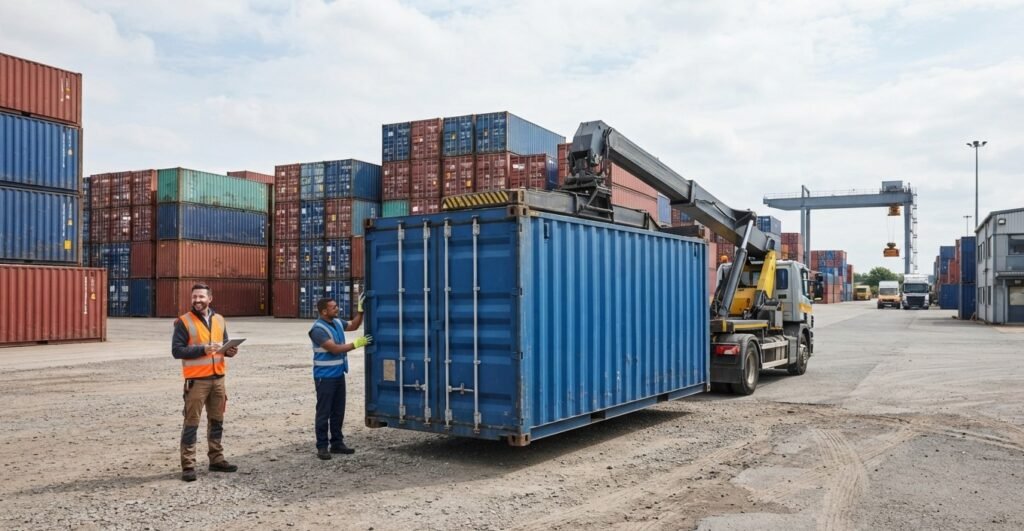
When you need extra storage space, a shipping container can be a practical solution. But buying one isn’t always necessary. Depending on how long you need it, your budget, and how you plan to use it, renting a shipping container may be a better fit.
Many suppliers offer both rental and purchase options, allowing customers to choose based on their specific needs. Conex Hub, for example, offers storage containers for sale or rent, including new, used, and specialty containers.
This guide explains how shipping container rentals work, what can affect the cost, the benefits and drawbacks of renting, and when buying may make more sense.
Table of Contents
- Can You Rent a Shipping Container?
- How Does Shipping Container Rental Work?
- How Much Does It Cost to Rent a Shipping Container?
- Benefits of Renting a Shipping Container
- Potential Drawbacks of Renting
- When Should You Rent a Shipping Container?
- When Should You Buy Instead?
- Renting vs. Buying: Quick Comparison
- What Types of Containers Can You Rent?
- FAQs
- Get a Shipping Container From Conex Hub
Can You Rent a Shipping Container?
Yes. Shipping containers can be rented for temporary or longer-term storage, construction projects, business inventory, equipment storage, and other applications.
The rental option can be useful when you need secure storage without making a large upfront purchase. Depending on the supplier, you may be able to select the container size, condition, and configuration that fits your project.
Conex Hub currently provides both buying and rental options, and its quote form allows customers to specify whether they want to buy or rent a container.
How Does Shipping Container Rental Work?
The process is generally straightforward.
1. Choose the Container
First, determine the size and type you need. Common options include 10ft, 20ft, and 40ft containers, along with high cube and specialty configurations.
2. Select Buy or Rent
Tell the supplier that you want to rent rather than purchase the container.
3. Provide Delivery Information
Your delivery address is important because availability, transportation, and site requirements can affect the overall rental arrangement.
4. Review the Rental Terms
Before agreeing, check the monthly or agreed rental rate, minimum rental period, delivery charges, return conditions, and any other applicable fees.
5. Schedule Delivery
Once the rental is arranged, the container can be delivered to the prepared site.
Conex Hub’s current quote process includes container type, condition, quantity, buy-or-rent preference, delivery address, and timeline.
How Much Does It Cost to Rent a Shipping Container?
There isn’t one universal rental price.
The cost can depend on factors such as:
- Container size
- Container condition
- Container type
- Rental duration
- Delivery location
- Delivery and pickup requirements
- Specialty features
- Availability
For example, current Conex Hub listings display rental options for different container types and sizes, but rates vary by individual unit.
Because inventory and rental rates change, it’s better to request a current quote instead of relying on an old advertised price.
Benefits of Renting a Shipping Container
Lower Upfront Commitment
Buying a container requires a larger initial payment. Renting allows you to obtain storage space without purchasing the unit outright.
Good for Temporary Projects
If you only need storage during a renovation, construction project, seasonal business period, or temporary relocation, renting can be practical.
Flexible Storage Capacity
You can select a container size based on your current requirements rather than permanently owning a larger unit than you need.
Useful for Businesses
Businesses may need additional inventory or equipment storage during busy periods. Renting can provide additional space without requiring a permanent storage investment.
Access to Specialty Containers
Depending on the supplier’s inventory, rental options may include specialized containers. Conex Hub, for example, lists options including high cube, open-side, office-ready, and other configurations.
Potential Drawbacks of Renting
Renting isn’t automatically the right choice for every situation.
Long-Term Rental Costs Can Add Up
If you need a container for many years, ongoing rental payments may eventually become substantial compared with purchasing a container.
You Don’t Automatically Own the Container
With a standard rental agreement, the container remains the supplier’s property.
Rental Terms Matter
Minimum rental periods, delivery arrangements, pickup requirements, and other terms can vary. Always review the agreement before committing.
Limited Modification Options
If you want to make extensive permanent modifications, buying may provide more flexibility than renting, depending on the supplier’s terms.
When Should You Rent a Shipping Container?
Renting may make sense when:
- You need storage for a limited period.
- You’re working on a temporary construction project.
- You need extra business inventory space.
- You’re storing equipment during a renovation.
- You don’t want a large upfront purchase.
- Your long-term storage requirements are uncertain.
- You need a container quickly for a temporary application.
For example, someone searching for a shipping container for sale near me may initially assume purchasing is the only option. However, comparing local rental availability with purchase options can help determine which arrangement fits the project.
When Should You Buy Instead?
Buying can make more sense when you expect to use the container for many years.
A purchased container can become a long-term asset and can be used for storage, transportation, workshops, modifications, or other purposes depending on the container’s condition and specifications.
If you’re researching shipping containers for sale, compare the purchase price with the expected rental cost over the period you plan to use the container.
Used containers can also be an option for buyers looking for a more budget-conscious purchase. Conex Hub describes its used containers as structurally sound and wind and watertight, subject to the condition of the individual unit.
Renting vs. Buying: Quick Comparison
| Factor | Renting | Buying |
|---|---|---|
| Upfront cost | Usually lower | Higher |
| Ownership | No | Yes |
| Temporary storage | Well suited | Can be more commitment |
| Long-term use | Ongoing rental expense | May be more suitable |
| Flexibility | Depends on rental terms | More control |
| Modifications | May be restricted | Generally greater flexibility |
| Asset ownership | No | Yes |
The right option depends on how long you need the container and how you intend to use it.
What Types of Containers Can You Rent?
Rental availability varies by supplier and location, but options may include:
Standard Containers
Standard 20ft and 40ft containers are commonly used for general storage and equipment.
High Cube Containers
High cube containers provide additional interior height and can be useful when vertical space is important.
Open-Side Containers
Open-side containers provide access along the long side of the unit, making them useful for bulky items and certain commercial applications.
Office and Specialty Containers
Depending on the supplier, rental inventory may include office-ready units, refrigerated containers, and other specialty configurations. Conex Hub’s current inventory shows rental availability across several container types.
FAQs
Is it cheaper to rent or buy a shipping container?
It depends on how long you need the container. Renting may reduce upfront costs, while buying may make more sense for long-term use.
Can I rent a shipping container for a short-term project?
Yes. Rental containers can be useful for temporary storage, construction, renovation, business, and equipment-storage needs. Rental terms vary by supplier.
Can I rent a 20ft or 40ft shipping container?
Yes, depending on local inventory and availability. Conex Hub offers rental options across multiple sizes and configurations.
Do rental containers include delivery?
Delivery arrangements vary. Ask the supplier whether delivery and pickup are included in the quoted rental arrangement and confirm any additional charges.
Can I modify a rented shipping container?
It depends on the rental agreement. Always get permission from the supplier before making modifications.
Can I eventually own a rented container?
Some suppliers offer rent-to-own programs. Conex Hub currently offers a rent-to-own option where customers make monthly payments and own the container at the end of the agreed term.
Where can I find storage containers for sale or rent?
You can compare local suppliers and online inventory. When searching for storage containers for sale, consider size, condition, delivery, access requirements, and intended use—not just the advertised price.
Get the Right Container With Conex Hub
Whether you need temporary storage or a long-term solution, comparing rental and purchase options can help you choose an arrangement that fits your project.
Conex Hub offers containers for sale and rent, with options ranging from standard storage containers to specialty configurations. Its quote process lets you provide your container requirements, delivery location, timeline, and whether you want to buy or rent.
Before choosing between shipping containers for sale, renting, or rent-to-own, consider how long you’ll need the container, your budget, required size, delivery location, and intended use.
Request a current quote from Conex Hub to compare available options and find a container solution that works for your needs.