Audio visual integration is changing how homes, offices and commercial spaces use technology. Instead of separate remotes, tangled cables and devices that do not talk to each other, integrated systems bring sound, video, lighting and control together in one simple setup. Whether you want a better meeting room, a cinema-like experience at home or powerful sound for a gym, planning everything together gives better results than buying devices one by one. This guide explains the main areas of AV and automation and how to plan them well.
1. What Is Audio Visual Integration?
Audio visual integration means connecting displays, speakers, microphones, cameras, lighting and control systems so they work as one coordinated system. A single touch panel or app can switch on the screen, adjust the volume, dim the lights and start a meeting or a movie. Good audio visual integration is planned around how people actually use the space, not just around the equipment list.
2. Choosing the Right AV Solutions
Every space has different needs. AV solutions (audio video) should be chosen based on:
- Room size and shape
- Number of people using the space
- Main purpose, such as meetings, training, entertainment or fitness
- Lighting and acoustic conditions
- Budget and future expansion plans
Buying the most expensive equipment does not guarantee good results. The right match between room and system matters more.
3. Conference Rooms That Work Every Time
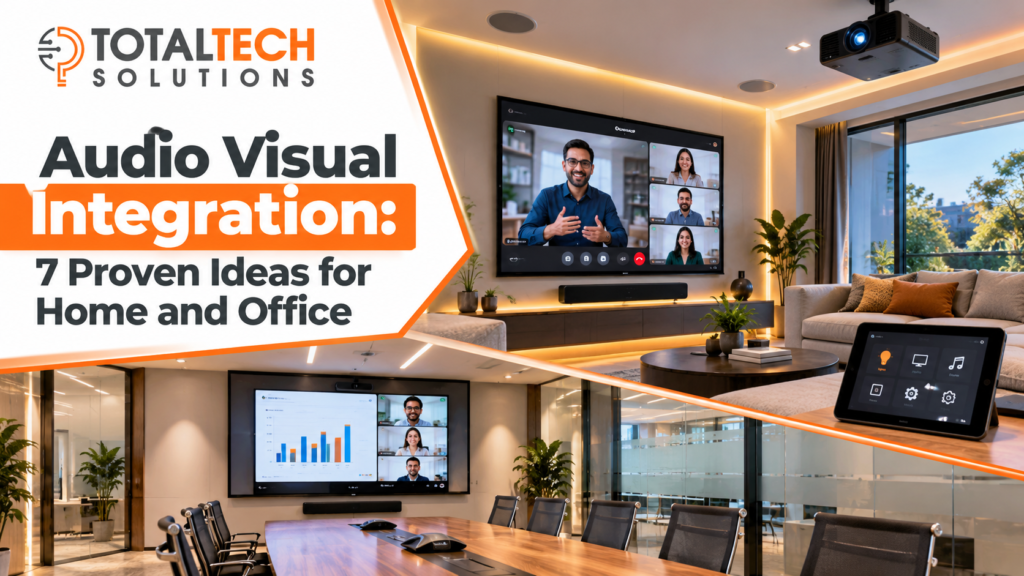
A meeting room should let people start a call in seconds and hear each other clearly. A well-planned conference room setup includes:
- A display sized for the room and seating distance
- A camera placed at eye level to capture all participants
- Microphones that pick up voices evenly across the table
- Acoustic treatment to reduce echo
- Simple one-touch control for staff
Audio visual integration in meeting rooms reduces wasted time at the start of meetings and makes remote participants feel included.
4. Projector Installation for Homes, Offices and Classrooms
Projectors are still the best way to get very large images. Professional projector installation services take care of:
- Correct throw distance and screen size
- Secure ceiling or wall mounting
- Hidden cabling for a clean look
- Screen selection based on room lighting
- Image alignment and calibration
Poor mounting or the wrong screen can spoil even an expensive projector, so installation quality matters.
5. Home Theatre Setup at Home
A cinema-like experience at home is now within reach for many families. A good home theatre setup in home depends on:
- Choosing between a large TV and a projector
- Speaker placement for surround sound
- Acoustic panels and soft furnishings to control echo
- Comfortable seating at the right distance
- Light control with curtains or blinds
With audio visual integration, a single remote or app can control the screen, sound and lights together.
6. Home Automation Services
Automation makes daily life easier and more comfortable. Home automation services can connect lighting, curtains, air conditioning, security cameras and entertainment systems. You can control them from your phone, by voice or through scheduled scenes such as “Good Morning”, “Movie Time” or “Away Mode”.
7. Smart Home Lighting
Lighting is often the easiest place to start with automation. Smart home lighting allows dimming, colour changes, schedules and motion-based control. It saves energy, improves comfort and creates the right mood for every activity. When combined with a home theatre, lights can dim automatically when a movie starts.
8. Premium Audio for Gyms and Fitness Studios
Music is a big part of the workout experience. Gyms need sound that is powerful but clear, evenly spread across the floor and easy for staff to control. Premium gym audio solutions Noida fitness centres look for usually include:
- Zoned audio for different workout areas
- Durable speakers suited to high-energy use
- Microphones for trainers and group classes
- Simple control panels for staff
- Sound levels planned to avoid distortion and disturbance
Audio visual integration in gyms can also include screens for workout videos, promotions and class schedules.
9. Planning Tips for Any AV Project
- Plan wiring and conduits before walls are finished
- Keep equipment racks ventilated and accessible
- Choose systems that can expand later
- Ask for training so users can operate the system easily
- Agree on after-sales support and maintenance
For more useful guides on technology, homes and everyday topics, you can read other articles on TopNewsToday.
FAQ
What is the main benefit of audio visual integration? It brings all devices under simple, unified control, making systems easier to use and more reliable.
Is a projector or TV better for a home theatre? Projectors suit dark, dedicated rooms. Large TVs suit brighter living rooms.
Can smart lighting be added to an existing home? Yes. Many smart lighting systems work with existing wiring or wireless controls.
Why do conference rooms need acoustic treatment? Hard surfaces cause echo, which makes voices unclear on calls.
What makes gym audio different? Gyms need powerful, durable and evenly spread sound with easy control for trainers.
Conclusion
Audio visual integration turns separate devices into one easy, reliable system. From conference rooms and projectors to home theatres, smart lighting and gym audio, planning everything together delivers better sound, clearer visuals and simpler control. With the right design and installation, technology becomes something you enjoy using every day.