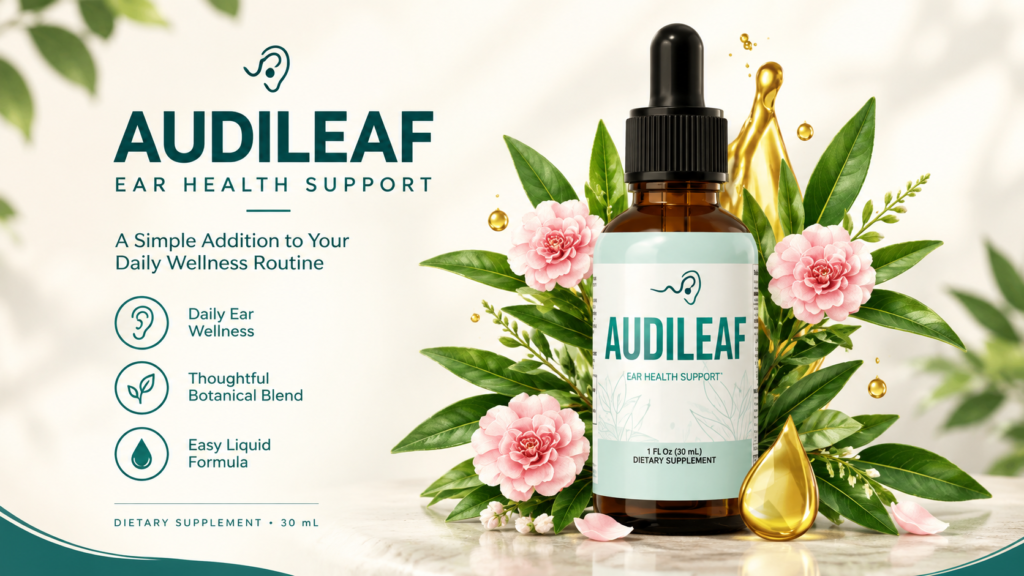
AudiLeaf Reviews: Ingredients, Benefits, Side Effects, and Complaints
Introduction: An Honest Look at AudiLeaf
Hearing health is an important part of everyday life. Being able to follow conversations, enjoy music, understand people in busy places, and communicate comfortably can make a significant difference to overall well-being. When hearing becomes less clear or everyday sounds seem more difficult to understand, many people begin exploring different ways to support their ear health.
This is where AudiLeaf enters the conversation. AudiLeaf is marketed as a dietary supplement designed to support hearing wellness, cognitive function, and nervous system health. Its promotional material describes a formula containing botanical ingredients and other compounds intended to support the relationship between the ears and the brain.
However, understanding a supplement requires more than reading its advertised benefits. Buyers should consider the ingredients, available scientific evidence, safety information, customer feedback, price, and refund conditions before deciding whether a product deserves their money.
In this AudiLeaf review, we examine the product’s advertised purpose, the ingredients disclosed on its online pages, potential benefits, possible side effects, reviews and complaints, and the questions worth asking before making a purchase.
One important point deserves attention from the beginning: claims that a supplement supports hearing do not establish that it can restore lost hearing, treat tinnitus, or cure an ear condition. The product’s own claims should be considered separately from evidence demonstrating that the finished formula is effective.
The goal of this review is to help readers make a more informed decision without relying on exaggerated promises or unsupported testimonials.
What Is AudiLeaf?
AudiLeaf is promoted as a hearing-support supplement intended for adults interested in maintaining auditory wellness and mental clarity. According to its marketing pages, the product combines selected botanical extracts and other ingredients in a daily formula. Different pages associated with the name describe somewhat different formulations, making it especially important to examine the actual label of the product being offered.
The advertised purpose of AudiLeaf is to support several aspects of wellness.
-
Hearing wellness: The product is marketed to people who want to maintain their hearing health.
-
Cognitive support: Its promotional material connects the formula with focus and mental clarity.
-
Nervous system support: Some product descriptions emphasize the relationship between nerve function and sound processing.
-
Everyday wellness: The supplement is presented as an addition to a daily routine rather than as a hearing device.
These descriptions explain how AudiLeaf is positioned in the market. They should not be interpreted as proof that the product improves hearing in people with an existing hearing problem.
Hearing depends on several structures and processes, including the outer and middle ear, the sensory cells in the inner ear, and the pathways that transmit sound information to the brain. Problems involving these structures may have different causes and require different forms of care.
For this reason, a supplement should not replace a hearing assessment, prescribed treatment, hearing aids, or other care recommended by a qualified healthcare professional.
What form does AudiLeaf come in?
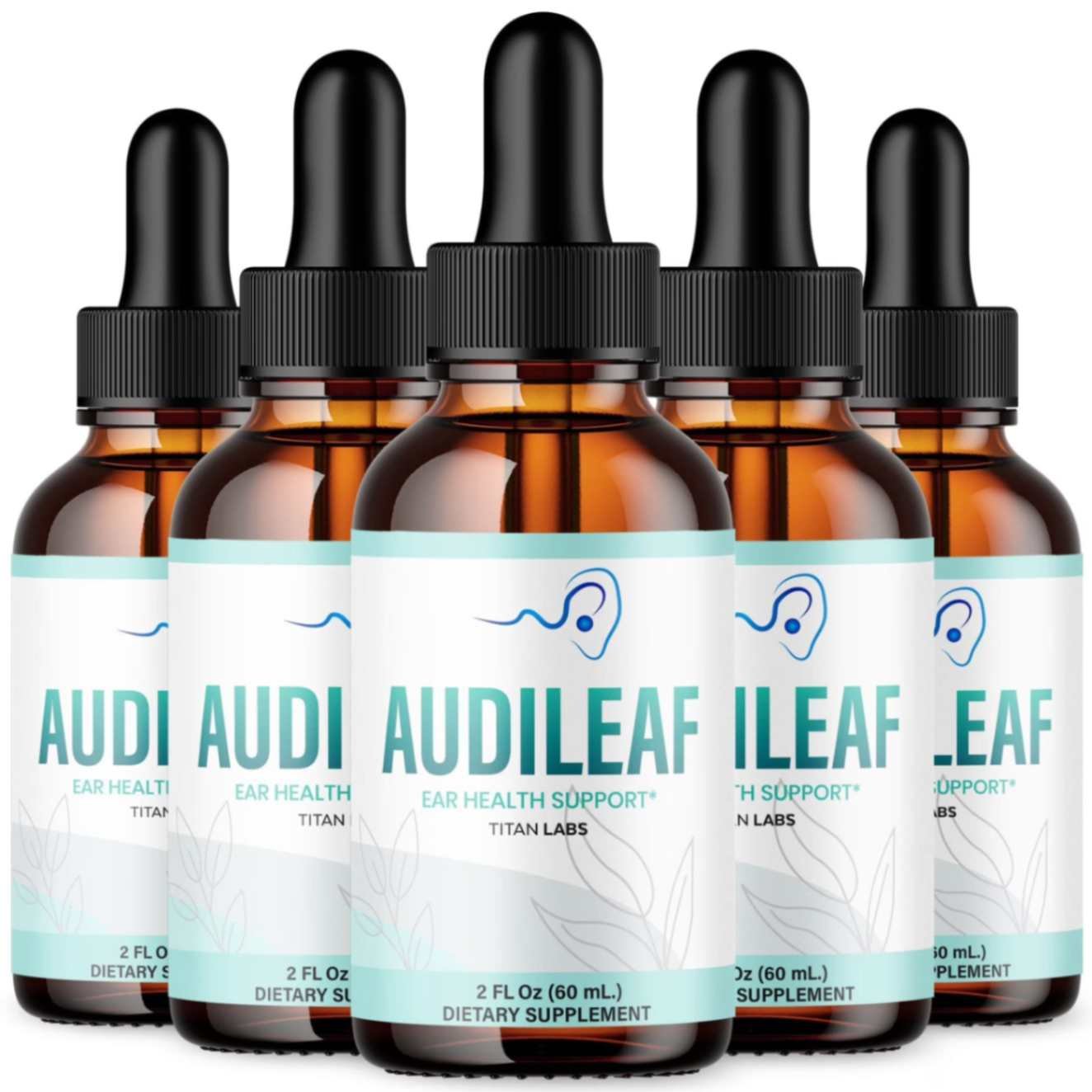
Online descriptions of AudiLeaf have presented different product formats and ingredient lists over time. Some pages describe a capsule-style product, while other marketing pages refer to a liquid formula or drops.
This inconsistency makes it unwise to assume that every page selling a product called AudiLeaf describes the same formula.
Before ordering, check the package photograph, dosage form, Supplement Facts panel, serving size, ingredient list, and seller information. The physical product label and the exact terms shown at checkout are more useful than relying solely on an older review or a generic advertisement.
How Does AudiLeaf Work?
AudiLeaf is marketed around the idea that nutritional and botanical ingredients may support general wellness processes associated with the ears, brain, and nervous system.
The product’s promotional descriptions discuss areas such as antioxidant activity, circulation, alertness, and nerve function. These are proposed explanations for its intended use, rather than verified proof that AudiLeaf improves hearing in humans.
The proposed role of antioxidant support
Antioxidants are compounds that help protect cells from damage associated with oxidative processes. Some plant extracts contain antioxidant compounds, and this is one reason botanical ingredients appear in many wellness supplements.
However, the presence of antioxidants in a formula does not automatically mean that the formula prevents hearing loss or repairs damaged auditory cells. The dose, form of each ingredient, quality of the research, and results from studies of the finished product all matter.
Circulation and auditory health
The inner ear depends on an adequate blood supply. This makes circulation a relevant subject in discussions of hearing health.
AudiLeaf’s marketing refers to circulation support as part of its proposed approach. Nevertheless, a general claim about circulation is not evidence that taking this particular supplement improves blood flow to the inner ear enough to change hearing ability.
The connection between hearing and the brain
Hearing involves more than detecting sound. The brain must process incoming signals so that a person can recognize speech, distinguish sounds, and understand conversations.
AudiLeaf is also promoted for cognitive wellness and mental focus. Yet a product advertised for both hearing and cognitive support should not be assumed to improve either function without appropriate clinical evidence.
What does the available information establish? It establishes the product’s advertised rationale, not its clinical effectiveness. The evidence reviewed for this article did not establish that AudiLeaf can reverse hearing loss, reliably reduce tinnitus, or treat an auditory disorder.
AudiLeaf Ingredients: What Is Disclosed?
Ingredients are among the most important factors to investigate when comparing hearing supplements. A useful label should identify the ingredients, quantities per serving, serving instructions, and any relevant warnings.
The AudiLeaf pages reviewed for this article do not all present the same ingredient information. One product description lists six botanical extracts, while a more recent product page describes a proprietary herbal blend and additional ingredients.
The following discussion covers ingredients named in these online descriptions. It should not be treated as a verified, complete list for every AudiLeaf product currently offered.
1. Maca root extract
Maca is a plant traditionally used as a food and in wellness products. It is commonly included in supplements marketed for vitality and general well-being.
AudiLeaf’s promotional descriptions associate maca root with energy, stamina, and mental clarity. However, those general uses do not establish that maca improves hearing or repairs auditory nerves.
Consumers should check the exact ingredient quantity and product label rather than assuming that the presence of maca provides a specific hearing benefit.
2. African mango seed extract
African mango seed extract appears in some AudiLeaf product descriptions. It is also used in certain supplements marketed for metabolic health and weight management.
Its inclusion in an advertised formula does not demonstrate a benefit for hearing. The available product information reviewed here does not establish that African mango seed extract improves auditory function when consumed as part of AudiLeaf.
It is also important to distinguish evidence about an ingredient used in one context from evidence about the same ingredient used in a different formula or for a different purpose.
3. Ginseng root extract
Ginseng is a botanical ingredient used in a variety of traditional and modern wellness products. Depending on the species, preparation, and dose, it may be studied for different aspects of health.
AudiLeaf’s promotional material connects ginseng with alertness, energy, and nervous system support. These statements should not be taken as proof that the ingredient improves hearing.
Ginseng may also interact with certain medicines and may not be appropriate for everyone. Anyone considering a ginseng-containing supplement should discuss it with a healthcare professional if they take medication or have an existing medical condition.
4. Green tea leaf extract
Green tea contains plant compounds, including catechins, that have been studied for their antioxidant properties.
In AudiLeaf’s marketing, green tea extract is associated with antioxidant support and cognitive wellness. However, antioxidant activity alone cannot establish that a supplement prevents hearing deterioration.
The amount and concentration of green tea extract are important. Concentrated extracts may also carry different safety considerations from an ordinary cup of brewed green tea.
5. Guarana seed extract
Guarana appears in some of the older AudiLeaf descriptions. It is a botanical source of caffeine and is commonly used in products marketed for energy or alertness.
Caffeine may affect sleep, heart rate, anxiety, and blood pressure in some individuals. People who are sensitive to caffeine or who have been advised to limit stimulants should check whether guarana is included in the exact product they intend to purchase.
Importantly, guarana’s presence in an older description does not confirm that it appears in every current AudiLeaf formula.
6. Grapefruit seed extract
Grapefruit seed extract is another ingredient named in certain AudiLeaf marketing material. Its appearance in an ingredient list should not be confused with evidence that it treats hearing loss or tinnitus.
Consumers should also distinguish grapefruit seed extract from grapefruit fruit and grapefruit juice. They are not interchangeable terms, and potential medication interactions depend on the actual substance and formulation involved.
If the product label contains this ingredient, a pharmacist can help assess whether it is suitable alongside existing medication.
7. Grape seed extract
A different AudiLeaf product page identifies grape seed extract as part of a proprietary herbal blend. Grape seed extract is distinct from grapefruit seed extract, even though the names may look similar.
It contains plant compounds that have been studied for various biological effects. However, general ingredient research does not establish the effectiveness of AudiLeaf itself.
This difference between the two ingredient names is another reason to examine the current Supplement Facts panel carefully.
8. Siberian ginseng
Some AudiLeaf descriptions list Eleutherococcus senticosus, commonly called Siberian ginseng. Despite its common name, it is botanically distinct from the better-known Panax ginseng.
The ingredient is used in certain traditional wellness preparations and supplements. Its presence does not demonstrate a specific benefit for auditory health.
People who want to understand its suitability should check the exact product label and consult a healthcare professional about possible interactions.
9. GABA and L-tryptophan
A more recent AudiLeaf product description mentions GABA and L-tryptophan as part of its formulation.
GABA is a compound involved in inhibitory signaling in the nervous system. L-tryptophan is an amino acid used by the body in several biological processes, including the production of serotonin.
Their presence in a supplement does not establish that the product treats ringing in the ears, improves sleep, or changes hearing performance. Claims about those outcomes require evidence for the particular product and its dose.
These ingredients may also warrant extra caution for people taking medicines that affect the nervous system.
10. Chromium picolinate
Chromium picolinate is listed on one AudiLeaf page as an additional ingredient. Chromium is a mineral involved in normal nutrient metabolism.
Its presence should not be interpreted as evidence of a direct hearing benefit. The amount listed on the actual label is important when evaluating the product’s nutritional contribution and suitability.
What is the main ingredient concern?
The main issue is not simply the number of ingredients. It is whether the buyer can identify the exact formulation and determine how much of each ingredient is included.
A recent description of AudiLeaf reports a proprietary herbal blend totaling 200 mg, with some individual ingredient amounts not disclosed.
When multiple ingredients share a proprietary blend, consumers may not be able to calculate the quantity of each component. That makes it harder to compare the formula with research or evaluate whether the amount is meaningful.
Before purchasing AudiLeaf, look for:
-
A complete and current Supplement Facts panel.
-
The amount per serving of each ingredient, where disclosed.
-
Clear serving instructions and warnings.
-
Manufacturer and distributor contact information.
-
Information about quality testing that can be independently verified.
If those details are unavailable, consider asking the seller for clarification before spending money.
Potential AudiLeaf Benefits: What Can You Realistically Expect?
AudiLeaf is promoted for hearing wellness, cognitive support, and everyday mental clarity. Whether these advertised benefits translate into noticeable improvements is a separate question.
The following sections explain the potential areas of interest while distinguishing marketing claims from established evidence.
Support for general wellness
Some people use dietary supplements to complement their diet or address specific nutritional needs. Whether a supplement is useful depends on its ingredients, dose, individual circumstances, and the quality of supporting evidence.
AudiLeaf may appeal to consumers looking for a botanical product as part of their wellness routine. However, there is insufficient product-specific evidence in the sources reviewed here to conclude that it delivers a meaningful hearing benefit.
Interest in hearing clarity
The product is marketed to adults who want to maintain hearing clarity. That positioning may attract people who have noticed changes in their ability to follow conversations.
Nevertheless, hearing difficulties can have many causes, including earwax blockage, infections, noise exposure, medication effects, and age-related changes. A supplement cannot be assumed to address these different problems in the same way.
Anyone experiencing new or worsening hearing difficulties should seek an appropriate medical assessment rather than relying on advertised supplement benefits.
Focus and mental alertness
Some ingredients named in AudiLeaf’s promotional material are also used in products marketed for energy or alertness.
Whether a person experiences any noticeable change depends on factors such as the ingredient, amount, sleep quality, diet, and individual response. It would be misleading to promise that AudiLeaf will improve concentration or mental performance.
Convenience as part of a daily routine
A daily supplement may be convenient for people who already follow a consistent wellness routine. However, convenience is a practical feature, not proof of effectiveness.
Buyers should weigh convenience against cost, ingredient transparency, safety, and whether the product addresses a genuine need.
What results should you expect?
There is no reliable basis in the reviewed evidence to promise clearer hearing, reduced ringing, improved memory, or a particular timeline for results from AudiLeaf.
Be cautious of marketing that guarantees improvement within a few days or suggests that everyone will experience the same outcome. A product’s advertised benefits should not be confused with results demonstrated in well-designed clinical studies.
How to Use AudiLeaf
The correct way to use AudiLeaf depends on the exact product format and the instructions on its current label.
Because different online descriptions use different formulations and formats, it would be inappropriate to invent a universal serving size or schedule.
Read the product label first
Before taking AudiLeaf, review the following details:
-
Serving size: Confirm how much constitutes one serving.
-
Directions: Follow the instructions printed on the exact product you receive.
-
Ingredient list: Check for ingredients you have been advised to avoid.
-
Warnings: Review any age restrictions, medication cautions, and other precautions.
-
Storage: Follow the manufacturer’s storage instructions and check the expiry date.
Do not increase the serving size in an attempt to achieve faster results. Taking more of a supplement does not necessarily make it more effective and may increase the risk of unwanted effects.
Ask a healthcare professional when necessary
If you take prescription medication, use other supplements, or have a medical condition, speak with a doctor or pharmacist before starting AudiLeaf.
This is especially important when the formulation includes stimulant-containing ingredients or herbs that may interact with medication.
If you are already receiving care for a hearing problem, do not stop or change that treatment because of a supplement advertisement.
Keep realistic expectations
If you decide to use a supplement after checking its safety, keep track of how you feel and stop using it if you develop concerning symptoms.
Do not use a subjective impression of improvement as a substitute for a hearing test when one is needed. Objective assessment is more useful for determining whether hearing has actually changed.
Who May Consider AudiLeaf?
AudiLeaf is marketed primarily toward adults interested in hearing wellness and cognitive support.
People who are curious about the product may include those who:
-
Want to learn more about botanical wellness supplements.
-
Are comparing the ingredients and cost of hearing-support products.
-
Prefer to investigate a supplement before discussing it with a healthcare professional.
-
Want to understand whether the product’s claims are supported by evidence.
These are possible consumer interests, not recommendations that AudiLeaf is medically necessary or appropriate.
Who should be particularly cautious?
Some people should obtain professional advice before using a product with a changing or incompletely disclosed ingredient list.
This includes:
-
People taking prescription or over-the-counter medication.
-
People with chronic medical conditions.
-
Individuals who are pregnant or breastfeeding.
-
People who have experienced allergic reactions to botanical ingredients.
-
Individuals who are sensitive to caffeine or other stimulants.
-
Anyone preparing for surgery or following a clinician-directed treatment plan.
Older adults who take several medicines may benefit particularly from a pharmacist’s review of the complete ingredient list.
Who should not rely on a supplement alone?
AudiLeaf should not be treated as a substitute for professional care when someone has hearing loss, persistent tinnitus, ear pain, dizziness, or other concerning symptoms.
Sudden hearing loss requires urgent medical assessment. Delaying care while waiting for a supplement to work can have serious consequences.
AudiLeaf Side Effects and Safety Precautions
A product described as natural is not automatically safe for everyone. Botanical extracts can have biological effects, and their risks depend on the ingredient, dose, formulation, and individual health circumstances.
Because the exact AudiLeaf formulation should be verified from the current label, the following discussion covers general precautions rather than claiming that a specific adverse effect has been confirmed for this product.
Possible reactions to botanical ingredients
Depending on the ingredients actually present, dietary supplements may cause digestive discomfort, headaches, allergic reactions, sleep disturbances, or other unwanted effects.
The absence of reported side effects on a promotional page does not prove that a supplement is risk-free. Not everyone responds to the same ingredient in the same way.
Caffeine-related concerns
If the version of AudiLeaf being considered contains guarana or another caffeine source, people sensitive to caffeine should be particularly careful.
Caffeine can contribute to restlessness, difficulty sleeping, palpitations, or anxiety in susceptible individuals. It is worth checking the complete label, especially if you also consume coffee, energy drinks, or other stimulant-containing products.
Medication interactions
Herbs and other supplement ingredients may affect the way some medicines work or increase the risk of unwanted effects.
Do not assume that an ingredient is safe alongside a medication simply because it is plant-derived. A doctor or pharmacist can review the complete formula and your medication list.
Allergies and ingredient transparency
If you have known allergies, carefully review all active and inactive ingredients. If the seller does not provide a complete label or cannot answer questions about potential allergens, it may be better to avoid purchasing the product until the information is available.
When should you stop using it?
Stop taking a supplement and seek medical advice if you experience an unexpected reaction. Seek urgent medical attention for severe symptoms, such as difficulty breathing, fainting, or signs of a serious allergic reaction.
For general supplement safety guidance, the US Food and Drug Administration advises consumers to review product information and consult a healthcare professional when appropriate.
A note about FDA approval
Some AudiLeaf marketing pages use wording such as “FDA approved” or refer to an FDA-registered facility. These phrases should not be interpreted as evidence that the finished supplement has been approved for safety and effectiveness.
The FDA explains that it does not approve dietary supplements before they are marketed. Facility registration is not the same as product approval.
This distinction matters because consumers should not base a health decision on a regulatory claim that suggests a level of product testing or endorsement that has not been established.
AudiLeaf Customer Reviews: What Do They Tell Us?
Customer feedback can provide useful information about purchasing experiences, packaging, delivery, customer service, and individual perceptions of a product.
However, customer reviews have limitations. A personal account does not prove that a supplement caused a reported improvement, and a testimonial published on a sales page may not have been independently verified.
Positive reviews on promotional pages
Some AudiLeaf marketing pages display positive testimonials describing improved focus, greater comfort, better sleep, or clearer hearing.
These accounts reflect claims presented in promotional material. They should not automatically be treated as independently verified customer experiences or representative results.
When reading positive feedback, consider the following questions:
-
Is the reviewer identifiable?
-
Is the review hosted by an independent platform or by the seller?
-
Can the purchase be verified?
-
Does the review describe a specific experience rather than make broad medical promises?
-
Are negative and mixed experiences also available?
These questions help distinguish useful consumer information from marketing content.
Can testimonials prove that AudiLeaf works?
No. Even a genuine testimonial cannot establish that a supplement caused an improvement.
Symptoms may change naturally, expectations can influence how a person interprets an experience, and other factors may be involved. Reliable evidence of effectiveness requires appropriately designed research, not simply a collection of personal stories.
The sources reviewed for this article did not establish that AudiLeaf has been proven effective through robust clinical trials of the finished product.
What should buyers look for in independent feedback?
Before buying AudiLeaf, look for reviews that discuss practical matters, such as:
-
Whether the product received matched the advertised description.
-
Whether the ingredient label was complete and understandable.
-
Whether delivery and payment were handled as expected.
-
Whether the seller responded to customer questions.
-
Whether a refund was processed according to the stated policy.
This information can be more useful for evaluating a purchasing decision than a vague statement that a product changed someone’s life.
AudiLeaf Reviews and Complaints
Search results contain both positive promotional descriptions and reports raising concerns about AudiLeaf-related purchases. These should be evaluated carefully rather than treated as conclusive proof that every transaction will have the same outcome.
Reports involving refunds and product claims
A June 2026 report on the Better Business Bureau’s Scam Tracker describes a buyer’s allegations concerning undisclosed ingredients and a disputed refund. The report records the consumer’s account; it is not, by itself, a legal finding that the seller committed fraud.
Other search results include consumer complaint reports involving order and refund disputes. Such reports can alert potential buyers to questions worth investigating, but allegations should not be confused with independently established facts.
Why inconsistent ingredient information matters
One notable issue in the available material is that different AudiLeaf pages describe different ingredients and product formats.
For example, one description lists African mango and guarana, while another names grape seed extract, GABA, and L-tryptophan in a proprietary blend.
This does not automatically establish wrongdoing. Product formulas can change, and some websites may describe older versions. Nevertheless, buyers should verify which formulation is currently being sold.
How to reduce the risk of a disappointing purchase
Before placing an order:
-
Read the complete ingredient label and compare it with the product being advertised.
-
Check the total price, shipping charges, and whether any recurring payment terms apply.
-
Read the refund policy carefully, including deadlines and return-shipping requirements.
-
Save the order confirmation, payment receipt, and a copy of the advertised offer.
-
Confirm the seller’s customer-service contact information.
-
Use a payment method that provides appropriate dispute-resolution options.
If the seller cannot clearly explain what is included, how much it costs, or how the refund policy works, reconsider the purchase.
Are all AudiLeaf reviews reliable?
No. Positive reviews, negative complaints, seller testimonials, and third-party articles can vary in reliability.
A careful review should separate verifiable information from personal allegations and marketing statements. This is particularly important for health products, where misleading expectations can affect both finances and healthcare decisions.
AudiLeaf Price, Offers, and Value for Money
The price of AudiLeaf may vary depending on the seller, package size, promotional offer, and product version. The pages reviewed for this article do not provide one consistently verifiable price that can safely be presented as the current price for every offer.
Some promotional pages advertise multi-bottle packages, bonuses, or a money-back guarantee. These offers should be checked against the exact checkout terms before you make a purchase.
What should you check before buying?
| Pricing factor | What to verify |
|---|---|
| Single-bottle price | The current price for one package |
| Multi-bottle offers | The total cost, not just the advertised savings |
| Shipping | Whether delivery charges are included |
| Extra products | Whether bonuses are optional or part of the offer |
| Refund policy | The deadline, return conditions, and refund procedure |
| Payment terms | Whether the order involves recurring charges |
Are multi-bottle packages worth it?
A larger package may reduce the advertised cost per bottle, but that does not necessarily make it the best choice.
Buying more of a product before confirming its ingredients, suitability, and refund terms can increase your financial risk. It is sensible to compare the total payment with the cost of alternatives and to consider whether there is convincing evidence that the product delivers its advertised benefits.
Is AudiLeaf good value for money?
Value depends on more than price. Ingredient transparency, product quality, credible evidence, customer service, and clear purchasing terms all matter.
Since the product-specific evidence reviewed here does not establish that AudiLeaf improves hearing, it would be premature to describe it as good value on the basis of its advertised benefits alone.
Consumers should make their decision after reviewing the complete label and the current offer rather than relying on countdown timers, large discounts, or statements about limited availability.
Is AudiLeaf a Scam or Legit?
The question of whether AudiLeaf is a scam or legitimate deserves a balanced answer.
The existence of a product website and published marketing material establishes that the product is being advertised. It does not independently establish the quality of every product sold under that name, the accuracy of all its claims, or the reliability of every transaction.
Likewise, a complaint is a reason to investigate, not automatic proof that every seller or purchase is fraudulent.
What raises questions?
Three issues deserve attention when assessing AudiLeaf.
1. Different ingredient lists
The online descriptions associated with AudiLeaf do not all present the same formula. Buyers should establish exactly which version is being offered and whether its complete label is available.
2. Limited product-specific clinical evidence
The sources reviewed for this article did not establish that the finished AudiLeaf formula has demonstrated an ability to restore hearing, treat tinnitus, or reverse hearing loss.
A plausible explanation of how an ingredient might work is not the same as evidence that a particular product works in people.
3. Consumer reports about purchases and refunds
Public complaint records include allegations about refund disputes and ingredient disclosure. These reports warrant caution, but they should be interpreted according to the evidence each report provides.
What would make the product easier to assess?
Confidence would be improved by a consistent ingredient label, clearly disclosed ingredient quantities, independently verifiable quality testing, transparent seller information, and well-designed studies of the finished formula.
Clear terms for pricing, shipping, and refunds are also important.
Final assessment: Should you trust AudiLeaf?
AudiLeaf is marketed as a hearing-support supplement, but the available information leaves important questions about formulation consistency and product-specific effectiveness.
It would be inaccurate to label every AudiLeaf offer a scam solely on the basis of these concerns. It would be equally inaccurate to describe its hearing benefits as proven.
The prudent approach is to verify the exact product and seller, assess the evidence carefully, and avoid treating AudiLeaf as a proven treatment for a hearing condition.
The FDA’s guidance on dietary supplements is also important here: supplements are not approved by the agency for safety and effectiveness before they are marketed.
AudiLeaf Pros and Cons
Before making a purchase, it helps to summarize the potential advantages and limitations.
Potential advantages
-
A clear wellness focus: AudiLeaf is marketed toward people interested in hearing and cognitive wellness.
-
Botanical ingredients: Some disclosed formulations include plant extracts that are also used in other wellness products.
-
A convenient format: The product is promoted as a daily supplement, although the exact format should be verified.
-
Published product information: Online pages provide descriptions of the intended uses and some ingredients.
-
Advertised refund terms: Some pages mention a money-back guarantee, subject to verification of the actual offer and conditions.
These points describe product features and marketing, not proof of health benefits.
Potential disadvantages
-
Inconsistent formula descriptions: Different pages name different ingredients and formats.
-
Unclear ingredient quantities: Some descriptions refer to a proprietary blend without disclosing the quantity of every component.
-
Limited product-specific evidence: The available sources do not establish that AudiLeaf treats hearing loss or tinnitus.
-
Possible ingredient interactions: Safety depends on the exact formula and the individual’s circumstances.
-
Uncertain value: Current pricing and refund terms need to be verified at checkout.
-
Consumer complaints: Public reports raise questions about some purchasing and refund experiences.
Is AudiLeaf worth considering?
AudiLeaf may interest consumers who are researching botanical supplements, but the limitations are significant for anyone expecting a proven solution to a hearing problem.
Before paying for the product, compare its ingredient transparency, evidence, and full cost with alternatives. If your concern is an actual change in hearing, professional evaluation should take priority over supplement shopping.
AudiLeaf Official Website: Where to Buy
Several websites use the AudiLeaf name or similar branding. For example, search results include audileaf.com, www-audileaf.com, and other similarly named domains. The existence of these pages does not establish that they all belong to the same seller or distribute the same formula.
You should therefore avoid assuming that any website described as an official store is automatically the correct source.
How to identify the seller
Before ordering AudiLeaf, take these steps:
-
Confirm the exact domain and the business name responsible for the sale.
-
Compare the product image and ingredient label with the description on the checkout page.
-
Check the seller’s contact information and refund policy.
-
Review the final order total, including shipping and taxes.
-
Look for recurring billing terms or additional items included in the order.
-
Save your confirmation and the version of the terms shown when you purchase.
Do not rely on a domain name alone to establish authenticity.
What about the money-back guarantee?
Some AudiLeaf pages advertise a refund period, but the terms shown across the available pages are not consistent.
Before purchasing, verify the precise refund period for your offer, the date from which it begins, whether opened packages are eligible, who pays return shipping, and how the refund must be requested.
A guarantee is only useful if you understand its conditions and can follow the required procedure.
Should you buy AudiLeaf online?
If you decide to investigate a purchase, use a seller whose identity, ingredient information, total price, and refund terms can be clearly verified.
However, if your primary reason for buying AudiLeaf is to reverse hearing loss or stop tinnitus, do not assume that the product can deliver those results. A hearing assessment can help identify more appropriate options.
Frequently Asked Questions About AudiLeaf
1. What is AudiLeaf used for?
AudiLeaf is marketed as a dietary supplement intended to support hearing wellness, cognitive function, and nervous system health. Its advertised uses should not be confused with proven medical benefits. The available evidence reviewed here does not establish that it treats hearing loss or tinnitus.
2. What are the main AudiLeaf ingredients?
Different online descriptions list different ingredients. Names appearing in the reviewed material include maca root, African mango seed, ginseng, green tea, guarana, grapefruit seed extract, grape seed extract, Siberian ginseng, GABA, L-tryptophan, and chromium picolinate. Not every ingredient appears in every version, so check the exact product label before buying.
3. Does AudiLeaf really improve hearing?
The sources reviewed for this article do not establish that AudiLeaf improves hearing through robust clinical evidence for the finished product. Marketing claims and customer testimonials are not enough to demonstrate effectiveness. Anyone experiencing hearing difficulties should consider a professional assessment.
4. Can AudiLeaf cure tinnitus?
There is insufficient evidence to conclude that AudiLeaf cures tinnitus or reliably reduces ringing in the ears. Tinnitus can have several causes, and appropriate evaluation depends on the individual’s symptoms and medical history. Do not delay medical care while waiting for a supplement to work.
5. Does AudiLeaf have side effects?
The exact risks depend on the formulation, ingredient quantities, and individual health circumstances. Botanical ingredients and other supplement compounds can cause unwanted reactions or interact with medication. Review the complete label and consult a healthcare professional if you have concerns.
6. Is AudiLeaf FDA approved?
Dietary supplements are not approved by the FDA for safety and effectiveness before being marketed. A statement that a product is made in an FDA-registered facility does not mean the finished supplement has FDA approval.
7. How much does AudiLeaf cost?
The price depends on the seller and package offered. Since a single current price could not be verified consistently across the reviewed pages, check the exact checkout price, shipping charges, and any additional payment terms before placing an order.
8. Is AudiLeaf a scam or legitimate?
The available information is not sufficient to conclude that every AudiLeaf offer is fraudulent, but there are reasons for caution, including inconsistent ingredient descriptions and publicly reported consumer complaints. Verify the seller, label, evidence, and refund terms before deciding whether to purchase.
9. Where can I buy AudiLeaf?
AudiLeaf is advertised through several similarly named websites. Verify the exact seller and domain instead of assuming that every page using the AudiLeaf name is associated with the same business. Check the product label, final price, customer-service details, and refund policy before ordering.
10. Is AudiLeaf worth the money?
That depends on your expectations and the evidence you require. AudiLeaf is marketed for hearing and cognitive wellness, but its product-specific effectiveness has not been established by the sources reviewed here. If you are considering it, weigh the cost and ingredient transparency carefully, and do not purchase it expecting a guaranteed medical result.
Final Thoughts on AudiLeaf Reviews
AudiLeaf is promoted as a dietary supplement for hearing wellness, cognitive support, and everyday mental clarity. Its marketing describes botanical ingredients and other compounds intended to support the ears, brain, and nervous system.
However, a closer look reveals several points that buyers should consider. Different websites describe different formulations, some ingredient quantities are not fully disclosed, and the available sources do not establish that the finished product can restore hearing, cure tinnitus, or reverse hearing loss.
Customer testimonials may offer personal perspectives, while public complaints can highlight issues worth investigating. Neither should be treated as conclusive proof on its own. The strongest purchasing decisions come from checking the actual product label, evaluating reliable evidence, and understanding the seller’s terms.
For anyone considering AudiLeaf, the most sensible next step is to verify the exact formulation, confirm the total price and refund conditions, and speak with a healthcare professional about possible interactions or suitability.
If you decide to explore a purchase, review the seller’s current product information and checkout terms carefully before ordering. If your main concern is a change in hearing, arrange an appropriate hearing assessment rather than relying on a supplement to solve the problem.
Call to action: Before purchasing AudiLeaf, check the current product details, complete ingredient list, pricing, and refund policy on the seller’s website. Make an informed decision based on verified information rather than promises of guaranteed results.
Disclaimer: This article is for informational purposes only and is not medical advice. AudiLeaf is discussed as a marketed dietary supplement, not as a proven treatment for hearing loss or tinnitus. Consult a qualified healthcare professional before starting a supplement, particularly if you take medication or have an existing medical condition. Seek urgent medical attention for sudden hearing loss.