Introduction
Eye health has become an important part of everyday wellness, especially for people who spend long hours working on computers, using smartphones, reading, or watching television. With so many products marketed for vision support, it is natural to wonder whether a dietary supplement can help maintain eye health and whether it is worth the money.
OptiCore Pro is marketed as an eye health supplement in capsule form. Its formula combines vitamins, minerals, and a proprietary blend of botanical ingredients. The product is promoted for everyday vision wellness, but its marketing claims should be considered separately from the scientific evidence available for its individual ingredients.
In this detailed OptiCore Pro review, we will explore the product’s purpose, listed ingredients, potential benefits, recommended use, possible side effects, customer feedback, pricing, and purchasing considerations. We will also look at the difference between supporting general nutritional health and treating an existing eye condition.
An important point before we begin: finding an ingredient in a supplement does not automatically prove that the finished product improves vision. The amount of each ingredient, the quality of the formulation, a person’s nutritional needs, and the available research all matter.
The goal of this article is to help readers make an informed decision rather than encourage them to purchase a product based on advertising alone.
What Is OptiCore Pro?
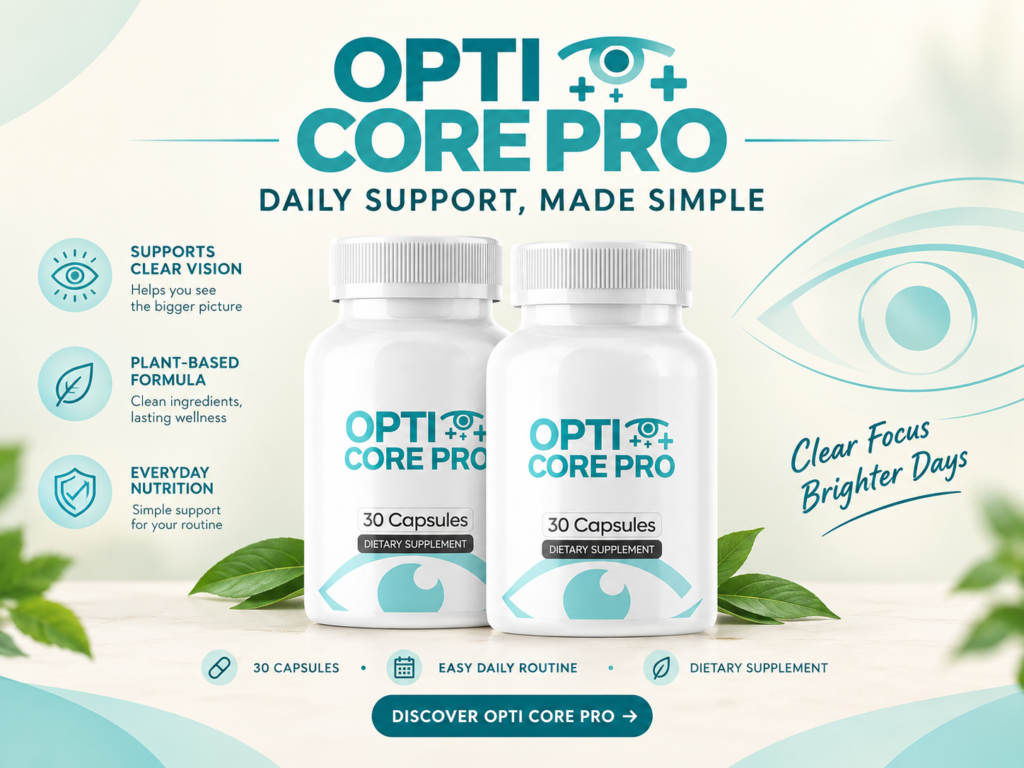
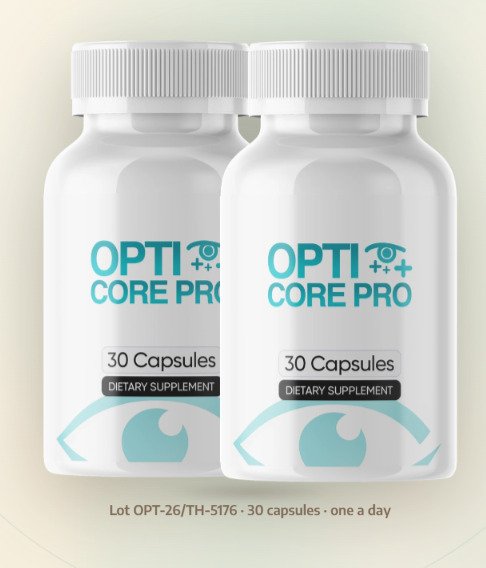
OptiCore Pro is a dietary supplement sold in capsule form and marketed for everyday eye and vision wellness. According to the product information and published Supplement Facts panel, each bottle contains 30 capsules, with a suggested serving of one capsule per day.
The formula contains vitamins, minerals, and a mixture of eleven botanical ingredients. Some nutrients are involved in normal body functions, including maintaining healthy tissues and supporting normal metabolism. However, that does not mean every ingredient in OptiCore Pro has been shown to improve eyesight or prevent eye disease.
What makes the formula different?
The product combines several types of ingredients in one capsule rather than focusing on a single nutrient. This may appeal to adults who prefer a convenient supplement instead of managing several separate products.
Another feature is its proprietary botanical blend. Although the ingredient names are listed, the label groups them under one total weight of 179.5 mg. The amount of each individual botanical is not disclosed on the published panel.
This makes it harder to compare the botanical ingredients with amounts used in scientific studies.
Is OptiCore Pro a medicine?
No. OptiCore Pro is marketed as a dietary supplement, not as a prescription medicine or a treatment for an eye condition. It should not be used as a replacement for prescribed medication, corrective glasses, contact lenses, or professional eye care.
Anyone experiencing blurry vision, eye pain, sudden changes in eyesight, or other concerning symptoms should seek appropriate medical advice rather than relying on a supplement.
How Does OptiCore Pro Work?
OptiCore Pro is designed around the idea of providing a combination of nutrients and plant-based ingredients as part of a daily wellness routine.
To understand how it may work, it is useful to look at the general roles of its nutrients and the limits of the available evidence.
The role of vitamins and minerals
Vitamins and minerals participate in many normal processes throughout the body. Some are important for maintaining healthy tissues, supporting immune function, and helping cells carry out their everyday activities.
Vitamin A, for example, is important for normal vision. Vitamin C and vitamin E have antioxidant functions, while zinc participates in numerous biological processes. These nutrients are relevant to general health, but their effects depend on the amount consumed and a person’s nutritional status.
Taking more of a nutrient than the body needs does not automatically produce better eyesight.
The role of botanical ingredients
Plant ingredients are often included in wellness supplements because they contain compounds that researchers have investigated for various biological effects. However, research involving a plant extract does not automatically establish the effectiveness of a supplement containing that plant.
The botanical blend in OptiCore Pro contains several ingredients in a combined amount of 179.5 mg. Since the quantity of each component is not individually stated, it is difficult to determine whether any particular botanical is present at a level associated with a specific effect.
What does the scientific evidence say?
Research on certain eye supplements has identified benefits for particular groups of people with specific eye conditions. For example, the National Center for Complementary and Integrative Health explains that AREDS and AREDS2 formulations may help slow the progression of age-related macular degeneration in people who meet particular clinical criteria. Those findings should not be generalized to every eye supplement.
The available sources reviewed for this article do not establish that OptiCore Pro itself has demonstrated comparable results in a clinical trial.
The most realistic approach is to view it as a supplement with a broad ingredient list, not as a proven way to sharpen vision or reverse an eye problem.
OptiCore Pro Ingredients and Their Stated Purposes
Ingredients are an important part of any OptiCore Pro review because the formula determines what the supplement actually provides.
The product’s published label lists sixteen individually quantified vitamins and minerals, followed by eleven botanicals within a proprietary blend.
Vitamins and minerals
| Ingredient | Amount per capsule | General nutritional role |
|---|---|---|
| Vitamin A, as beta-carotene | 60 mcg RAE | Supports normal vision and other body functions |
| Vitamin C | 60 mg | Antioxidant and collagen formation |
| Vitamin D | 10 mcg | Supports bone health and calcium regulation |
| Vitamin E | 7 mg | Antioxidant function |
| Thiamin (vitamin B1) | 3 mg | Helps the body process energy from food |
| Vitamin B6 | 4 mg | Supports normal metabolism and nervous system function |
| Folate | 748 mcg DFE | Supports cell division and DNA production |
| Vitamin B12 | 6 mcg | Supports red blood cell formation and nerve function |
| Biotin | 2,500 mcg | Helps enzymes involved in nutrient metabolism |
| Pantothenic acid | 15 mg | Supports energy metabolism |
| Calcium | 40 mg | Supports bones and muscle function |
| Iron | 7.25 mg | Helps transport oxygen in the blood |
| Magnesium | 60 mg | Supports muscle, nerve, and enzyme functions |
| Zinc | 3.62 mg | Supports normal immune function and other processes |
| Manganese | 2 mg | Supports enzyme activity and metabolism |
| Potassium | 47 mg | Supports normal muscle and nerve function |
Source: the published OptiCore Pro Supplement Facts panel. Amounts are per capsule and should be checked against the physical bottle before use.
These nutrients have established roles in normal nutrition, but the table does not mean each one has been proven to improve vision when taken in the quantities listed.
Botanical ingredients in OptiCore Pro
The label lists the following eleven ingredients in its 179.5 mg proprietary blend.
-
P-aminobenzoic acid (PABA): A compound sometimes included in dietary supplement formulations. Its presence does not establish a vision benefit.
-
Horsetail extract: A plant ingredient investigated for uses unrelated to proving the effectiveness of this particular eye supplement.
-
Fo-Ti: A traditional botanical also known as Polygonum multiflorum. It has been associated with reports of liver injury, making safety considerations important.
-
Bamboo extract: A plant-derived ingredient. Its inclusion does not demonstrate that it improves eyesight.
-
Stinging nettle: A botanical used in various traditional and modern supplements. Its benefits depend on the preparation and intended use.
-
Chinese peony: A plant whose extracts have been studied for different biological effects, but that research does not establish an eye-health benefit for this formula.
-
Spirulina: A nutrient-containing cyanobacterium used in some nutritional products.
-
Saw palmetto: A botanical commonly discussed in supplements for purposes other than vision support.
-
Soybean plant sterols: Plant compounds associated with research into cholesterol management at suitable doses.
-
Alfalfa: A plant used as an ingredient in some nutritional products.
-
Barley grass: A plant-derived ingredient used in some green-food and wellness formulations.
The individual amounts of these botanicals are not disclosed in the published Supplement Facts panel. Therefore, their inclusion should not be treated as evidence that OptiCore Pro delivers the quantities used in relevant research.
Other ingredients and allergens
The published label also lists rice flour, hypromellose for the vegetable capsule shell, vegetable magnesium stearate, and silicon dioxide. It declares that the product contains soy.
People with soy allergies should not assume the supplement is suitable for them. Anyone with other allergies or dietary restrictions should inspect the actual packaging and consult a qualified healthcare professional if necessary.
Potential OptiCore Pro Benefits and Realistic Expectations
The potential benefits of OptiCore Pro should be considered in the context of normal nutrition, the product’s actual nutrient amounts, and the lack of established product-specific clinical evidence.
Convenient daily nutritional support
One capsule provides several vitamins and minerals in a single serving. For people who have difficulty maintaining a varied diet, a supplement may sometimes help address particular nutritional gaps.
However, whether supplementation is appropriate depends on individual needs. A person already receiving adequate nutrients from food and other supplements may not gain additional benefits from taking another multinutrient product.
Support for normal body functions
Several nutrients in the formula help maintain ordinary physiological processes. Vitamin A contributes to normal vision, while vitamin C, vitamin E, and zinc have roles in general health.
These functions should not be confused with proof that OptiCore Pro can correct refractive errors, eliminate the need for glasses, or treat conditions such as glaucoma or cataracts.
A simple capsule format
The product uses a once-daily capsule format according to its published label. This may be convenient for adults who prefer capsules to powders, liquids, or multiple separate supplements.
Convenience is a practical advantage, but it does not establish effectiveness.
What results should you expect?
There is no reliable basis for promising that OptiCore Pro will produce sharper vision, reduce screen-related discomfort, or prevent future eye disease.
Results can vary according to a person’s nutritional status, underlying health, lifestyle, and existing eye conditions. People with a nutrient deficiency may have different needs from those whose nutrient intake is already adequate.
For everyday eye care, appropriate lighting, regular breaks from screens, a balanced diet, protective eyewear when needed, and regular eye examinations remain important.
The National Center for Complementary and Integrative Health advises people not to replace established eye care or treatment with unproven approaches.
How to Use OptiCore Pro
The published product label recommends taking one capsule daily with an eight-ounce glass of water. It also suggests taking it 20–30 minutes before a meal, or following the instructions of a healthcare professional.
Follow the label directions
-
Check the serving instructions on the bottle you receive.
-
Do not take more than the recommended amount.
-
Avoid combining it with other supplements containing the same nutrients without checking the total intake.
-
Store the bottle in a cool, dry place away from heat and light.
-
Keep the product away from children.
-
Do not use the product if its safety seal is missing or damaged.
How long should you take it?
The published label does not establish a clinically proven duration for improving eyesight. A larger bottle supply or a longer purchasing plan should not be interpreted as evidence that taking the supplement for longer will produce better results.
If you are considering ongoing use, ask a healthcare professional whether the formula is appropriate for your nutritional needs and medical history.
Should you take it with food?
The label suggests taking the capsule before a meal with water. If this conflicts with advice you have received about a medication or another supplement, ask a pharmacist or healthcare professional before proceeding.
Do not change prescribed medication schedules to accommodate a dietary supplement without professional guidance.
Who May Consider Using OptiCore Pro?
OptiCore Pro may interest adults who are comparing multinutrient supplements and want to examine the ingredients before making a decision.
Adults interested in nutritional supplements
Adults who want a convenient capsule containing several vitamins and minerals may wish to evaluate the formula alongside their existing diet and supplements.
The important question is whether the listed nutrients meet a genuine need, not simply whether the label contains a long ingredient list.
People who spend a lot of time on screens
Office workers, students, and people who regularly use digital devices may be interested in products marketed for eye wellness.
However, screen-related discomfort can have many causes, including reduced blinking, dry eyes, unsuitable lighting, and an outdated glasses prescription. A supplement is not a proven solution for all these problems.
People who want to review the formula carefully
Some consumers prefer to check ingredient amounts, serving directions, allergen statements, and purchasing terms before choosing a supplement. Reading the full label is particularly important with OptiCore Pro because its botanical blend does not disclose individual quantities.
Who should seek professional advice first?
The product’s published caution advises pregnant or nursing women, people under 18, and individuals with a known medical condition to consult a physician before use.
People taking prescription medication, managing a chronic condition, or using several dietary supplements should also seek professional advice before adding this product.
Possible OptiCore Pro Side Effects and Precautions
A supplement’s natural or nutritional ingredients do not guarantee that it is safe for everyone. The risks depend on the ingredients, doses, personal health, allergies, and interactions with other products.
Digestive discomfort and individual reactions
Some people experience stomach discomfort or other unwanted effects when taking dietary supplements. The published product information does not provide enough independent evidence to establish a reliable rate of side effects for OptiCore Pro itself.
Stop taking a supplement and seek appropriate medical advice if you experience a concerning reaction. Severe allergic symptoms require urgent medical attention.
Important precaution about Fo-Ti
Fo-Ti, also known as Polygonum multiflorum, is included in the product’s proprietary blend. Published medical literature has associated this botanical with liver injury.
Because the formula does not disclose the individual amount, consumers cannot readily assess their exposure from the label alone. This is an important reason to discuss the product with a healthcare professional before use, especially if you have a history of liver problems or take medicines that may affect the liver.
High-dose biotin and laboratory tests
One of the more notable features of the published OptiCore Pro label is its biotin content of 2,500 micrograms per capsule.
Biotin can interfere with certain laboratory tests, potentially producing misleading results. The US Food and Drug Administration has warned about this issue, including with some tests used to assess heart-related conditions.
If you take OptiCore Pro, tell your doctor and laboratory staff before blood tests. Do not stop a medically recommended supplement or change your treatment plan without professional advice.
Interactions and overlapping nutrients
The formula includes iron, zinc, magnesium, and several vitamins. These nutrients can overlap with multivitamins and other supplements, and some may interact with particular medicines.
Ask a pharmacist or healthcare professional to review your complete list of supplements and medicines before starting OptiCore Pro.
Avoid replacing eye examinations
A supplement should not delay assessment of vision changes or ongoing eye symptoms. Sudden loss of vision, a sudden increase in floaters, flashes of light, or severe eye pain warrants urgent medical evaluation.
Safety reminder: This article is educational and is not a substitute for personalized medical advice.
OptiCore Pro Customer Reviews and Feedback
Customer feedback can help shoppers understand how a product is presented and what concerns other buyers report. However, reviews should be assessed carefully, especially when the information comes from a seller or distributor rather than an independent review platform.
What do published OptiCore Pro reviews say?
One distributor page reports an average rating of 4.6 out of 5 from 1,098 written reviews and 9,125 orders. It also publishes a small roster of eight buyers. These figures are distributor-reported and have not been independently verified in the material reviewed for this article.
The published summary describes three general themes:
-
Positive feedback: Some listed buyers reportedly liked incorporating the capsule into their daily routine.
-
Mixed feedback: Some wanted more noticeable changes during the first few weeks.
-
Negative feedback: Some listed buyers reportedly felt that the product did not meet their expectations and stopped using it early.
These are summaries from a distributor’s page, not independently confirmed testimonials. They should not be interpreted as proof that the product improves vision.
How should you evaluate customer reviews?
Before relying on an OptiCore Pro review, consider whether it identifies the reviewer, explains how long the product was used, and describes specific experiences rather than making broad claims.
Look for independent feedback across multiple sources. Be cautious if many comments repeat identical wording, promise dramatic results, or offer no meaningful details about the buyer’s experience.
Remember that satisfaction with ordering, packaging, or customer service is different from evidence of a health benefit.
OptiCore Pro Reviews and Complaints
A balanced review should consider possible disadvantages as well as positive feedback.
Complaints about slow results
The distributor’s published review summary includes comments about wanting faster results.
This is an important consideration because OptiCore Pro has not been established as a fast-acting vision treatment. Buyers should not expect immediate changes in eyesight or assume that waiting a certain number of weeks will guarantee improvement.
Concerns about the ingredient blend
The proprietary blend weighs 179.5 mg in total, but the label does not disclose how much of each of its eleven botanical ingredients is included.
This makes it difficult for consumers to compare individual botanical doses with those investigated in scientific studies.
Questions about value for money
The published US sales pages require buyers to purchase at least two bottles rather than offering a single-bottle option. The initial payment is therefore relatively substantial for someone who wants to try the supplement for the first time.
Uncertainty about real-world effectiveness
The available material does not establish that OptiCore Pro has been tested in a well-designed clinical trial demonstrating an improvement in vision.
This does not, by itself, prove that the product is ineffective or fraudulent. It means consumers should distinguish the seller’s claims, reported customer satisfaction, and independently demonstrated health outcomes.
OptiCore Pro Price, Offers, and Value for Money
The published US sales pages list three purchasing options. The following prices were displayed on a product sales page in September 2026 and may change.
| Package | Total price | Price per bottle | Capsule supply |
|---|---|---|---|
| 2 bottles | $158 | $79 | 60 days |
| 3 bottles | $207 | $69 | 90 days |
| 6 bottles | $294 | $49 | 180 days |
The seller’s pages advertise free US shipping on the three- and six-bottle packages. The smallest package has a shipping charge listed on one of the sales pages. Check the current checkout total before placing an order.
Which package offers better value?
The six-bottle option has the lowest listed price per bottle, but it also requires the largest upfront payment. A lower unit price does not necessarily mean better value if you have not determined whether the product is suitable for you.
The two-bottle option requires less spending upfront than the larger packages, although it is still a commitment to 60 capsules.
For a first-time buyer, the most sensible decision is to evaluate the ingredient list, safety considerations, evidence, and refund terms before purchasing multiple bottles.
Is the money-back guarantee worth considering?
The seller’s main sales page advertises a 60-day money-back guarantee, while another website associated with the product advertises a 180-day guarantee.
This difference is important. The terms may depend on which seller processes the order, and a guarantee advertised on one website should not be assumed to apply to purchases made elsewhere.
Before paying, verify the refund period, its starting date, any return requirements, shipping costs, and the correct contact details. Keep your order confirmation and payment receipt.
Is OptiCore Pro a Scam or Legit?
The question of whether OptiCore Pro is a scam or legitimate cannot be settled simply by reading a product description or looking at a high customer rating.
The published product information provides a named ingredient panel, serving directions, package prices, and seller-stated refund terms. Those are useful details to review, but they do not independently prove product effectiveness, manufacturing quality, or the accuracy of every marketing statement.
Points to check before purchasing
-
Ingredient transparency: Confirm that the bottle you receive matches the published Supplement Facts panel.
-
Health claims: Be wary of promises to restore perfect eyesight, eliminate glasses, or cure eye conditions.
-
Clinical evidence: Look for independent human trials on the finished product, not just studies involving individual nutrients.
-
Seller identity: Check the business details, contact information, and checkout domain.
-
Refund policy: Confirm the exact terms that apply to your order.
-
Payment security: Use a reputable payment method and retain your transaction records.
My assessment
Based on the information reviewed, there is not enough evidence to label OptiCore Pro definitively as either a scam or a proven vision supplement.
Its formula contains identifiable nutrients, but the evidence does not establish that the finished product delivers a specific vision benefit. The proprietary blend and the reported difference between refund policies also deserve attention.
Consumers should make their decision based on transparent labeling, realistic claims, safety, and verifiable purchasing terms rather than marketing language alone.
OptiCore Pro Pros and Cons
Potential advantages
-
Combines several vitamins and minerals in one daily capsule.
-
Publishes amounts for sixteen individual nutrients.
-
Provides a named list of eleven botanical ingredients.
-
Uses a vegetable capsule shell rather than a gelatin shell.
-
Offers several package sizes and seller-advertised refund terms.
Potential disadvantages
-
No established product-specific clinical evidence demonstrating improved vision was identified.
-
Individual botanical quantities are not disclosed.
-
The label declares soy, which matters for people with soy allergies.
-
Fo-Ti has safety concerns, and the high biotin content warrants attention before laboratory testing.
-
The minimum purchase is two bottles on the reviewed US sales pages.
-
Different seller pages advertise different money-back periods.
Where to Buy OptiCore Pro and Official Website Information
People searching for where to buy OptiCore Pro should first establish which website is responsible for the specific order they intend to place.
Two websites publishing product information were identified during research:
These websites publish different guarantee periods and different distributor or retailer details. They should not automatically be treated as the same seller or as proof of a single, independently verified official manufacturer website.
Before purchasing, verify the seller’s identity and make sure the product label, package size, price, shipping costs, and refund terms match the offer.
If you are ordering from outside the United States, also check whether the seller ships to your country, what the delivery charges are, and whether import duties or local restrictions apply.
Avoid assuming that a website is trustworthy simply because its domain contains the product name. A professional-looking website, customer ratings, and a money-back promise are not substitutes for independent verification.
Frequently Asked Questions About OptiCore Pro
1. What is OptiCore Pro used for?
OptiCore Pro is marketed as a dietary supplement for everyday eye and vision wellness. Its formula contains vitamins, minerals, and botanical ingredients. Its effectiveness for improving eyesight has not been established by the evidence reviewed here.
2. What are the main OptiCore Pro ingredients?
The published label lists vitamins A, C, D, E, and several B vitamins, along with calcium, iron, magnesium, zinc, manganese, and potassium. It also includes biotin and an eleven-ingredient botanical blend.
3. How do you take OptiCore Pro?
The published label recommends one capsule daily with eight ounces of water, preferably 20–30 minutes before a meal, or as directed by a healthcare professional. Always confirm the directions on your own bottle.
4. Does OptiCore Pro improve eyesight?
There is insufficient evidence in the sources reviewed to confirm that OptiCore Pro itself improves visual acuity or reverses vision problems. Its ingredients have different nutritional roles, and research on individual nutrients cannot automatically be applied to the complete formula.
5. Are there any OptiCore Pro side effects?
Individual reactions are possible, and some ingredients raise specific safety considerations. Fo-Ti has been associated with liver injury, while biotin can interfere with certain laboratory tests. Consult a healthcare professional before use if you have a medical condition or take medication.
6. Is OptiCore Pro suitable for vegetarians?
The published label identifies hypromellose as the vegetable capsule shell, rather than gelatin. However, the product also declares soy, and people with allergies should check the complete packaging before use.
7. How much does OptiCore Pro cost?
The reviewed US sales pages list packages of two bottles for $158, three for $207, and six for $294. Prices and shipping charges may change, so confirm the current checkout total.
8. Is OptiCore Pro a scam or legitimate?
The available information is insufficient to make a definitive judgment about fraud or to confirm the product’s effectiveness. Review the seller’s identity, ingredient label, refund terms, and independent evidence before making a purchase.
9. Where can I buy OptiCore Pro?
You can start by examining the product information and pricing pages linked in the buying section. Confirm which business will process your payment and which guarantee applies before completing an order.
10. Can OptiCore Pro replace eye medication or glasses?
No. A dietary supplement should not replace prescribed medication, corrective lenses, or regular eye examinations. If your vision changes or you have persistent eye discomfort, consult an eye care professional.
Final Thoughts on OptiCore Pro Reviews
OptiCore Pro offers a combination of vitamins, minerals, and botanical ingredients in a convenient daily capsule. Its published label provides amounts for sixteen nutrients, but the eleven ingredients in its proprietary blend are grouped under one total weight. This limits how easily consumers can assess the botanical doses.
The main concerns are the lack of established product-specific clinical evidence for vision improvement, the safety considerations associated with certain ingredients, the high biotin content, and differences between published seller guarantees.
That does not automatically mean the product is a scam. It means that consumers should avoid treating marketing claims or distributor-reported reviews as proof of effectiveness.
If you are considering OptiCore Pro, first compare its ingredients with your nutritional needs and existing supplements. Ask a healthcare professional whether it is appropriate for you, especially if you take medication or have an eye condition.
Disclaimer: This article is for informational purposes only and does not constitute medical advice. Dietary supplements are not substitutes for professional eye care, diagnosis, or treatment. Individual responses may vary.