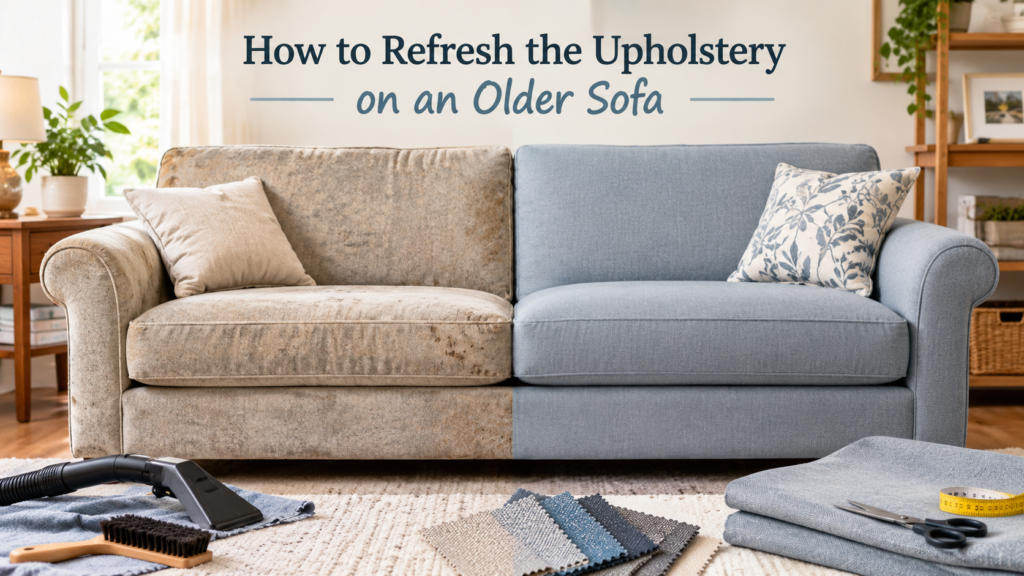
An older sofa can still be one of the most comfortable and useful pieces of furniture in your home. Over time, however, everyday use can leave its upholstery looking dull, stained, flattened, or generally worn out. Before you decide to replace the entire sofa, consider giving it a refresh. With the right cleaning methods, minor repairs, and a few simple updates, an older sofa can look noticeably cleaner and feel comfortable again.
If the fabric has accumulated years of dust, food spills, pet hair, or everyday grime, professional cleaning can make a significant difference. A reliable Upholstery Cleaning Service San Diego can help remove deeply embedded dirt and stains while using methods appropriate for the sofa’s particular fabric. Even when the upholstery looks reasonably clean, professional attention can restore some of its original freshness and improve the overall appearance of the furniture.
Start by Inspecting the Sofa
Before cleaning or making any changes, take a few minutes to inspect the sofa carefully. Look at the upholstery, cushions, seams, frame, legs, and other visible components. This helps you determine whether the sofa needs a simple refresh or more substantial restoration.
Check for loose threads, small tears, damaged seams, sagging cushions, discoloration, and stubborn stains. Also pay attention to unusual odors, especially if the sofa has been exposed to pets, smoke, moisture, or food spills.
The condition of the frame is particularly important. If the frame is solid and the sofa is structurally sound, refreshing the upholstery may be worthwhile. If the frame is severely damaged or unstable, extensive upholstery work may not be the best investment.
Identify the Upholstery Fabric
Not every upholstery material should be cleaned in the same way. Before applying any cleaning product, identify the fabric and check the manufacturer’s care instructions if they are available.
Common upholstery materials include:
- Cotton
- Linen
- Polyester
- Microfiber
- Velvet
- Leather
- Synthetic blends
Many sofas also have a care label with a cleaning code. These codes can help indicate whether the fabric is suitable for water-based cleaning, solvent-based cleaning, or vacuum-only care.
If you cannot identify the material or are unsure about the appropriate cleaning method, avoid experimenting with strong household cleaners. An unsuitable product can cause discoloration, shrinkage, watermarks, or permanent fabric damage.
Remove Loose Dirt and Dust First
Cleaning should begin with dry debris rather than immediately applying moisture. Use a vacuum cleaner with an upholstery attachment to thoroughly clean the sofa.
Work slowly across the seat cushions, back cushions, armrests, sides, and crevices. Pay special attention to areas where crumbs, dust, pet hair, and other debris tend to collect.
If the cushions are removable, vacuum both sides. You can also gently vacuum underneath the cushions and around the frame.
For stubborn pet hair, a soft upholstery brush or lint roller can help loosen and collect hair that a standard vacuum may miss.
This step may seem basic, but removing loose debris first makes the rest of the cleaning process more effective.
Treat Stains Carefully
Older sofas often have stains that have been there for months or even years. Trying to remove them aggressively can sometimes make the problem worse.
Start by identifying the type of stain whenever possible. Food, grease, ink, coffee, pet accidents, and general dirt may require different approaches.
Always test a cleaning solution on a small, hidden area before treating a visible section. This allows you to check for color bleeding, fading, or other reactions.
Avoid soaking the fabric. Excess moisture can penetrate into the padding and create lingering odors or even encourage mold growth if the material does not dry properly.
Instead, use a controlled amount of an appropriate cleaner and gently blot the affected area. Rubbing aggressively can spread the stain or damage delicate fibers.
Why Blotting Is Better Than Scrubbing
When dealing with upholstery, vigorous scrubbing can push a stain deeper into the fabric. It can also weaken fibers and create a noticeably different texture around the treated area.
Blotting works by lifting moisture and loosened dirt from the fabric without placing excessive friction on the surface. Use a clean cloth and work from the outside of the stain toward the center when appropriate.
Deep Clean the Upholstery
Once loose dirt and surface stains have been addressed, the sofa may benefit from a deeper cleaning. The appropriate method depends on the upholstery material and its care requirements.
Professional upholstery cleaning can be particularly useful for older sofas because dirt often becomes embedded below the visible surface. Professional cleaners can assess the fabric and choose equipment and cleaning products based on its condition.
A deep clean may help remove:
- Embedded dust and dirt
- Body oils
- Food residue
- Pet hair and dander
- Surface stains
- Unpleasant odors
- General buildup from years of use
The goal isn’t simply to make the sofa smell fresh. Proper cleaning should improve the overall cleanliness and appearance without unnecessarily stressing the fabric.
Refresh the Sofa Cushions
Cushions often show wear before the rest of the sofa. Years of sitting in the same spots can flatten the filling and make the sofa appear tired.
If the cushion covers are removable and washable, follow their care instructions carefully. Do not assume that every removable cover is machine washable.
For cushions that have become flat, inspect the internal filling. Depending on the sofa’s construction, replacing or adding suitable foam or filling may restore some of its original support.
Rotating and flipping cushions regularly can also help prevent uneven wear. This simple habit is especially useful for sofas that receive heavy daily use.
Repair Small Upholstery Problems
Cleaning alone may not make an older sofa look completely refreshed if there are visible physical imperfections.
Small loose seams can sometimes be repaired before they become larger tears. Loose buttons can be reattached, and minor areas of wear may be repaired depending on the fabric.
For more complicated damage, consider having the sofa assessed by an upholstery professional. Attempting a complicated repair without the right tools or experience can result in uneven stitching or additional damage.
The earlier you address minor problems, the easier they are usually to manage.
Improve the Appearance With Accessories
You don’t always need to completely reupholster an older sofa to give it a new appearance. Accessories can make a surprisingly noticeable difference.
Consider adding a few well-chosen cushions or a throw blanket that complements the room. A properly sized sofa cover can also provide additional protection, particularly in homes with children or pets.
However, avoid using too many accessories simply to hide damage. If the upholstery is structurally worn, stained beyond reasonable cleaning, or badly torn, restoration may be more appropriate.
Consider Reupholstering the Sofa
Sometimes an older sofa is worth saving but the original fabric has reached the end of its useful life. In that situation, reupholstering may provide a more substantial transformation.
Reupholstering involves removing the existing fabric and replacing it with new material. Depending on the sofa, the process may also include replacing foam, padding, webbing, or other components.
This can be a good option when the sofa has a strong frame, a comfortable design, or sentimental value. You can also select a new fabric that better suits your current interior style.
Before committing, compare the expected restoration cost with the price of a quality replacement sofa. A well-made older sofa can sometimes be worth restoring, while an inexpensive piece with a weak frame may not justify extensive work.
Let the Sofa Dry Properly
Drying is an important part of upholstery care. After cleaning, make sure the sofa has sufficient airflow so moisture can evaporate properly.
Open windows when weather conditions allow, use fans to improve air circulation, and avoid covering the sofa until it is completely dry.
Do not sit on heavily damp cushions unless the cleaning instructions specifically allow it. Pressure can slow drying and potentially affect the shape of the cushion.
A sofa that remains damp for too long can develop unpleasant odors, so proper drying should never be treated as an afterthought.
Keep Your Refreshed Sofa Looking Good
Once you’ve brought your older sofa back to life, regular maintenance will help preserve the results.
Vacuum the upholstery regularly, address spills as soon as they happen, rotate cushions when appropriate, and avoid placing the sofa in direct sunlight for extended periods if the fabric is susceptible to fading.
It is also worth scheduling deeper cleaning based on how frequently the sofa is used. A living-room sofa used every day will generally need more attention than a piece of furniture in a rarely used guest room.
A Simple Maintenance Routine
A practical routine might include weekly vacuuming, immediate attention to fresh spills, regular cushion rotation, and periodic professional cleaning when needed.
These small habits prevent dirt and oils from building up to the point where restoring the sofa becomes much more difficult.
When Cleaning Isn’t Enough
Not every older sofa can be restored through cleaning alone. If the upholstery is severely faded, extensively torn, permanently stained, or structurally damaged, replacement or professional reupholstery may be a better option.
Likewise, if the sofa has persistent odors despite thorough cleaning, there may be contamination within the padding or other internal materials.
The key is to assess the entire piece rather than focusing only on how the surface looks. A sofa with clean fabric but broken support may still need significant work, while a structurally sound sofa with dirty upholstery could be an excellent candidate for restoration.
Final Thoughts
Refreshing an older sofa doesn’t necessarily require buying new furniture. Start with a careful inspection, identify the upholstery material, remove loose dirt, treat stains gently, and consider professional deep cleaning when the fabric needs more thorough attention. From there, cushion repairs, small upholstery fixes, and simple accessories can further improve its appearance and comfort. With consistent maintenance and the right care, an older sofa can remain a practical and attractive part of your home for years. If you need help bringing tired upholstery back to life, Coastal Carpet Care can be a useful option to consider for professional upholstery cleaning and care.