Modern buildings demand more from their HVAC systems than ever before. In addition to maintaining comfortable temperatures, today’s heating, ventilation, and air conditioning systems must also manage indoor humidity effectively. Excess moisture can lead to mold growth, poor indoor air quality, and reduced occupant comfort, while air that is too dry can create health and material concerns. One proven solution for achieving balanced humidity control is bypass dehumidification.
Bypass dehumidification is a practical design strategy that enhances moisture removal without significantly increasing energy consumption. When properly integrated into an HVAC system, it helps improve comfort, protect building materials, and optimize system performance. Understanding how bypass dehumidification works allows engineers, contractors, and facility managers to design HVAC systems that perform efficiently in a wide range of environments.
What Is Bypass Dehumidification?
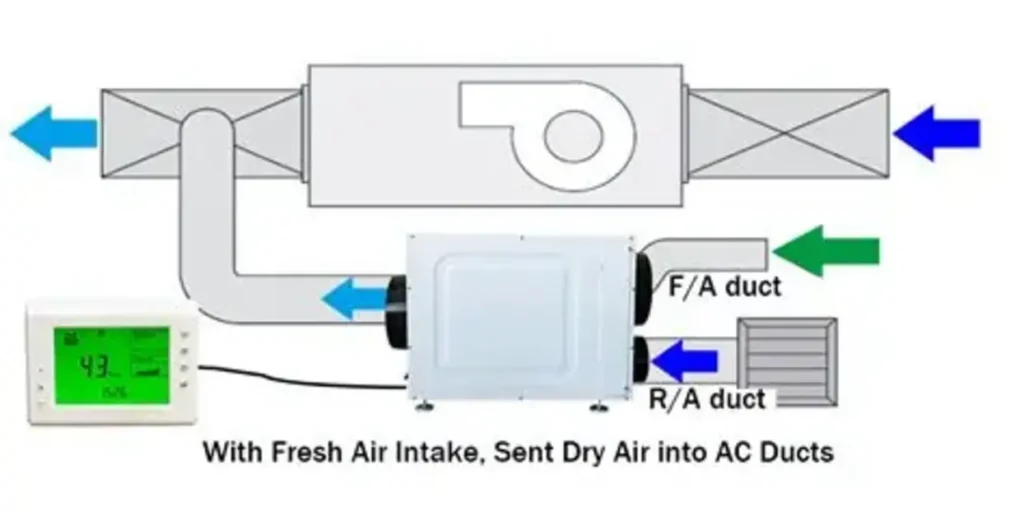
Bypass dehumidification is an HVAC design method that directs a portion of the conditioned air around the cooling coil while the remaining air passes through the coil for intensive cooling and moisture removal. Afterward, the cooled and dehumidified air is mixed with the bypassed air before being distributed throughout the building.
Unlike conventional cooling methods that rely solely on lowering air temperature, bypass dehumidification focuses on controlling humidity while minimizing unnecessary overcooling. This approach is particularly valuable in climates where humidity remains high even when cooling demand is relatively low.
The technique enables HVAC systems to achieve better latent cooling performance without requiring excessive compressor operation or supplemental reheating in many applications.
Why Humidity Control Matters
Indoor humidity directly affects occupant comfort, equipment reliability, and building health. Maintaining indoor relative humidity between 40% and 60% offers several important benefits, including:
- Improved occupant comfort
- Reduced risk of mold and mildew growth
- Better indoor air quality
- Protection of wood, paper, electronics, and sensitive materials
- Lower chances of condensation on building surfaces
Traditional HVAC systems often prioritize temperature control, allowing humidity levels to fluctuate during periods of light cooling demand. Bypass dehumidification addresses this limitation by improving moisture removal while maintaining comfortable supply air temperatures.
How Bypass Dehumidification Works
A bypass dehumidification system typically includes dampers that divide incoming airflow into two separate streams.
One stream passes through the cooling coil where moisture condenses and is removed. The second stream bypasses the coil entirely. After the cooling process, the two air streams are recombined to produce supply air that meets both temperature and humidity requirements.
This process offers several operational advantages:
- Enhanced moisture removal
- Reduced risk of overcooling occupied spaces
- Better supply air temperature control
- Lower energy usage compared to some reheat systems
- Improved overall HVAC efficiency
By carefully controlling the bypass airflow, designers can optimize both sensible and latent cooling performance.
Applications That Benefit from Bypass Dehumidification
Although bypass dehumidification can be applied in many building types, it is particularly valuable in facilities where humidity control is essential.
Healthcare Facilities
Hospitals, clinics, and laboratories require precise humidity control to protect patients, medical equipment, and sterile environments. Stable humidity also helps reduce the risk of microbial growth.
Schools and Universities
Educational buildings experience varying occupancy levels throughout the day. Bypass dehumidification maintains comfortable indoor conditions while reducing unnecessary energy consumption during partial occupancy.
Office Buildings
Modern office spaces often have significant internal heat gains from computers, lighting, and occupants. Proper humidity control improves employee comfort and productivity.
Hotels
Guest comfort depends on maintaining pleasant indoor conditions regardless of outdoor weather. Effective dehumidification reduces odors, prevents condensation, and enhances overall guest satisfaction.
Manufacturing Facilities
Industries such as pharmaceuticals, electronics, food processing, and precision manufacturing often require strict humidity control to protect products and maintain production quality.
Design Considerations
Designing an efficient bypass dehumidification system requires careful planning rather than simply adding bypass dampers to existing ductwork.
Proper Coil Selection
Cooling coils should be selected based on both sensible and latent cooling loads. Larger coil surface areas often improve moisture removal efficiency while reducing airflow resistance.
Airflow Management
Correct airflow balancing is essential for achieving optimal performance. Excessive bypass airflow may reduce dehumidification effectiveness, while insufficient bypass airflow may result in overly cold supply air.
Control Systems
Modern building automation systems can continuously monitor temperature, humidity, and occupancy to adjust bypass dampers dynamically. Smart controls maximize comfort while minimizing energy consumption.
Drainage Design
Because dehumidification produces condensate, drain pans and piping must be properly sized and maintained to prevent standing water and microbial growth.
Maintenance Accessibility
Designers should ensure easy access to coils, filters, dampers, and condensate systems to simplify routine inspection and cleaning.
Energy Efficiency Advantages
One of the primary reasons designers choose bypass dehumidification is its ability to improve HVAC energy performance.
Instead of cooling all supply air to very low temperatures and then reheating it, bypass systems achieve humidity control through intelligent airflow management. This reduces compressor runtime in many operating conditions while maintaining desired indoor humidity levels.
Additional efficiency benefits include:
- Lower cooling energy requirements
- Reduced reheat energy consumption
- Improved seasonal system efficiency
- Extended equipment life due to reduced operating stress
- Lower operating costs over the long term
These savings become increasingly valuable in large commercial buildings that operate HVAC systems continuously.
Common Challenges
Although bypass dehumidification offers many benefits, successful implementation requires careful attention to several potential challenges.
Improper damper calibration can reduce humidity removal efficiency. Dirty coils or clogged filters restrict airflow and negatively affect system performance. Inadequate condensate drainage may lead to water damage or biological contamination.
Regular preventive maintenance remains essential for maintaining both efficiency and indoor air quality.
Engineers should also evaluate local climate conditions before selecting bypass dehumidification. Buildings located in consistently humid regions often experience the greatest benefits from this design strategy.
Best Practices for Long-Term Performance
To maximize the effectiveness of bypass dehumidification systems, HVAC professionals should follow several best practices:
- Perform accurate heating and cooling load calculations.
- Select high-efficiency cooling coils designed for moisture removal.
- Integrate humidity sensors into the control strategy.
- Balance airflow during commissioning.
- Inspect dampers regularly for proper operation.
- Clean coils and replace filters according to maintenance schedules.
- Verify condensate drainage during routine service visits.
- Monitor indoor humidity trends using building automation systems.
Consistent maintenance ensures that the system continues to deliver reliable humidity control throughout its service life.
Conclusion
Designing efficient HVAC systems involves more than achieving the desired indoor temperature. Effective humidity management plays a vital role in occupant comfort, indoor air quality, energy efficiency, and building durability. Bypass dehumidification provides a practical and energy-conscious solution by enhancing moisture removal while avoiding unnecessary overcooling.
When combined with proper system design, intelligent controls, and routine maintenance, bypass dehumidification can significantly improve HVAC performance across commercial, institutional, healthcare, hospitality, and industrial facilities. As building owners continue to prioritize energy savings and healthier indoor environments, this approach remains an important strategy for creating HVAC systems that deliver reliable comfort and long-term operational efficiency.
Post by harga ac 1/2 pk acjakarta