stussy
Stussy Built the Blueprint Everyone Else Just Copies
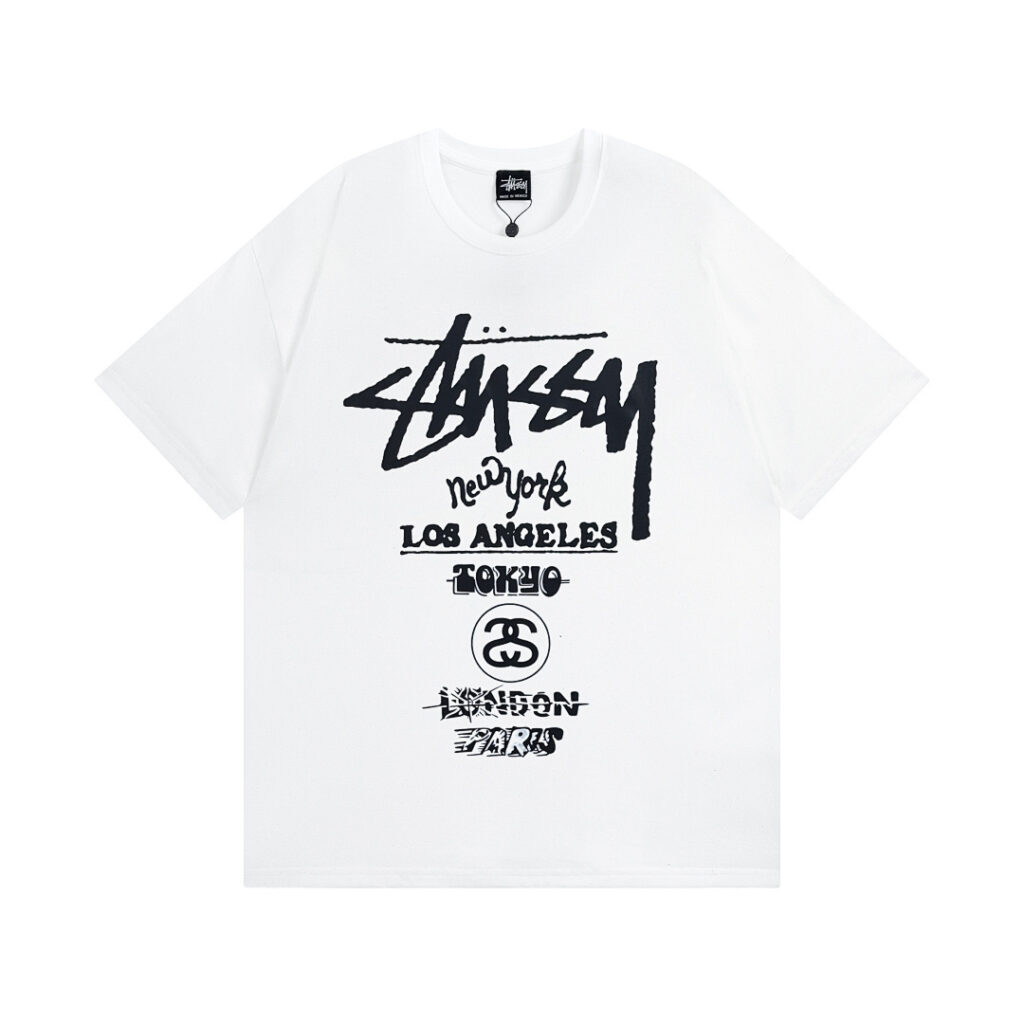
Stussy didn’t stumble into streetwear — it invented the entire language the culture still speaks fluently today. Shawn Stussy started signing surfboards in Laguna Beach in the early eighties, and that signature became a logo before logos were cool. The brand crossed surf, skate, and hip-hop at a time when nobody thought those worlds had anything to say to each other. That crossover isn’t just history — it’s the reason Stussy still feels authentic when newer labels feel manufactured. For Gen Z buyers, authenticity is the only currency that actually holds value long term. Stussy earns it by staying quiet, consistent, and weirdly unbothered while everyone else chases hype cycles. That restraint is, paradoxically, its greatest competitive investment signal.
BAPE Arrived Louder and Never Apologized for It
A Bathing Ape launched out of Tokyo’s Ura-Harajuku in 1993 and immediately refused to play by anyone else’s rules. Nigo designed for a small, obsessive circle and made scarcity the entire product strategy before Supreme ever thought of it. The camo prints, the shark hoodie, the Baby Milo graphics — every piece screamed “you either know or you don’t.” That insider energy turned BAPE into a status signal that crossed from Japan to the US entirely through rap culture and word of mouth. Pharrell, Kanye, and Lil Wayne weren’t paid to wear BAPE — they wore it because it genuinely meant something to them. That organic celebrity adoption gave BAPE a cultural credibility that no marketing budget can manufacture or replicate. Today that legacy is baked into every piece’s perceived value, whether the current buyer knows the history or not.
Resale Value Tells You What Hype Can’t Honestly Explain
When you’re thinking about streetwear as an investment, resale data is the only honest market signal worth reading carefully. Stussy pieces hold value steadily — not explosively, but reliably, the way index funds do versus lottery tickets. Chapter Store drops and limited collaborations consistently push two to four times retail on StockX and Grailed without requiring any breathless countdown timers. BAPE, by contrast, spikes harder on key releases — a shark hoodie in a rare colorway can flip at five to eight times retail almost overnight after a drop. But BAPE’s resale market is also more volatile, meaning timing your exit matters significantly more than it does with Stussy. For a patient Gen Z investor building a small streetwear portfolio, Stussy offers lower risk with slower but more sustainable appreciation. BAPE rewards speed, attention, and frankly a tolerance for the chaos that hype culture inevitably produces.
Collab Track Records Separate Good Bets from Expensive Regrets
Here’s what most streetwear guides conveniently skip — collaboration history is the clearest predictor of a brand’s long-term investment ceiling. Stussy’s collabs read like a greatest-hits of cultural taste-making: Nike, Dior, Our Legacy, Levi’s, and CDG among others. Each partnership elevated both parties and created pieces that genuinely appreciated in secondary markets over meaningful time horizons. BAPE’s collaboration roster is equally impressive and includes Adidas, Porsche, Comme des Garçons, and consistent NBA and NFL crossovers. The difference is that BAPE collabs tend to lean heavier into novelty, which means the appreciation window can be shorter before pieces plateau or correct. Stussy collabs feel considered and minimal, which aligns well with the aesthetic values Gen Z and minimalists are actually building wardrobes around right now. If you’re choosing based on collab quality alone, Stussy edges ahead on taste, while BAPE edges ahead on immediate resale velocity.
What Each Brand Actually Costs to Enter Seriously
Let’s be direct about the financial barrier because most investment guides pretend entry costs don’t matter to younger buyers on real budgets. A standard Stussy graphic tee runs between forty and sixty-five dollars retail, making it genuinely accessible for first-time buyers building a streetwear position. Stussy hoodies and jackets land in the one-hundred to two-hundred-fifty dollar range, which is real money but not irrational for a piece with documented resale stability. BAPE entry is steeper — basic tees start around eighty dollars, and the iconic shark hoodies retail between three hundred fifty and five hundred dollars depending on the season. On the secondary market, those same hoodies commonly trade between eight hundred and fifteen hundred dollars, so secondary entry is a genuine commitment. For a Gen Z buyer working with limited capital, Stussy lets you start small, learn the market, and scale up without catastrophic downside exposure. BAPE is the higher-upside play that demands either bigger capital or perfect timing — and usually both at once.
The Pieces Worth Actually Holding in 2026
Not every piece from either brand is worth holding — that’s the part nobody wants to say out loud but every serious collector already knows. For Stussy, the Chapter Store exclusives, the Nike Air Max and Air Force 1 collabs, and any CDG joint are the pieces with demonstrable multi-year appreciation built into their market history. Basic logo tees are wearable and enjoyable but shouldn’t anchor an investment strategy unless you find them significantly below market price. For BAPE, the first-camo shark hoodies in black, grey, and the rarer green colorways consistently outperform across all secondary platforms and time periods. Baby Milo pieces have nostalgia value with older millennials but trade more sideways than up with current Gen Z buyers who didn’t grow up with them. The WGM (World Gone Mad) full-zip hoodies remain the single most reliable BAPE hold across the widest range of buyers and geographies. Condition is everything — a creased, worn shark hoodie loses thirty to fifty percent of its secondary value against a deadstock equivalent almost immediately.
How Gen Z and Minimalists Should Actually Approach This
If your aesthetic leans minimal and your patience runs long, Stussy is structurally the better brand to build around without question. Its design language is clean, its drops don’t demand social media vigilance, and its pieces integrate with a wardrobe that isn’t entirely dedicated to streetwear signaling. Here are the core investment principles worth following if you’re starting in 2026:
- Buy Stussy for stability — Chapter exclusives and Nike collabs first, core logo pieces second
- Buy BAPE for velocity — shark hoodies and first-camo pieces only, in deadstock condition
- Avoid both brands’ mainline basics as investment pieces; wear them, don’t hold them
- Track StockX, Grailed, and GOAT weekly — price literacy is the actual competitive advantage here
- Size matters in resale — medium and large consistently outperform small and XL in secondary markets
The minimalist buyer wins by choosing fewer, better pieces rather than chasing volume across every drop cycle.
The Honest Verdict for 2026 and Beyond
Stussy and BAPE are not competing for the same buyer, which is actually the most important thing this entire guide is trying to say. Stussy is for the patient, taste-driven buyer who wants a brand that won’t embarrass them in five years and will quietly appreciate. BAPE is for the buyer who understands hype mechanics, moves fast, and treats streetwear like an actual active market rather than a passive hold. In 2026, Stussy’s aesthetic alignment with minimalism gives it a structural advantage with the audience that’s actually growing in spending power right now. BAPE’s cultural weight in Black American music and fashion culture keeps its floor surprisingly high even when hype cycles cool between major drops. Neither brand is dying — both have survived long enough to prove they’re not trend-dependent in the way their imitators clearly are. The real investment mistake isn’t choosing the wrong brand — it’s buying pieces you don’t understand from a culture you’re not actually part of.