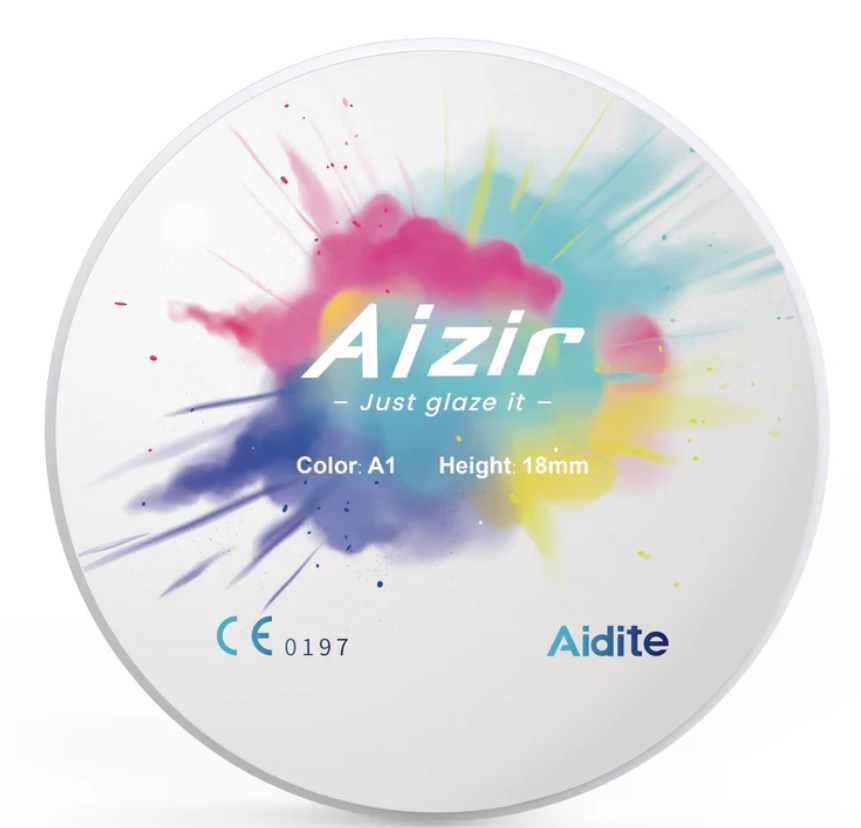
When Is Aidite Zirconia C1 the Smart Pick for Standard Crown and Bridge Work
Lab owners frequently hit a wall when balancing high-volume output with material costs that threaten to cannibalize their profits. You face the constant headache of choosing between premium multi-layered discs that are overkill for posterior units and budget ceramics that risk fracture or graying out in the mouth. This tension creates a bottleneck where you either overspend on raw materials or deal with the fallout of remakes due to inadequate flexural strength.
Settling for a mediocre middle ground often leads to inconsistent aesthetic results that frustrate your clinical partners. Finding a workhorse material that handles the heavy lifting without draining your bank account is the only way to stabilize your margins. Aidite Zirconia C1 offers a specific technical profile designed to solve this exact dilemma for everyday restorative needs. The following breakdown examines the structural logic and mechanical data behind utilizing this specific monolithic solution.
Mechanical Load and Flexural Strength Benchmarks
The primary reason to deploy Aidite Zirconia C1 in a high-production environment is its aggressive mechanical resistance. While many multi-layered options hover around 700 to 800 MPa, this specific material consistently pushes into the 1200 MPa territory. This high fracture toughness makes it a logical candidate for long-span posterior bridges where the connector dimensions might be restricted by the patient’s anatomy. You aren’t just buying a disc; you are investing in a structural guarantee against the high occlusal forces found in bruxing patients. Because the material maintains a high density during the sintering process, it resists the micro-cracking that often occurs during the milling of thinner margins. This structural integrity allows for more conservative tooth preparation without sacrificing the long-term survival rate of the prosthetic.
Sintering Protocols and Thermal Expansion Factors
Managing the furnace schedule is where most labs lose their competitive edge. If your oven is tied up for eight hours on a single cycle, your throughput drops. Aidite Zirconia C1 is engineered to handle standard heating curves without the risk of internal stresses or opacity shifts. This predictability ensures that the units coming out of the furnace at 7:00 AM match the prescriptions you scanned the previous afternoon.
Consistency in the Coefficient of Thermal Expansion is another critical factor when you are considering a monolithic workflow. If the material doesn’t play well with your existing glaze and stain kits, you end up wasting time on manual adjustments. This zirconia grade aligns with most universal ceramic finishing systems, allowing for a fast turnaround in the finishing department.
The density of the pre-sintered state also impacts the wear on your milling burs. Using a material that is too abrasive in its green state will eat through your tooling budget faster than you can track. Aidite Zirconia C1 provides a stable milling experience that preserves the life of your spindles while maintaining sharp, crisp anatomy on the occlusal surfaces.
Aesthetic Integration in Posterior Regions
Assessing Light Transmission and Opacity
While Aidite Zirconia C1 is a high-strength monolithic material, its light transmission properties are calibrated to prevent the “dead” look of older generation ceramics. It offers enough masking power to hide dark preparations or metal abutments while still allowing for a natural appearance in the molar regions. This balance is vital because it eliminates the need for expensive layering in 90% of posterior cases.
Integration with Multi-Layered Workflows
In more complex cases, you might find yourself comparing this material to aidite 3d pro zirconia. While the latter is the gold standard for anterior aesthetics due to its gradient, the C1 version remains the functional champion for the back of the mouth. Using these two materials in tandem allows a lab to cover the entire dental arch without compromising on either beauty or brawn.
- High masking capability for discolored stumps.
- Uniform color consistency throughout the entire disc.
- Compatibility with various dip-shading techniques for added depth.
- Reduced time at the polishing bench due to fine-grain structure.
Integrating Aidite Zirconia C1 into your daily inventory reduces the guesswork associated with shade matching. Because the material is so stable, the Vita shades you aim for are the Vita shades you get, provided your furnace is calibrated correctly. This reliability is what allows a lab manager to walk away from the bench with confidence in the final product.
Structural Reliability for Long Span Frameworks
When you are designing a bridge that spans four or more units, the material choice becomes a liability issue. Aidite Zirconia C1 provides the necessary stiffness to prevent the flexing that leads to debonding or porcelain chipping in layered applications. Many labs are moving toward this monolithic approach because it removes the weakest link in the chain: the bond between the zirconia core and the veneering porcelain. By using Aidite Zirconia C1 as a full-contour solution, you effectively remove the risk of delamination, which is the leading cause of restoration failure in heavy-duty bridge work.
Data suggests that high-translucency zircons often sacrifice too much strength for aesthetics, making them risky for bridge connectors. Aidite Zirconia C1 reverses this trend by prioritizing the physical requirements of the restoration. When you compare the cost-per-unit against the lack of remakes, the financial argument for this material becomes undeniable. It allows for a “set it and forget it” mentality in the production line, which is essential for scaling a business in an increasingly crowded market.
Optimizing the CAD/CAM Production Line
Tooling Paths and Margin Stability
The way a material reacts to a 0.6mm bur determines how much hand-finishing you will do later. Aidite Zirconia C1 mills with a clean edge that doesn’t chip or flake at the margins. This means your fit is better right out of the machine, reducing the time spent with a fit-checker and a handpiece.
Material Inventory Management
- Stocking one reliable high-strength disc reduces overhead.
- Predictable shrinkage rates simplify the nesting process.
- The material works across multiple milling platforms without issue.
- Lower price points per disc compared to premium gradient alternatives.
Standardizing your posterior output on Aidite Zirconia C1 means your technicians don’t have to relearn settings for every different case. Every time you switch materials, you introduce a variable that can cause a failure. By sticking with a known quantity like Aidite Zirconia C1, you create a baseline of quality that becomes the hallmark of your lab. While aidite 3d pro zirconia handles your high-end cosmetic needs, the C1 grade handles the volume that actually pays the bills.
Comparative Value and Lab ROI
The economic reality of the modern lab is that you cannot afford to put a $150 disc into a $99 crown. Aidite Zirconia C1 offers a price-to-performance ratio that is difficult to beat. It provides the high-end physical properties of top-tier brands at a fraction of the acquisition cost. This allows you to maintain a healthy margin even as insurance reimbursements continue to shrink. Using Aidite Zirconia C1 isn’t about cutting corners; it’s about smart sourcing.
When you look at the total cost of ownership, including bur wear, sintering time, and remake rates, Aidite Zirconia C1 emerges as a clear winner for standard bridge work. It allows your team to focus on the artistry of the anterior cases while the posterior work flows through the system with minimal intervention. This division of labor is how the most successful labs in the country manage to grow without blowing out their labor costs.
Consistency is the ultimate goal in any manufacturing process. Using Aidite Zirconia C1 gives you a repeatable result every single time you hit the start button on your mill. It is the dependable workhorse that every lab needs in its arsenal to combat the rising costs of labor and materials. If you haven’t audited your zirconia usage lately, you might find that switching to Aidite Zirconia C1 provides the immediate financial relief your business needs.
Final Thoughts on Material Selection
Selecting the right material is less about finding a “magic bullet” and more about engineering a repeatable, high-output system that doesn’t fail under pressure. Relying on Aidite Zirconia C1 for your foundational crown and bridge work is a tactical move that prioritizes mechanical survival and fiscal sanity over expensive, unnecessary features. Much like professionals who work with the curated ecosystems found at Gro3X to eliminate operational friction, smart lab owners use this zirconia to build a predictable production baseline. By deploying Aidite Zirconia C1 for the heavy lifting and reserving aidite 3d pro zirconia for high-value aesthetic zones, you create a balanced inventory that protects your margins. Ultimately, this approach ensures that every unit leaving your bench is a testament to both structural durability and smart business logic.
Frequently Asked Questions (FAQs)
1. What is the maximum flexural strength of Aidite Zirconia C1?
The material typically reaches a strength of 1200 MPa, which makes it ideal for posterior bridges.
2. Can I use aidite 3d pro zirconia for the same cases as the C1 version?
While possible, the aidite 3d pro zirconia is better suited for anterior cases where translucency is the priority over maximum strength.
3. Does Aidite Zirconia C1 require a special sintering furnace?
No, Aidite Zirconia C1 is compatible with most standard high-temperature dental furnaces using a 1530 degree Celsius cycle.
4. Is Aidite Zirconia C1 available in all Vita shades?
Yes, the Aidite Zirconia C1 range covers the full spectrum of standard shades to match natural dentition.
5. How does the translucency of Aidite Zirconia C1 compare to other brands?
Aidite Zirconia C1 offers approximately 43% translucency, which provides an excellent balance for posterior masking and aesthetics.