Key Takeaways
- Bird vitamins can support health, immunity, and recovery—but only when used correctly.
- Overusing vitamins for birds can lead to toxicity, organ damage, and long-term health issues.
- A balanced diet often reduces or eliminates the need for best bird vitamins.
- Not all birds need supplements; needs vary by species, age, and health status.
- Always consult an avian vet before starting or changing bird vitamin routines.
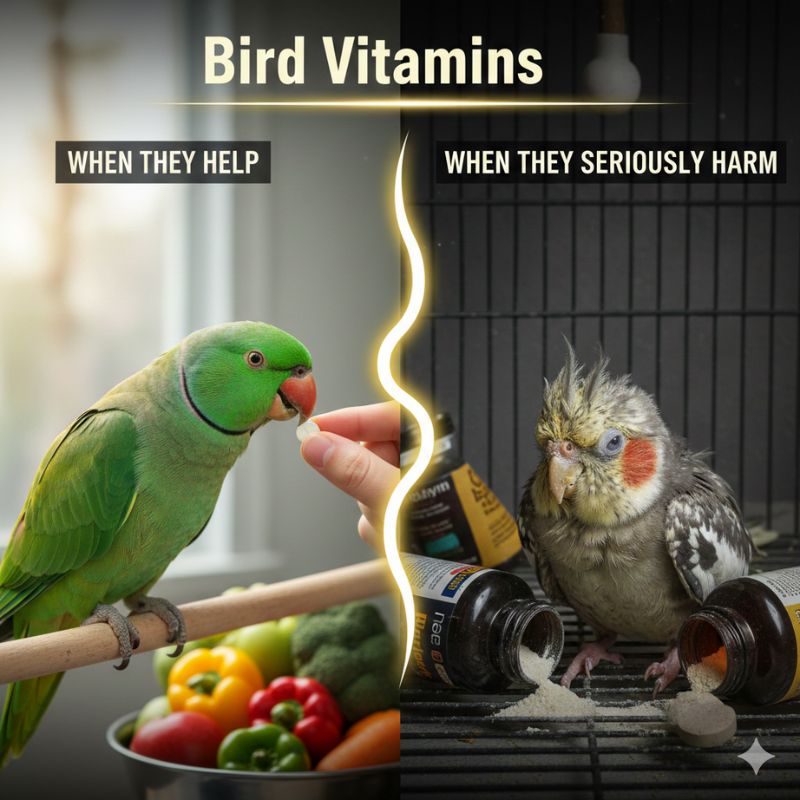
Bird owners often want to do the best for their feathered companions, and supplements seem like an easy solution. However, bird vitamins are a double-edged sword. When used properly, they can improve health and vitality—but when misused, they can seriously harm your bird.
This vet-informed guide explains when vitamins for birds are truly beneficial, when they become dangerous, and how to choose the best bird vitamins safely.
What Are Bird Vitamins and Why Are They Used?
Bird vitamins are dietary supplements designed to support nutritional gaps in a bird’s diet. They often include:
- Vitamin A, D3, E, and K
- B-complex vitamins
- Minerals like calcium and phosphorus
Vitamins for birds are commonly used during:
- Molting and feather regrowth
- Breeding and egg-laying
- Recovery from illness or stress
- Documented nutritional deficiencies
When prescribed appropriately, the best bird vitamins can play a valuable role in overall bird health.
When Bird Vitamins Help Your Bird
1. Correcting Nutritional Deficiencies
Seed-based diets often lack essential nutrients. In such cases, bird vitamins can help correct deficiencies—especially vitamin A and calcium shortages.
2. Supporting Growth and Development
Young birds and breeding pairs may benefit from targeted vitamins for birds to support bone strength, reproduction, and immune development.
3. Boosting Immunity During Recovery
After illness, surgery, or stress, bird vitamins can aid recovery by strengthening the immune system and restoring energy levels.
4. Improving Feather Quality
During molting, the best bird vitamins support healthy feather growth and reduce excessive feather loss.
When Bird Vitamins Can Seriously Harm
1. Vitamin Overdose (Hypervitaminosis)
Unlike humans, birds are extremely sensitive to excess vitamins—especially fat-soluble ones like A and D. Too many bird vitamins can cause:
- Liver and kidney damage
- Weakness and lethargy
- Abnormal bone growth
2. Masking Underlying Illness
Using vitamins for birds without diagnosis may temporarily hide symptoms while a serious disease progresses untreated.
3. Mixing Multiple Supplements
Combining different bird vitamins often leads to accidental overdosing, even if each product seems safe on its own.
4. Using Low-Quality Products
Not all supplements marketed as the best bird vitamins meet quality or safety standards. Poor formulations may contain incorrect dosages or contaminants.
Signs Your Bird May Be Getting Too Many Vitamins
Watch for these warning signs:
- Reduced appetite
- Diarrhea or unusual droppings
- Excessive thirst or urination
- Lethargy or behavioral changes
- Swollen joints or beak abnormalities
If you notice these symptoms, stop supplementation and consult an avian vet immediately.
How to Choose the Best Bird Vitamins Safely
To protect your bird:
- Choose species-specific vitamins for birds
- Avoid products with vague ingredient labels
- Never exceed recommended dosages
- Prefer vet-recommended brands
- Reassess supplement needs regularly
Remember, the best bird vitamins are those used only when needed—not daily by default.
Can Diet Replace Bird Vitamins?
In many cases, yes. A balanced diet including:
- High-quality pellets
- Fresh vegetables and fruits
- Clean water
often provides all essential nutrients. Birds on complete diets usually do not require additional bird vitamins unless advised by a vet.
Final Thoughts
Bird vitamins are not harmless boosters—they are powerful tools that must be used responsibly. When chosen carefully and used under guidance, vitamins for birds can support long-term health. When misused, even the best bird vitamins can lead to serious and preventable health problems.
Smart supplementation starts with knowledge, observation, and professional advice.
FAQs About Bird Vitamins
1. Are bird vitamins safe for daily use?
Only if prescribed. Daily use of bird vitamins without need can cause toxicity.
2. Can I add vitamins for birds to drinking water?
Yes, but only if directed by a vet. Water-based dosing can lead to inconsistent intake.
3. What are the best bird vitamins for seed-eating birds?
Vitamin A and calcium supplements are common—but only after deficiency is confirmed.
4. Do birds on pellet diets need vitamins?
Usually no. Most pellets are nutritionally complete and eliminate the need for extra vitamins for birds.
5. How long should a bird take vitamin supplements?
Only for the duration recommended by an avian veterinarian—never indefinitely.
Read More: When Does Your Bird Really Need Medication? Warning Signs You Shouldn’t Ignore
Read More: Can Too Many Bird Vitamins Harm Your Bird? Vet-Backed Facts