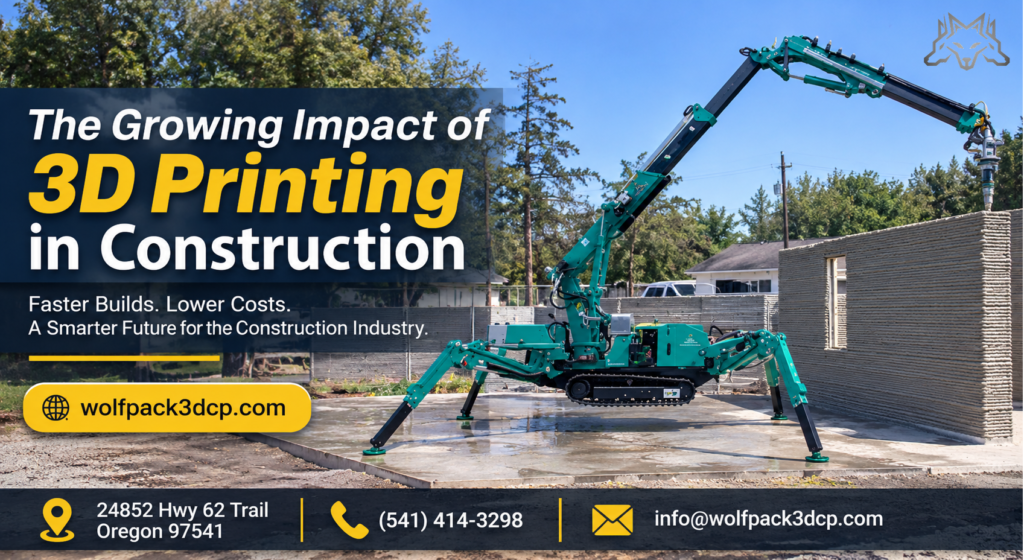
3D Printing in Construction
The construction industry continues to adopt new technologies to improve building processes, support innovative designs, and manage project requirements more effectively. 3D Printing in Construction is one emerging approach that combines digital modeling with automated concrete placement to create selected structures and building components.
Conventional construction methods rely on formwork, manual material placement, and coordinated labor across multiple stages. Although these methods remain essential, automated concrete printing offers an alternative for certain applications where design flexibility and controlled material placement are valuable.
As contractors, architects, and developers evaluate new building technologies, understanding how concrete printing works and where it can be applied is becoming increasingly important.
What Is Concrete 3D Printing?
Concrete 3D printing is an automated building process in which specialized machinery deposits printable cement-based material in successive layers. The printer follows a digital design that determines the shape, dimensions, and placement of the printed structure.
The process generally begins with a digital model prepared by architects or engineers. The model is converted into machine instructions that guide the printer’s movement. A nozzle then extrudes the material along a programmed path, gradually forming the intended component.
Unlike conventional concrete construction, which often uses formwork to shape concrete, this approach can produce selected geometries directly through automated material placement.
3D Construction Printing requires specially formulated mixtures. The material must flow through the printing nozzle while maintaining enough stability to support additional layers. Bonding between layers, curing conditions, and final strength are also important considerations.
The printing process does not eliminate the need for engineering. Structural design, reinforcement, connections, and building compliance must still be addressed according to the project’s requirements.
Key Applications of 3D Printing in Construction
Concrete printing can be used in several areas of the construction industry. Its suitability depends on the intended application, material characteristics, equipment capabilities, and engineering approval.
Residential Building Projects
Selected residential projects may incorporate printed concrete walls or other suitable components. Digital designs can help architects plan customized shapes while coordinating printed elements with conventional building systems.
Architectural Features
Curved walls, decorative structures, and customized architectural elements may benefit from automated printing. These designs can provide flexibility where traditional formwork would require additional fabrication.
Landscape Structures
Planters, outdoor seating, landscape walls, and decorative installations are potential applications. These relatively specialized projects may also provide opportunities for construction companies to evaluate printing workflows.
Specialized Building Components
Some companies use Concrete 3D Printing Equipment to manufacture selected components rather than printing an entire building. This approach allows contractors to investigate automated production while continuing to use conventional construction methods for other activities.
These applications demonstrate that 3D Concrete Printers can support different construction needs without replacing every established building technique.
Benefits and Limitations of Concrete 3D Printing
One potential advantage of concrete printing is design flexibility. Digital models can guide the production of customized shapes and geometries that may otherwise require complex formwork.
Automated material placement can also reduce certain repetitive manual tasks. Depending on the project, this may help construction teams organize their workflows and improve consistency in printed sections.
Another benefit is the ability to plan printing paths digitally before construction begins. This allows teams to review dimensions, material placement, and design details in advance.
However, the benefits depend on project conditions. Concrete 3D printing does not automatically reduce overall construction costs or eliminate material waste.
Several limitations must also be considered:
- Material compatibility: Conventional concrete mixtures may not be suitable for extrusion-based printing.
- Equipment setup: Printers require proper calibration, positioning, and preparation.
- Skilled operation: Operators must understand machine controls, material handling, and printing procedures.
- Structural engineering: Printed components must meet the applicable load-bearing and reinforcement requirements.
- Environmental conditions: Temperature, moisture, and site conditions may influence printing operations.
- Regulatory compliance: Permits, inspections, and building standards must be addressed before construction.
Companies exploring 3D Printing in Construction should evaluate these factors before selecting a project.
Renting vs. Buying Concrete 3D Printing Equipment
The decision to rent or purchase a printing system depends on project frequency, available capital, and long-term operational requirements.
Purchasing equipment may suit businesses that expect to use the technology regularly. Ownership can provide greater control over scheduling and equipment availability. However, it also involves an upfront investment, maintenance responsibilities, storage requirements, and operator training.
For businesses evaluating the technology for a limited project, a 3D Concrete Printer Rental arrangement may provide access to equipment without the commitment of purchasing machinery.
A 3D Construction Printer for Rent can also help contractors test printing workflows, evaluate material requirements, and understand how automated equipment fits into their construction operations.
Rental arrangements should be reviewed carefully. Companies need to compare transportation costs, rental duration, maintenance responsibilities, operator support, and additional equipment requirements.
Renting is not necessarily the most economical choice for every business. The right decision depends on the total cost of equipment use and how frequently the printing system will be required.
What to Consider Before Renting a 3D Concrete Printer
Before selecting a rental system, contractors should establish clear project requirements. The intended structure, printing dimensions, design complexity, and construction schedule will influence equipment selection.
Site preparation is another important consideration. The working area should provide sufficient space, suitable access, and an appropriate printing surface. Transportation and equipment positioning must be planned before machinery arrives.
Material compatibility should also be confirmed. Contractors need to understand which printable mixtures are supported and how the material will be supplied, mixed, and handled during the project.
Operator support is particularly important for businesses new to automated printing. Teams may require assistance with equipment setup, digital design preparation, calibration, and troubleshooting.
California contractors researching a 3D Construction Printer for Rent can review WolfPack 3DCP’s California rental options to learn more about concrete printing equipment rental and operator-supported services.
Before finalizing an agreement, businesses should review rental terms, insurance responsibilities, transportation arrangements, and technical support availability.
Applicable California building regulations must also be considered. Local authorities, structural engineering requirements, building codes, and inspection procedures may affect how printed components can be used. Contractors should confirm compliance before beginning construction.
The Future of 3D Printing in Construction
Construction automation is likely to involve multiple technologies working together. Digital design, robotic machinery, material science, and project management systems can support more connected construction workflows.
Ongoing research into printable materials, reinforcement methods, and quality control may improve the practical use of automated concrete printing. However, wider adoption will depend on reliable engineering practices, trained operators, and suitable regulatory frameworks.
3D Construction Printing may become increasingly useful for selected components and specialized projects where automated material placement offers practical value.
For construction professionals, the most effective approach is to evaluate specific project requirements rather than assume that every building can benefit from printing technology.
FAQs:
What is 3D printing in construction?
3D printing in construction is an automated process that uses specialized machinery to deposit printable cement-based material in layers according to a digital design. It can be used to create selected walls, structures, and building components.
What are the main benefits of concrete 3D printing?
Potential benefits include design flexibility, automated material placement, reduced reliance on certain formwork processes, and more controlled construction workflows. Actual benefits depend on project requirements and equipment capabilities.
Can contractors rent a 3D concrete printer instead of buying one?
Yes. A 3D Concrete Printer Rental option may be suitable for contractors handling occasional projects or evaluating the technology. Businesses should compare rental costs, equipment availability, operator support, and transportation requirements.
What should businesses consider before renting concrete printing equipment?
Contractors should assess project dimensions, site preparation, material compatibility, operator experience, transportation, rental terms, and applicable building regulations before selecting equipment.
Is concrete 3D printing suitable for every construction project?
No. The technology is appropriate for selected applications where the design, material, equipment, and structural requirements are compatible. Conventional construction methods may remain more practical for other projects.
Conclusion:
For contractors planning their next project, WolfPack 3DCP is one California-based resource worth considering when researching concrete printing equipment rental. Ultimately, successful implementation requires suitable project planning, compatible materials, experienced operators, proper site preparation, and regulatory compliance. By evaluating these factors carefully, construction businesses can determine whether automated concrete printing offers a practical advantage alongside conventional building methods.