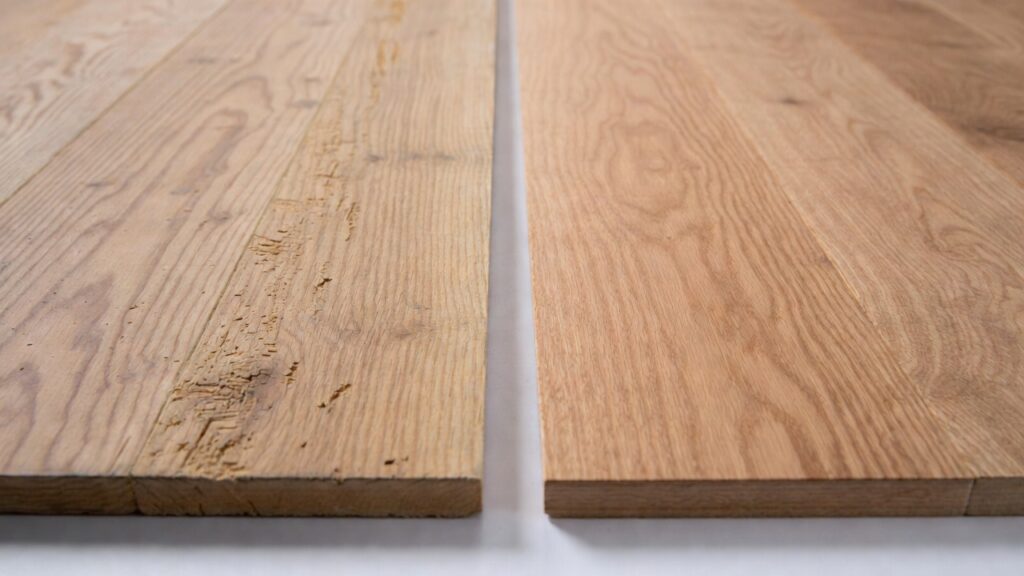
Wood flooring decisions are rarely as simple as choosing a colour or plank size. Once you start planning an installation, the question of finish comes up quickly, and that’s where many homeowners pause. Unfinished and pre-finished wood flooring may look similar once installed, but the experience of living with them can be very different.
The difference is not just technical. It affects how the floor is installed, how the home feels during that time, and how the surface ages over time. Understanding these details early makes the decision far easier.
What Is the Real Difference Between Unfinished and Pre-finished Flooring?
What Does Unfinished Flooring Mean for Homeowners?
Unfinished flooring arrives without any protective coating. After installation, the entire surface is sanded and finished on-site. This turns the floor into one continuous plane rather than a collection of individual boards.
Because finishing is done inside the home, the final look can be carefully adjusted. Some homeowners prefer a warmer tone; others want something lighter or more natural. This flexibility is one of the main reasons unfinished flooring is still widely chosen, especially in homes where the flooring is meant to feel integrated rather than decorative.
This approach is often favoured in detailed layouts or classic interiors, including patterns like herringbone flooring, where a seamless finish enhances the overall design.
How Is Pre-Finished Flooring Different?
Pre-finished flooring is already sealed and protected before it reaches the site. Each board is treated individually under factory conditions, then delivered ready for installation.
The advantage becomes clear once fitting begins. With no sanding or sealing required, the room becomes usable almost immediately, which makes a noticeable difference during renovation projects.
How Does Installation Affect Daily Life?
Installation is often where the practical differences between these two options become most noticeable. Unfinished flooring requires patience. Sanding creates dust, even when done carefully, and finishing products need time to cure. During this stage, rooms are often closed off, and everyday routines are interrupted.
Pre-finished flooring avoids most of these issues. Installation is cleaner and quicker, which is why it is often chosen for occupied homes. For many people, this convenience outweighs any design compromises.
How Do These Floors Look After Installation?
Why Do Unfinished Floors Feel More Seamless?
Unfinished floors do not have bevelled edges. Once finished, the boards blend into each other, creating a smooth surface that feels calm and uninterrupted. This works particularly well in open spaces and traditional interiors where visual continuity matters.
It also allows better control over how light interacts with the floor, which can subtly change how large or warm a room feels.
How Do Pre-Finished Floors Create a Modern Look?
Pre-finished floors usually show slight lines between boards. These edges give the floor structure and rhythm, which suits contemporary interiors. The look is intentional rather than seamless, and many modern homes are designed around this kind of visual definition.
How Durable Are Unfinished and Pre-finished Floors Over Time?
Factory-applied finishes on pre-finished floors are tough. They handle daily movement well and resist surface scratches more effectively during everyday use. This makes them suitable for busy households.
Unfinished wood flooring depend more on the quality of the on-site finish. When done correctly, they wear evenly. Instead of showing apparent damage, they tend to soften and develop character, which many homeowners prefer over a uniform surface.
Which Flooring Option Is Easier to Refinish or Repair?
One clear advantage of unfinished flooring is its ability to be refreshed. The surface can be sanded and refinished as a whole, bringing the floor back to life even after years of use. This makes it especially appealing in homes where long-term ownership and evolving interiors are expected.
Pre-finished flooring is less flexible in this respect. If damage occurs, individual boards are usually replaced. While this is not necessarily a problem, it does limit repair options compared to unfinished surfaces.
What Should You Consider for Long-Term Value?
Unfinished flooring often looks cheaper at first, but finishing work adds to the total cost. Over time, however, the ability to refinish can make it a good long-term investment.
Pre-finished flooring tends to cost more upfront, but installation is faster, and labour costs are lower. For many homeowners, finishing the project quickly has its own value. The better value ultimately depends on whether flexibility or convenience matters more in daily living.
Where Does Each Flooring Option Work Best?
Unfinished flooring is commonly chosen for new builds and custom homes, where timelines are flexible, and design decisions evolve gradually. It also works well with modern solutions like engineered wood flooring, especially when stability and longevity are priorities.
Pre-finished flooring suits renovations and everyday living spaces where speed and practicality matter. Unfinished wood flooring, on the other hand, remains popular with homeowners who want control, adaptability, and a floor that can change with the home over time.
Final Thoughts
There is no universally better option. The right choice depends on how much disruption you can manage, how involved you want to be in the final finish, and how you expect the floor to age.
Some homeowners value convenience above all else. Others prefer a floor that can be reshaped and renewed over the years. Both unfinished and pre-finished wood flooring serve these needs differently, and understanding that difference is what leads to a decision that remains practical and satisfying over time.