In today’s modern construction industry, the role of strong foundations can’t be denied. They are the cornerstone of any building that not only provides strength but also stability to ensure the longevity and safety of the building. Therefore, constructors paid special attention to foundation techniques and technologies to create strong buildings that can withstand all types of weather and other environmental factors.
From traditional techniques to piled foundations and floating foundations to king post retaining walls, foundation solutions have undergone a massive transformation in recent years. Understanding these modern techniques or technologies, their benefits, and their overall impact on a building’s integrity is crucial to making an informed decision and choosing the right type of foundations for your construction project.
Here are some modern foundation techniques or technologies, their benefits, applications, and everything you need to know about before making any decision.
Retaining Walls
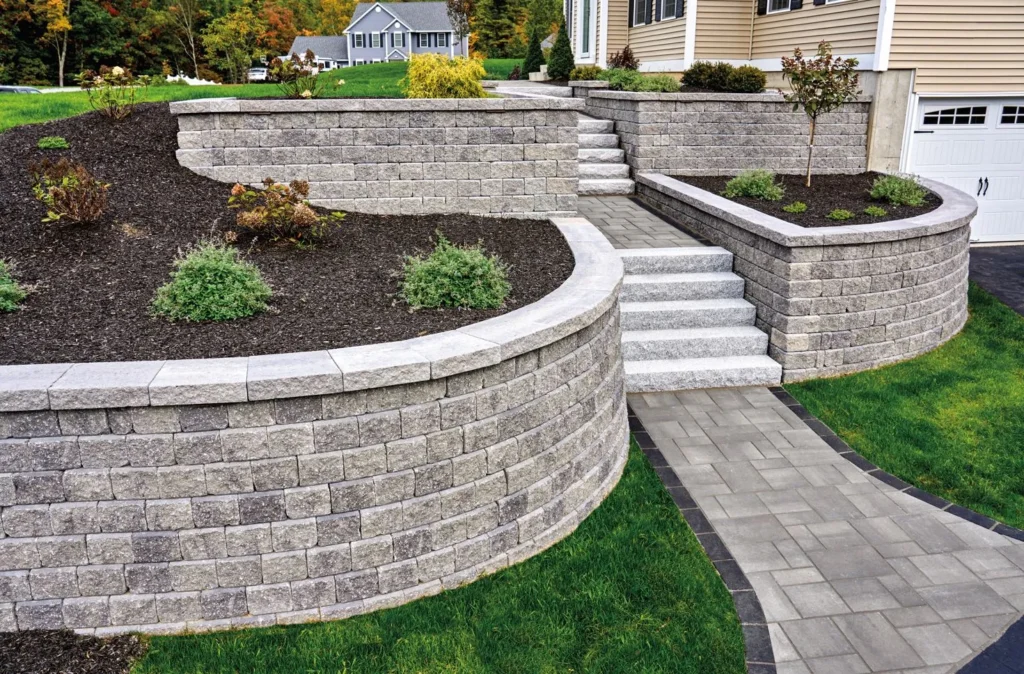
Retaining walls are also an emerging foundation solution. They are rigid walls made up of various types of materials that are used to support the soil laterally so that it can be retained at different levels on the two sides.
They can bind soils between two different elevations, often in areas of inconveniently steep terrain where the landscape needs to be shaped severely and engineered for more specific purposes like hillside farming or roadway overpasses.
There are various types of retaining walls, but the most popular one is the king post retaining walls, also known as soldier piles, because of their compatibility with different types of soils, wide applications, and potential benefits that are listed below:
- Fast construction and installation
- Cost-effective
- Versatile
- Vibrationless and silent installation
- Can be used for a variety of applications
Depending on their sustainability and applications, they are classified into three groups: the cantilever version, the counterfort type, and the buttressed version.
Floating Foundations
Floating foundations, also known as buoyant foundations, are the most innovative solutions to build strong, sustainable buildings in areas with challenging soil conditions. Their main purpose is to evenly distribute the structure load to minimise the risk of differential settlement.
From flood-prone areas to soft and unstable soils, coastal and marine structures, temporary structures, and offshore platforms, it has wide applications because of its incredible stability in challenging soil conditions.
Floating foundations can be further classified into four classes:
- Pontoons and rafts
- Mat foundations
- Caisson foundations
- Geosynthetics-Reinforced foundations
Each type of floating foundation has different stability in different soil conditions. Therefore, make sure to carefully evaluate your structural needs, environmental conditions, and all crucial factors before choosing any type of floating foundation.
Helical Piers
Helical piers, also known as screw piles or ground anchors, are deep foundations that are highly versatile and suitable for various types of structures. Unlike concrete piers, they are screwed into the soil instead of being buried or rammed.
From foundation support to foundation repair and underpinning, or to provide foundation support to existing structures, it can be used for multiple purposes. Their versatile nature and sustainability also make them an ideal solution for sign and light pole foundations, retaining walls, and bridge abutments.
The most appealing feature of helical piers is that they are more cost-effective and time-saving than other types of foundation solutions. Some of their major benefits are described below:
- Helical piers are quite easy to install; they can be screwed into the ground, which makes installation a lot easier.
- Helical piers provide long-term structural support.
- Environmentally friendly, they can be installed with minimal impact on the landscape.
Piled Foundations
These are one of the most common and widely used foundation solutions due to their strong resistance to environmental factors and their adaptable nature. The process involves driving or drilling piles deep into the ground, allowing the structural load to be transferred to deeper, more stable soil or rock layers. In projects where site conditions are tight or entry space is limited, restricted access piling is often used to achieve the same level of stability without compromising surrounding structures.
This type of foundation is particularly suitable for areas with weak or compressible soils. From residential developments to high-rise buildings, and from bridges to overpasses, piled foundations are used across a wide range of construction projects.
Piled foundations are of two types:
- Driven piles are made up of steel and driven into the ground by using a pile driver.
- Bored piles involve drilling a hole into the soil and then filling it with concrete. It is suitable for large structures and heavy loads.
Bottom Line
With the ever-evolving landscape of construction, foundation solutions have come a long way to address the challenges of modern construction. From piling to helical piers and retaining walls, these innovative foundation solutions are emerging techniques that provide a robust, efficient, and sustainable basis for your structures.
Carefully evaluating these options and understanding your construction needs, you can choose the right type of foundation solutions and build stronger, resilient foundations for the future.