Washers are small, simple components, but they carry a surprising amount of responsibility in fastening systems. Whether used in heavy machinery, construction, automotive assemblies, or consumer products, washers help ensure that fasteners perform reliably and safely. This article explains what washers do, why they matter, and how to choose the right type for different applications. It’s written for a global professional audience seeking clear, practical insight with an industry focus.
Why Washers Matter
At a basic level, washers sit between a fastener and the surface it’s joining. They distribute load, protect materials, and support long-term performance. Without washers, many assemblies would loosen, deform, or fail prematurely.
In industries where reliability is non-negotiable, such as energy, transportation, and manufacturing, washers help maintain the integrity of bolted joints. They reduce the risk of downtime, improve product life, and maintain safety standards. Their value may not always be obvious, but experienced engineers know that the right washer can make a measurable difference.
Core Purposes of Washers
1. Load Distribution
When a bolt or screw is tightened, it applies pressure to the material below the head. In softer or thinner materials—such as aluminum, wood, or plastics—this can cause crushing or deformation. Washers spread the load over a wider area. This protects the surface and stabilizes the joint.
2. Surface Protection
Fasteners can scratch or damage surfaces. A washer adds a barrier that prevents the fastener from biting into the material. This is especially important with coated or finished surfaces where damage can weaken corrosion resistance.
3. Prevention of Loosening
Vibration and movement are common causes of fastener loosening. Specialized washers, such as spring washers or lock washers, add resistance. They maintain tension in the assembly, helping prevent rotation and backing out.
4. Spacing and Alignment
Washers can serve as shims to adjust spacing or alignment. This is useful in assemblies that need fine adjustment, such as machinery setups or installations with uneven surfaces.
5. Corrosion Barriers
In some applications, a washer made from a compatible material helps prevent galvanic corrosion between the fastener and the joint surface. Stainless steel and certain coated washers are often used for this purpose.
Key Types of Washers
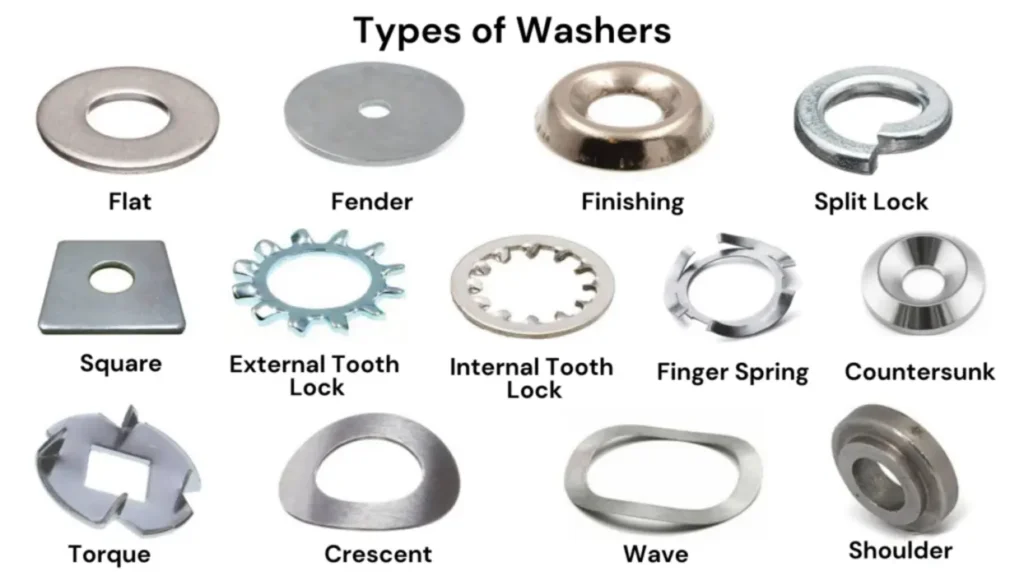
There are dozens of washer designs, but several categories are used across most fastening applications. Understanding their functions helps engineers specify the right hardware.
Flat Washers
Flat Washers are the most common type, used to distribute load and protect surfaces. They come in standardized sizes (such as DIN, ISO, and ANSI) to match bolts and screws. Within this group, heavy-duty flat washers are thicker and suited for high-load environments.
Spring Washers
Spring Washers provide tension that helps prevent loosening. Two common styles include:
Split Lock Washers: Feature a cut and offset ends that bite into the fastener head and surface.
Wave or Curved Washers: Used when controlled flexibility is needed, such as in sensitive equipment.
Fender Washers
Fender Washers have a large outer diameter relative to the bolt size. They are ideal for thin materials or oversized holes, offering broad load distribution.
Sealing Washers
These combine metal with rubber or other elastomers to create a watertight or airtight seal. They are common in plumbing, HVAC, roofing, and outdoor equipment.
Belleville Washers
Also called conical washers, Belleville Washers are designed for high-load applications where maintaining tension is critical. Their spring-like shape allows them to absorb shock and vibration.
Countersunk Washers
Used with countersunk screws, these washers allow flush installation on surfaces that cannot be countersunk directly.
Factors to Consider When Selecting Washers
Material Selection
Material directly affects performance. Examples include:
Stainless steel: Good for corrosion resistance in outdoor or marine environments.
Carbon steel: Strong and cost-effective for general use.
Brass or copper: Useful in electrical applications due to conductivity.
Nylon or plastic: Lightweight and non-corrosive, ideal for non-metal surfaces.
Choosing materials compatible with the fastener and the working environment helps avoid corrosion and maintains joint stability.
Surface Treatments
Coatings such as zinc plating, black oxide, and hot-dip galvanizing provide added protection. When working in high-humidity or chemical environments, coated or stainless washers generally offer better longevity.
Application Requirements
Engineers should consider:
- Load conditions
- Vibration levels
- Temperature changes
- Sealing needs
- Space constraints
Selecting the right washer type improves reliability, reduces maintenance, and enhances product performance.
The Role of Washers in Modern Manufacturing
As global production demands higher precision and durability, the role of washers continues to grow. Manufacturers rely on standardized washers to ensure consistent assembly quality across distributed production lines. In industries like automotive and aerospace, washers contribute to safety-critical joints. In energy and infrastructure, they support long-term structural resilience.
Companies that produce Washers increasingly focus on tighter tolerances, better materials, and specialized designs. These enhancements help support evolving technologies such as electric vehicles, renewable energy systems, and automated machinery.
Final Thoughts
Washers may be small, but their impact in fastening applications is significant. They protect surfaces, improve joint stability, increase safety, and extend the life of assemblies across industries. For engineers, buyers, and technicians, understanding the purpose and variety of Washers is essential to selecting the right components and achieving reliable results.
Article” The Purpose of Washers and Their Key Role in Fastening Applications” post by: toko baut & mur – tokohasil.com