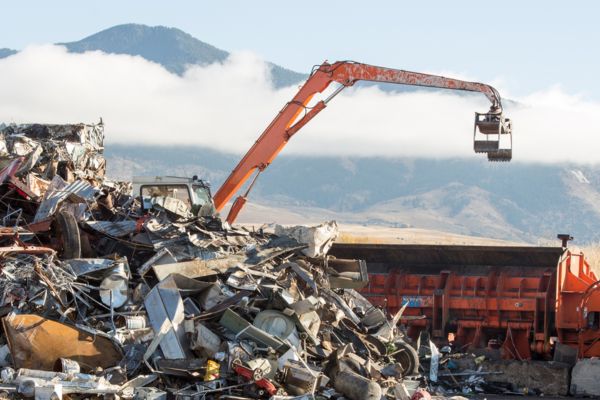
The morning sun barely breaks the horizon when Jake pulls up to another suburban home in western Sydney. His truck’s already half-full with copper piping, aluminium window frames, and steel beams. By day’s end, he’ll have diverted nearly three tonnes of metal from ending up in landfill. Jake’s part of an often-overlooked network of local scrap collectors who’ve quietly become environmental champions, transforming what most Australians consider rubbish into valuable raw materials that feed our manufacturing sector.
Here’s something that might surprise you: Australia generates roughly 67 million tonnes of waste annually, and metals comprise a substantial portion of this figure. Yet thanks to scrap collectors operating across our suburbs and regional centres, approximately 90% of ferrous metals and 60% of non-ferrous metals get recycled rather than buried. These individuals aren’t just running businesses—they’re operating critical nodes in our circular economy, often providing services like free scrap metal pick up that make recycling accessible to everyday Australians who’d otherwise struggle with disposal logistics.
The economics tell a compelling story. When scrap metal reaches recycling facilities instead of landfills, we’re not just saving space. We’re preserving the embodied energy and resources that went into producing that metal in the first place. Consider that recycling steel uses 60% less energy than producing it from virgin ore, whilst aluminium recycling consumes a staggering 95% less energy. Local collectors serve as the essential link between households with unwanted metal and the facilities capable of processing it. Learn more: https://www.metalbiz.com.au/scrap-metal/
The Hidden Infrastructure of Metal Recovery
Most Australians never think about what happens to their old washing machine, corroded guttering, or demolished shed. They ring a collector, the metal disappears, and that’s the end of the story. But behind this simple transaction exists a sophisticated informal economy that’s evolved over decades.
Local scrap collectors typically fall into three categories: individual operators running ute-based services, small family businesses with sorting yards, and more established operations with processing equipment. What unites them is their knowledge—the ability to identify different metal grades, understand current commodity prices, and maintain relationships with recycling facilities that pay by weight and purity.
This knowledge matters enormously. Contaminated loads get rejected or heavily penalised at recycling facilities. A skilled collector knows that copper wire needs stripping, that stainless steel commands premium prices, and that aluminium window frames need the plastic and glass removed. They’re essentially conducting preliminary sorting and processing that makes large-scale recycling economically viable.
The geographical coverage these collectors provide cannot be overstated. Major recycling centres cluster around industrial areas and ports, yet metals accumulate in homes, farms, and businesses across vast distances. Collectors bridge this gap, aggregating smaller quantities into economically transportable loads. In regional Queensland or rural Victoria, a local collector might be the only realistic recycling option for hundreds of kilometres. Learn more: https://www.metalbiz.com.au/scrap-metal/gold-coast/
Environmental Impact Beyond the Obvious
The environmental mathematics of metal recycling reveals why collectors play such a crucial role. Every tonne of steel recycled prevents roughly 1.5 tonnes of iron ore from being mined, one tonne of coal from being burned, and 40% of the water that virgin steel production requires. Scale that across the millions of tonnes Australian collectors divert annually, and you’re looking at environmental benefits that rival major conservation initiatives.
But the impact extends beyond resource conservation. Landfills aren’t designed for metal, and metal doesn’t belong there. Iron and steel corrode slowly, leaching into groundwater. Aluminium persists virtually unchanged for centuries. Copper and brass can release toxic compounds as they degrade. By keeping metals in circulation, collectors prevent these long-term contamination issues before they start.
There’s also the space consideration. Metals are dense and bulky. A single demolished house might generate five to eight tonnes of recyclable metal—steel frames, copper plumbing, aluminium windows, brass fittings. Multiply that across the thousands of renovations and demolitions occurring daily across Australia, and you begin to understand how quickly our landfills would overflow without collection networks.
Climate implications deserve attention as well. The Australian steel industry has committed to significant decarbonisation, and recycled steel produces approximately 75% fewer emissions than steel made from raw materials. Each time a collector diverts metal from landfill to recycling, they’re contributing to our national emissions reduction targets, whether they realise it or not.
The Economic Ecosystem
Understanding the economics helps explain why this system works without government mandates or subsidies. Scrap metal has genuine commodity value that fluctuates with global markets. Copper prices might range from $8,000 to $12,000 per tonne. Steel sits lower at $300 to $600 per tonne, whilst aluminium typically fetches $1,500 to $2,500 per tonne.
For collectors, these prices create the business model. They collect metal at little or no cost—often offering free removal as a service—then sell it to recycling facilities. Their profit comes from volume and efficiency. A well-organised collector might process 50 to 100 tonnes monthly, generating revenue of $20,000 to $50,000 depending on metal composition and market conditions.
This economic engine creates employment across skill levels. Individual operators build businesses with minimal capital investment—essentially a truck and knowledge. As operations grow, they employ drivers, sorters, and administrative staff. The largest operations run substantial facilities with dozens of employees.
The ripple effects flow through manufacturing sectors. Australian steel mills, aluminium smelters, and copper processors all rely on domestic scrap as feedstock. BlueScope Steel, for instance, sources significant portions of its raw materials from recycled metal. When collectors keep metals circulating domestically, they’re supporting Australian manufacturing jobs and reducing our reliance on imported materials.
Challenges Facing the Industry
Despite their environmental and economic contributions, scrap collectors face substantial headwinds. Regulatory compliance presents ongoing challenges. Environmental protection requirements, occupational health and safety standards, and waste tracking obligations all demand resources that small operators struggle to provide. One Melbourne collector described spending fifteen hours weekly on paperwork—time not spent actually collecting metal.
Fluctuating commodity prices create income volatility. When global steel prices crashed in 2015, many Australian collectors ceased operations or consolidated. They operate with thin margins, making them vulnerable to market swings beyond their control. Unlike businesses with long-term contracts, collectors essentially sell into spot markets where yesterday’s prices don’t guarantee tomorrow’s viability.
Competition from illegal operators undermines legitimate businesses. Unlicensed collectors avoid regulatory costs and sometimes engage in theft, contaminating loads or damaging the industry’s reputation. Councils and property owners increasingly struggle to distinguish reputable collectors from problematic operators.
Infrastructure access poses another barrier. Many metropolitan areas have pushed recycling facilities to urban fringes as land values rise. This increases transport costs and time, squeezing margins. For collectors in Sydney’s eastern suburbs or Melbourne’s inner north, a trip to the nearest facility might consume three hours and $50 in fuel.
Innovation and Adaptation
Progressive collectors are embracing technology to improve efficiency and transparency. GPS tracking allows customers to monitor collection times. Digital weighing systems provide immediate, verifiable records. Some operators use apps that let customers photograph scrap for instant quotes.
Specialisation represents another adaptation strategy. Rather than collecting all metals, some operators focus on specific niches—air conditioning units, automotive scrap, or building site waste. This specialisation allows deeper expertise and relationships with specific recycling streams.
Processing capabilities increasingly separate successful operations from struggling ones. Simple collection reaches limits quickly; the real value comes from sorting, cleaning, and preparing metal to specifications that command premium prices. Operators investing in shears, balers, and separation equipment can capture more value from each tonne.
Partnerships with builders, plumbers, and electricians create predictable supply streams. A collector might service twenty plumbers who call whenever they remove old copper piping or brass fixtures. These relationships provide steadier income than responding to random homeowner calls.
Education outreach helps too. Forward-thinking collectors run workshops explaining what’s recyclable, how to prepare materials, and why proper recycling matters. This builds community relationships whilst ensuring higher-quality loads that command better prices.
The Future Landscape
Several trends will shape how local scrap collection evolves. Construction industry changes present both opportunities and challenges. Modern buildings increasingly use composite materials that complicate recycling. However, the sheer volume of construction generates enormous metal streams, particularly as post-war buildings reach end-of-life.
Electric vehicle adoption will transform automotive scrap within fifteen years. EVs contain substantially more copper and aluminium than conventional vehicles, whilst reducing steel content. Collectors will need new knowledge and equipment to safely handle battery systems whilst maximising recovery of valuable materials.
Circular economy policies are gaining traction across Australian jurisdictions. Extended producer responsibility schemes may eventually require manufacturers to fund collection and recycling, potentially transforming business models. Some collectors might transition to contracted service providers rather than commodity traders.
Building codes could mandate design for disassembly, making future metal recovery far easier. When buildings incorporate demountable connections and material identification, collectors can process them more efficiently and profitably. This would strengthen the business case for collection services.
Data and traceability requirements will likely increase. Governments and manufacturers want visibility into material flows to verify recycling claims and prevent contamination. Collectors who develop robust record-keeping and tracking systems will be better positioned for this regulatory evolution.
What Individuals Can Do
Supporting local scrap collectors requires minimal effort with maximum impact. When you’re renovating, demolishing, or disposing of anything metal, contacting a local collector ensures proper recycling. Most provide free collection for significant quantities, eliminating disposal costs whilst benefiting the environment.
Preparation increases value and efficiency. Separating different metal types, removing non-metal attachments, and making materials accessible helps collectors work efficiently. A homeowner who removes wood from steel fencing or separates copper from steel piping makes everyone’s job easier.
Business owners can establish ongoing relationships with reliable collectors. Construction firms, manufacturing plants, and automotive workshops generate consistent metal waste. Regular collection schedules prevent accumulation whilst ensuring materials get recycled.
Community advocacy matters as well. Supporting legitimate, licensed collectors through council tender processes and community recommendations helps ethical operators compete. Reporting illegal collection or theft protects the industry’s integrity.
The Bigger Picture
Local scrap collectors embody practical environmentalism. They’re not driven primarily by ecological ideology—they’re running businesses. Yet their work delivers environmental benefits that surpass many headline-grabbing initiatives. Every tonne of metal they divert represents ore that stays in the ground, energy that doesn’t get consumed, and emissions that don’t enter the atmosphere.
Australia’s transition to a circular economy depends on infrastructure both large and small. We celebrate major recycling facilities and government programmes, but the humble collector driving through suburbs, stopping at construction sites, and sorting mixed loads performs the essential first step. Without them, even the most advanced recycling facility sits idle.
As we confront resource constraints and climate imperatives, the role of these collectors becomes more critical, not less. They’ve built networks that work, proven business models that sustain themselves, and environmental benefits that scale with minimal oversight. Strengthening and supporting this industry represents one of the most cost-effective environmental investments available.
The next time you see a scrap collector’s truck navigating your street, recognise it for what it truly is: mobile environmental infrastructure, operated by individuals who’ve turned society’s discards into resources. They’re keeping tons of metal out of landfills, one collection at a time, building a more sustainable Australia through the unglamorous but essential work of making sure valuable materials never become waste.