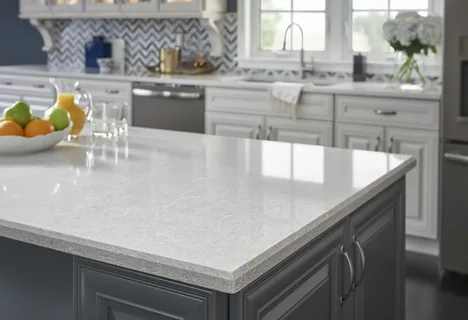
Looking to upgrade your kitchen or bathroom with quartz countertops? This durable and beautiful material is one of the most popular choices for modern homes.
Quartz offers exceptional strength and requires minimal maintenance. It resists stains, scratches, and heat better than many alternatives. Homeowners love its consistent patterns and wide range of colors.
This guide explains the key factors that influence quartz countertop projects. You’ll learn about material options, design choices, and installation considerations. We’ll help you understand what goes into a quality quartz installation.
Whether you’re remodeling in Milwaukee or planning a new build, knowing these details helps. You can make informed decisions that match your style and needs. Let’s explore what makes quartz an excellent choice for your space.
What Is a Quartz Countertop?
Quartz countertops are made from crushed quartz stone mixed with resin. This creates a very hard surface. They’re engineered, not cut from a single slab like granite or marble.
This manufacturing process makes them different from natural stone. The result is a consistent pattern and color. There are no natural variations or weak spots.
Quartz is incredibly strong. It resists scratches, stains, and heat better than many other materials. You won’t need to seal it like you would granite.
Taking care of quartz is simple. Just wipe it down with soap and water. No special cleaners needed. This makes it perfect for busy Milwaukee kitchens.
Average Cost of Quartz Countertops
The typical price for quartz ranges from $50 to $120 per square foot installed. Basic options start around $40 to $60 per square foot. High-end designer quartz can cost $100 to $150 or more.
Keep in mind that’s just the material cost. The total price includes installation, which we’ll cover later. Material is usually about 60% of your total expense.
Your final bill depends on your specific choices. Size, design, and complexity all play a role. A standard kitchen might cost $2,000 to $5,000 total.
Main Things That Affect Quartz Countertop Cost
Quality of Quartz
Not all quartz is created equal. There are different quality levels available. Low-quality quartz uses less actual quartz stone and more resin.
Mid-range quartz offers good durability at a fair price. High-end quartz contains more natural quartz and premium resins. It looks better and lasts longer.
Quality directly impacts your quartz countertops cost. Basic quartz might save you money upfront. But premium quartz holds up better over time.
Badger Granite
Popular brands like Caesarstone, Silestone, and Cambria charge more. Their reputation and quality control justify the higher prices. You’re paying for consistency and warranty coverage.
Generic or lesser-known brands cost less. They can still be good quality. But you’ll want to check reviews carefully. Some Milwaukee suppliers offer house brands that are excellent values.
Color and Design
Simple solid colors are the most affordable. White, gray, and beige are usually budget-friendly. These colors use common pigments that don’t cost much.
Rare colors and exotic patterns cost significantly more. Veined patterns that look like marble are popular right now. They require more manufacturing precision, which raises the price.
Thickness of the Slab
Standard quartz slabs are usually 2 centimeters or 3 centimeters thick. The 2cm option costs less but may need extra support. Most people choose 3cm for durability and appearance.
Thicker slabs look more substantial and luxurious. They also cost more because they use more material. The difference can add $10 to $20 per square foot.
Edge Styles
The edge profile you choose affects the final cost. Simple straight or eased edges are cheapest. These are clean and modern-looking.
Fancy edges like ogee, bullnose, or waterfall cost more. They require extra cutting and polishing time. Expect to pay $10 to $30 extra per linear foot for decorative edges.
Size of Your Countertop
Bigger countertops need more material. This is pretty straightforward. A large kitchen will cost more than a small bathroom vanity.
Complex layouts with lots of corners cost more too. More cuts mean more labor and potential waste. Measure your space carefully when getting quotes.
Installation Costs
Labor typically runs $30 to $50 per square foot. This covers measuring, cutting, and installing your countertops. Experienced installers are worth the investment.
Cutting and fitting requires special tools and skills. The installer will template your exact space. They’ll cut openings for sinks and cooktops precisely.
Plumbing adjustments and sink cutouts add to the cost. Removing your old countertops usually costs $100 to $300. Some contractors include this in their quote.
Extra Costs to Think About
A matching quartz backsplash looks beautiful but adds expense. Expect $40 to $80 per square foot for backsplash installation. Some people choose tile instead to save money.
Seams are sometimes necessary on larger countertops. Each seam costs about $100 to $200. Good installers make seams nearly invisible.
Support brackets may be needed for overhangs or islands. Delivery fees can range from $50 to $200. Ask about these costs upfront when comparing quotes.
How to Save Money on Quartz Countertops
Get quotes from at least three different suppliers in Milwaukee. Prices can vary widely between companies. Don’t just pick the cheapest without checking reviews.
Choose simple designs and standard colors. They look great and cost less. You can always add personality with cabinet hardware or lighting.
Buy during holiday sales or end-of-year clearances. Many suppliers offer discounts in slow seasons. Ask about remnant pieces for small areas like bathroom vanities.
Quartz vs Other Countertops
Quartz typically costs more than laminate but less than high-end granite. Laminate runs $20 to $50 per square foot installed. Granite ranges from $40 to $200 per square foot.
Marble is usually more expensive than quartz. It also requires more maintenance and stains easily. Quartz gives you a similar look without the upkeep.
For durability and value, quartz sits in a sweet spot. It outlasts laminate and requires less care than natural stone. Many Milwaukee homeowners find it’s the best balance.
Is Quartz Worth the Price?
Quartz offers excellent long-term value. It can last 15 years or more without issues. You won’t need to reseal it or worry about stains.
The durability means fewer repairs and replacements. This saves money over time. Plus, it looks great for years with minimal effort.
Low maintenance is a huge selling point. Busy families don’t have time for complicated care routines. Quartz fits perfectly into modern lifestyles.
Quality countertops also boost home value. Potential buyers love quartz kitchens. It’s a smart investment if you plan to sell someday.
Conclusion
Quartz countertop pricing depends on many factors. Quality, brand, color, thickness, and edge style all matter. Installation and extras add to the total cost.
Expect to pay $50 to $120 per square foot for most projects. Basic options cost less, while premium designs cost more. Your specific choices determine your final price.
Get multiple quotes from reputable suppliers. Ask about all included costs upfront. Compare quality, not just price.
Quartz is a smart investment for most homeowners. It combines beauty, durability, and easy maintenance. If you’re ready to upgrade, start gathering quotes today.
FAQ
How much does quartz cost compared to granite?
Quartz and granite have similar price ranges. Both typically cost $50 to $120 per square foot installed. Quartz is often more consistent in pricing.
Can I install quartz countertops myself?
Professional installation is strongly recommended. Quartz slabs are heavy and require specialized cutting tools. Mistakes can be costly.
Do quartz countertops increase home value?
Yes, quality countertops appeal to buyers. Quartz is especially attractive because it’s durable and low-maintenance. You’ll likely recoup much of your investment.
What’s the cheapest color of quartz?
Simple solid colors like white, gray, and beige cost less. Exotic patterns and rare colors increase the price significantly.
How long do quartz countertops last?
With proper care, quartz can last 15 years or longer. Many homeowners never need to replace them. The durability makes them worth the investment.