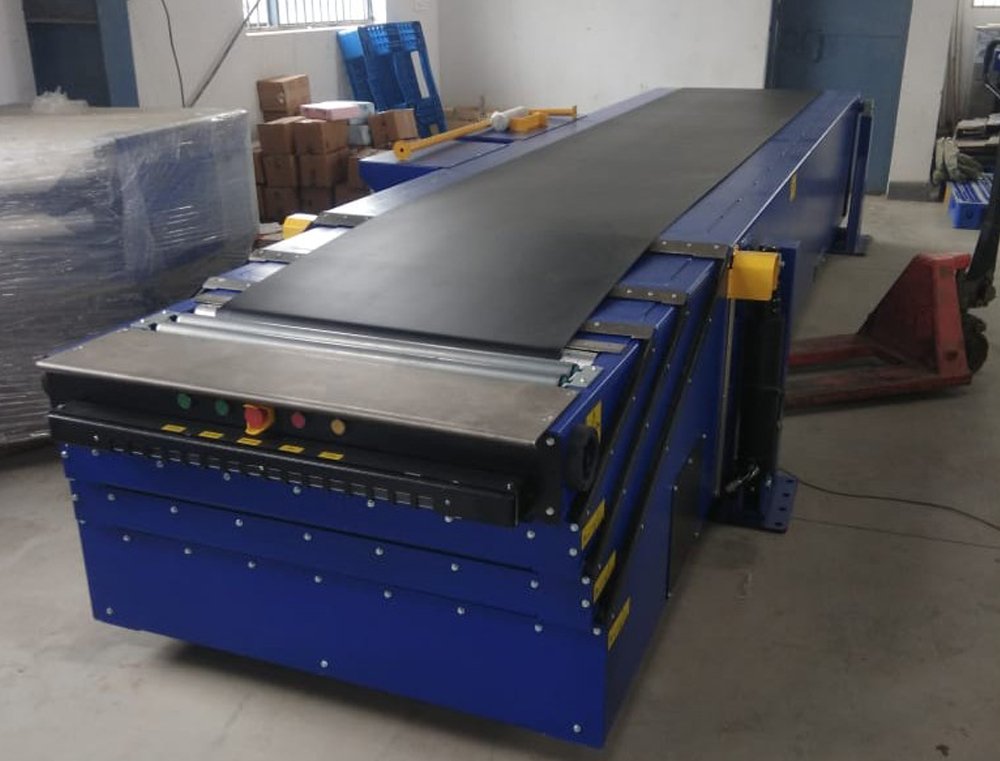
Efficient material handling is essential for warehouses, manufacturing facilities, and logistics centres. Businesses need reliable equipment to move goods quickly while reducing manual effort and saving valuable time. A telescopic belt conveyor is a practical solution designed to make loading and unloading operations easier, faster, and more organised. Its extendable structure allows the conveyor to reach inside trucks, containers, and other vehicles, improving the movement of goods between different locations.
What Is a Telescopic Belt Conveyor?
A telescopic belt conveyor is a specialised conveyor system featuring multiple extendable sections that slide forward and backward. Unlike conventional conveyors with fixed lengths, this system can extend into a vehicle or container to bring the loading point closer to workers.
It uses a motor-driven belt to transport cartons, packages, bags, and other materials. Depending on operational requirements, the conveyor can include adjustable height, variable speed controls, emergency stop switches, and other safety features.
How Does a Telescopic Belt Conveyor Work?
The system operates through a powered conveyor belt supported by an extendable framework. During loading or unloading, the conveyor sections move outward to reach the required position inside a truck or container.
Products are placed on the moving belt and transported between the vehicle and the warehouse floor. Once the operation is completed, the conveyor retracts into its compact position. This adjustable design makes it suitable for facilities handling vehicles of different sizes.
Major Benefits of Telescopic Belt Conveyors
Installing a telescopic belt conveyor can improve warehouse and industrial operations in several ways.
1. Faster Loading and Unloading: The extendable design brings the conveyor closer to the products, reducing unnecessary walking and manual transportation.
2. Reduced Labour Effort: Workers can transfer goods using the conveyor instead of repeatedly carrying heavy packages over long distances.
3. Better Warehouse Productivity: Faster material movement helps warehouses manage higher volumes of incoming and outgoing shipments.
4. Space-Saving Design: The conveyor retracts when not in use, helping businesses utilise available floor space more effectively.
5. Improved Operational Convenience: Adjustable extension and height options can make loading and unloading easier across different vehicle types.
6. Consistent Material Flow: Powered belt movement supports organised transportation and reduces interruptions during handling operations.
Applications of Telescopic Belt Conveyors
A telescopic belt conveyor is widely used in industries where regular loading and unloading activities take place.
- Warehouses: Used for moving cartons and packages between storage areas and delivery vehicles.
- Logistics Centres: Helps speed up parcel handling and distribution activities.
- E-commerce Facilities: Supports high-volume order dispatch and shipment operations.
- Manufacturing Units: Transports finished products and packed materials for transportation.
- Distribution Centres: Makes loading and unloading goods more organised and efficient.
- Courier Companies: Helps manage packages during vehicle loading and unloading.
Important Features to Consider Before Buying
Before selecting a telescopic belt conveyor, businesses should evaluate their material handling requirements. The maximum load capacity, belt width, conveyor length, extension range, and operating speed are important factors.
The number of telescopic sections should match the available loading space and vehicle dimensions. Businesses should also consider height adjustment, motor quality, control panel accessibility, emergency stop arrangements, and protective safety features.
A suitable conveyor should be designed for the expected workload and operating environment. Customised configurations may be useful for facilities with specific loading requirements.
Maintenance Tips for Long-Term Performance
Regular maintenance helps maintain conveyor efficiency and reduces the chances of unexpected breakdowns. Inspect the belt for damage, check its alignment, and examine rollers, pulleys, and drive components periodically.
Keep moving sections clean and ensure that the extension and retraction mechanisms operate smoothly. Electrical connections, motors, and safety controls should also be inspected according to the manufacturer’s recommendations. Proper operator training further supports safe and reliable operation.
Conclusion
A telescopic belt conveyor is an effective material handling solution for businesses looking to improve loading speed, reduce manual effort, and organise warehouse operations. Its extendable structure, powered belt movement, and space-saving design make it valuable for logistics, manufacturing, and distribution facilities. Selecting the right system according to load capacity, dimensions, and operational needs can help businesses achieve smoother and more productive material handling.