Why Your Vanity Choice Matters More Than You Think
The bathroom vanity is the hardest-working piece of furniture in your bathroom. It holds your sink, hides your plumbing, stores your daily essentials, and sets the visual tone for the entire room. Yet most buyers spend more time choosing a faucet than choosing the vanity itself.
A good vanity does three jobs at once. It must survive constant moisture and daily use without warping or peeling. It must store everything from towels to toiletries in a way that stays organized. And it must look right in the room, anchoring the design rather than fighting it. Get any one of these wrong and you will notice it every single day.
This guide walks you through every decision that matters: measuring your space, choosing the right width, picking between floating and freestanding styles, understanding materials, selecting finishes, planning storage, pairing sinks and countertops, and shopping smart on a budget.
Start With Measurements: The Five Numbers You Need
Before browsing a single product page, grab a tape measure. Write down these five numbers and keep them on your phone while shopping:
- Available wall width. Measure the wall where the vanity will sit, then subtract 4 to 6 inches of clearance on each side. A vanity crammed wall-to-wall makes installation and future repairs difficult.
- Depth clearance. Standard vanities are 18 to 22 inches deep. Measure from the wall outward and confirm doors can still swing open and you can walk past comfortably.
- Plumbing location. Note where water supply lines and the drain come out of the wall or floor. Moving plumbing is expensive, so most buyers choose a vanity that works with existing rough-in positions.
- Door swing and fixtures. Open the bathroom door fully and check that it clears the vanity zone. A drawer that hits the toilet when opened is a daily annoyance.
- Mirror and light positions. Your vanity should align sensibly with the mirror and lights above it. A 60-inch vanity under a 24-inch mirror looks unbalanced, so plan these together.
Vanity Sizes Explained: From 20-Inch Powder Rooms to 84-Inch Master Baths
20 to 30 inches: powder rooms and tiny baths. A 24-inch vanity is the sweet spot for most powder rooms — large enough for a usable sink and a little storage, small enough to keep the room feeling open.
30 to 48 inches: the standard single-sink range. A 36-inch vanity suits most full bathrooms. At 42 to 48 inches, you get generous drawer stacks and room for a wider sink — the most popular range for family bathrooms.
48 to 60 inches: single or double sink territory. Around 48 inches you can choose between an extra-wide single sink or a compact double. At 60 inches, double sinks become genuinely comfortable.
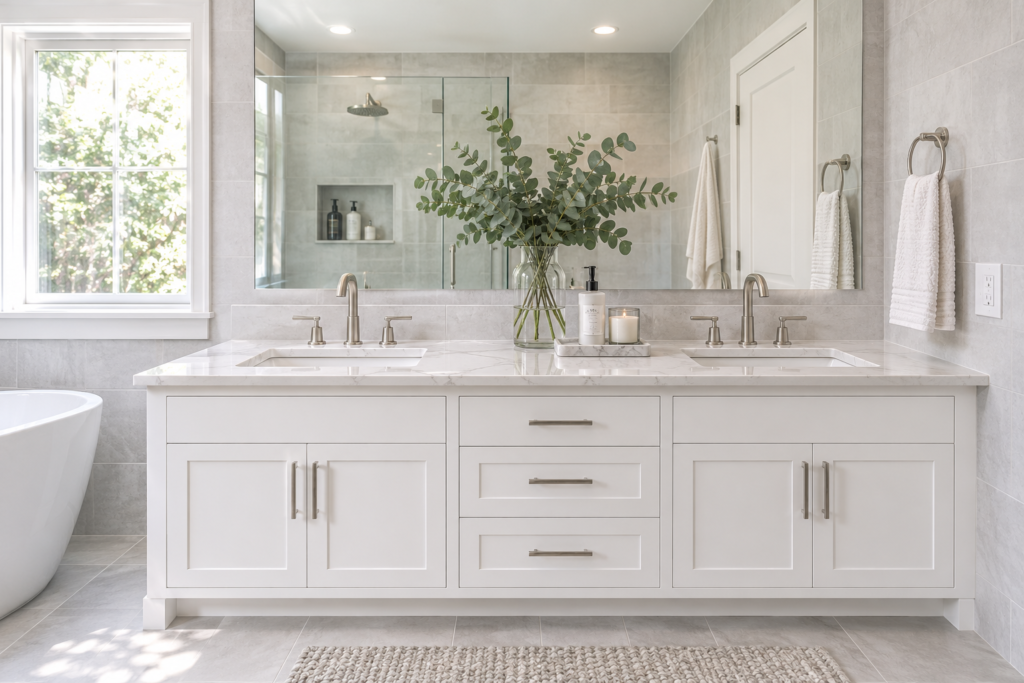
60 to 84 inches: master bathroom luxury. A 72-inch double vanity gives each user a full 36 inches of personal space. At 84 inches, you are in spa territory.
Rule of thumb: when in doubt between two sizes, most designers recommend going slightly larger, as long as clearances allow. Storage and counter space are the two things owners most often wish they had more of.
Getting the Height Right: Comfort and Accessibility
Vanity height is the most overlooked dimension, yet it affects your comfort every single day. The old standard of 30 to 32 inches came from an era of shorter average heights. Today’s comfort-height vanities run 34 to 36 inches — roughly kitchen-counter height — and most adults find this far more comfortable for brushing teeth, washing faces, and getting ready.
If your household includes taller members, lean toward 36 inches. For children’s bathrooms, a lower 30 to 32-inch vanity works better, or consider a pull-out step stored in the toe kick. For aging-in-place or accessible bathrooms, a wall-mounted floating vanity at 34 inches with clear knee space underneath accommodates a seated user far better than any freestanding cabinet.
Also factor in your sink choice: a vessel sink sitting on the counter adds 5 to 6 inches of rim height, so pair vessels with slightly lower vanity bodies. An undermount sink keeps the rim at counter level. The goal is a rim height where you can wash your hands without hunching or reaching — small detail, daily difference.
Floating vs. Freestanding: Which Style Suits Your Bathroom?
Floating vanities mount directly to the wall, leaving the floor visible underneath. In small bathrooms the effect is dramatic — continuous flooring makes the room feel significantly larger. Cleaning is easier since you can mop straight underneath. The trade-off is installation: a floating vanity must anchor into wall studs or solid blocking to carry the full weight of cabinet, countertop, sink, and contents. Drywall anchors alone are not enough.
Freestanding vanities sit on the floor like traditional furniture. They feel solid and classic, install more simply, and typically maximize interior storage. In larger bathrooms, a freestanding vanity grounds the design. The downside is the floor contact zone, which needs cleaning attention, and the visual weight, which can overwhelm a very small room.
Small powder room with tricky cleaning angles? Floating. Large master bath needing presence and storage? Freestanding. Many households sensibly end up with one of each.
Materials: Why Solid Wood Wins in Bathrooms
This specification determines whether your vanity lasts five years or twenty-five. Bathrooms attack furniture daily with steam, splashed water, humidity swings, and cleaning products.
Solid wood — teak, white oak, mango, birch, and similar hardwoods — is the gold standard. It is dimensionally stable, resists moisture far better than engineered alternatives, and can be refinished if the surface ever wears. A solid hardwood frame with dovetailed drawer boxes is a vanity built for decades.
Plywood is the respectable middle ground. Furniture-grade plywood resists moisture reasonably well and is widely used in mid-range cabinetry, though it lacks the longevity of solid hardwood.
MDF and particleboard are where problems start. These compressed fiber boards swell irreversibly when wet. A single plumbing leak or years of steam can puff up cabinet sides, bubble the finish, and loosen hinges. They keep prices low, but the replacement cycle is short.
When comparing vanities at similar prices, always check the material specification first. For solid wood options in every size from 20 to 84 inches, explore the collection of solid wood bathroom vanities built for real bathrooms.
Finishes That Last: White, Black, and Natural Wood Tones
White vanities remain the most popular choice. White reflects light, making bathrooms feel brighter and larger, and it is timeless rather than trendy. Look for catalyzed or conversion-varnish finishes, which cure harder and resist moisture and chipping far better than simple paint.
Black vanities create striking contrast against light tile and white fixtures, giving a deliberate designer feel. Black works best with good lighting so the drama reads as sophistication. Like white, it demands a quality finish — cheap black paint shows every chip.
Natural wood tones bring warmth that paint cannot match. Wood grain adds texture and hides minor wear gracefully. In Japandi, Scandinavian, and organic-modern bathrooms, a natural wood vanity is often the centerpiece.
Whatever finish you choose, check that edges and interiors are sealed, not just visible faces. Unsealed interiors are a common failure point in lower-quality vanities.
Matching Your Vanity to Your Bathroom Style
A vanity should feel intentional in the room, not dropped in. Start from your bathroom’s dominant style and work outward.
In modern minimalist bathrooms — large-format tile, frameless glass, matte black fixtures — a floating vanity in white or black with flat-panel doors disappears into the architecture in the best way. Handleless drawers with push-to-open hardware keep the lines perfectly clean.
In traditional bathrooms — wainscoting, brushed nickel, classic subway tile — a freestanding vanity with framed panel doors, furniture-style legs, and a natural wood or white finish feels like it was always meant to be there. Small details like beveled edges and classic cup pulls complete the look.
In transitional bathrooms, which blend both worlds, a shaker-style vanity is the safest choice. Its simple framed doors work with nearly any tile and fixture combination, and it will not look dated when trends shift.
One practical tip: bring a tile or paint sample when finalizing your finish choice. Colors shift dramatically under bathroom lighting, and what looked perfect on a screen can clash in person. A five-minute comparison saves years of regret.
Storage Done Right: Drawers, Doors, and Hardware
Drawers beat doors for daily use. Deep drawers let you see and reach everything without kneeling. Look for full-extension slides so nothing hides in the back, and dovetailed drawer boxes as a sign of real craftsmanship.
Soft-close hardware is the single best upgrade. It prevents slamming, reduces wear, and makes the vanity feel premium every time you touch it. Prioritize this over decorative details.
Plan for plumbing intrusion. Drains and supply lines eat interior space. U-shaped drawers that wrap around plumbing, or a tip-out tray above the sink cabinet, turn dead space into useful space. Check interior diagrams before buying.
Sinks and Countertops: Pairing Them With Your Vanity
Undermount sinks attach beneath the countertop for a seamless, easy-to-clean edge and the cleanest modern look. Vessel sinks sit on top like bowls — sculptural and dramatic, though they raise rim height. Integrated sinks are molded as one piece with the countertop: no seams, nothing to trap grime, the lowest-maintenance option.
For countertops, quartz leads for bathrooms: non-porous, stain-resistant, and available in endless patterns. Natural stone is beautiful but needs periodic sealing. Match countertop depth to vanity depth and confirm sink compatibility before ordering.
Installation: What to Know Before the Vanity Arrives
Check your walls. Floating vanities need studs or added blocking at mounting height — mark positions with a stud finder before delivery day. Secure freestanding vanities with anti-tip hardware, especially with children at home.
Verify plumbing alignment. Compare existing drain and supply positions against the vanity’s interior layout. Minor offsets are handled with flexible connectors, but a drain landing mid-drawer is worth solving before installation day.
Level the floor. Older bathroom floors often slope slightly. Use the vanity’s adjustable feet or shims — an unlevel vanity means drawers that drift open on their own.
Protect the finish. Keep protective wrapping on until plumbing and countertop work is done. Touch-up never matches factory finish perfectly.
Care and Maintenance: Keeping It Beautiful for Decades
Wipe up standing water promptly and clean with a soft cloth and mild soap — avoid abrasives and harsh chemicals. Run the exhaust fan during showers; ventilation is the cheapest longevity insurance a bathroom can have. Tighten hinges and slides once a year, and check the countertop-to-wall caulk line annually, refreshing it if cracked. With these habits, a quality solid wood vanity serves for twenty years or more.
Getting Premium Quality on a Budget
Spend on: cabinet material (solid wood over MDF, always), drawer hardware (soft-close, full-extension), and finish quality. These determine lifespan and daily satisfaction.
Save on: ornate moldings that add cost without function, ultra-trendy colors that date quickly, and brand premiums that charge for a name rather than construction.
Time your purchase. Seasonal promotions can move you up a full quality tier for the same money. Decide your specifications first, then wait for the right price rather than compromising on material. Veil Bath Vanity was built around exactly this philosophy — premium solid wood construction at budget-friendly prices.
Frequently Asked Questions
What is the most popular vanity size?
36 to 48 inches for single sinks; 60 to 72 inches for doubles; 24 to 30 inches for powder rooms.
How long should a bathroom vanity last?
Solid wood with quality hardware: 20+ years with basic care. MDF in humid bathrooms: often serious wear within 5 to 8 years.
Can I install a floating vanity on any wall?
No — it must anchor into studs or solid blocking. Drywall anchors cannot safely support the loaded weight.
What is the best countertop for a bathroom vanity?
Quartz: non-porous, stain-resistant, low-maintenance. Natural stone is beautiful but needs sealing.
How do I clean a solid wood vanity?
Soft cloth, mild soap, water — then dry. Avoid abrasives, bleach, and ammonia cleaners. Wipe up standing water and ventilate during showers.
Final Checklist Before You Buy
- Measurements recorded: wall width, depth clearance, plumbing positions, door swings
- Width chosen with proper clearances on all sides
- Style decided: floating (small bath, easy cleaning) or freestanding (storage, presence)
- Material confirmed: solid wood preferred; MDF avoided for humid bathrooms
- Finish selected in a quality catalyzed finish
- Storage planned: drawers over doors, soft-close hardware, plumbing accounted for
- Sink and countertop compatible with the vanity
- Installation requirements understood: studs, leveling, plumbing alignment
- Budget allocated to material and hardware first, decoration last
Get these nine decisions right and you will buy once, buy well, and enjoy your bathroom for years. To browse solid wood vanities in widths from 20 to 84 inches, visit https://veilbathvanity.com/.