3D Construction Printing
Construction methods have evolved considerably as builders adopt digital tools to improve planning, coordination, and material use. 3D Construction Printing is one emerging approach that allows specialized machines to deposit cement-based material in programmed layers, creating building components and selected structures from digital designs.
Unlike conventional construction, which often depends on extensive formwork, manual placement, and repeated assembly tasks, this technology introduces a different way to translate architectural models into physical structures. Its practical value depends on the project, the printable material, the equipment, and the experience of the construction team.
What Is Concrete 3D Printing?
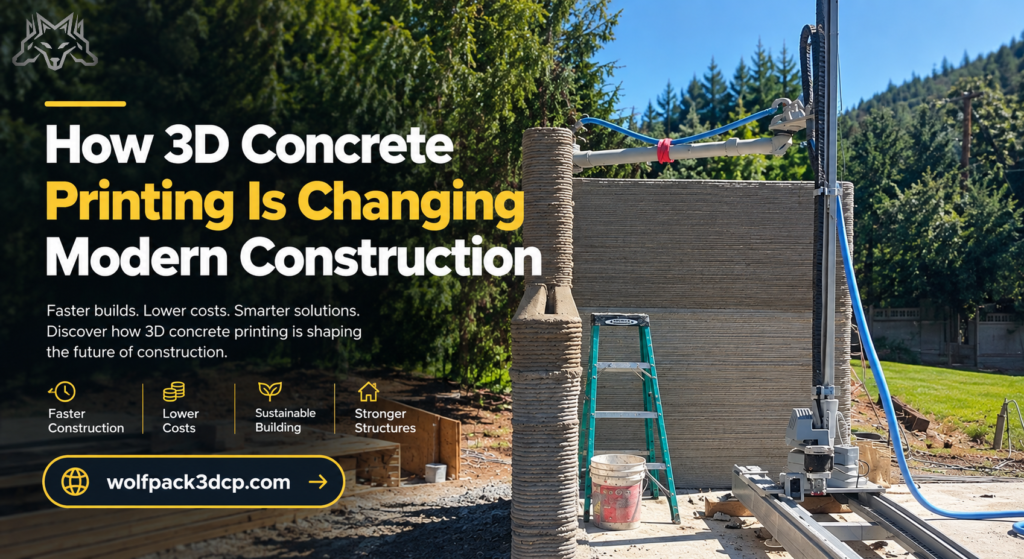
Concrete 3D printing is an automated construction process in which a printer deposits a specially formulated cement-based mixture through a nozzle. The machine follows instructions generated from a digital model, placing material in successive layers until the planned shape is produced.
The process typically begins with a computer-aided design model. Engineers and designers convert that model into machine-readable instructions, considering the printer’s movement, material flow, layer dimensions, and construction sequence. Before printing begins, the team must confirm that the mixture can move through the delivery system while retaining enough shape after deposition.
This balance is essential. Material that is too fluid may spread or deform, while material that is too stiff may create pumping difficulties or interrupt the printing process. Successful Concrete 3D printing therefore requires coordination between material science, digital design, and equipment operation.
Traditional construction techniques remain important because printing does not automatically replace foundations, reinforcement, roofing, plumbing, electrical installations, or finishing work. Instead, the technology can automate specific portions of a wider construction process.
Key Applications of 3D Printing in Construction
One promising use is the production of selected residential building components. Depending on the approved design and the system being used, printers can create wall sections and other geometrically complex elements. Some projects also explore printing entire wall systems on-site, although structural engineering and local approval remain essential.
Architectural features offer another practical application. Curved walls, decorative elements, custom seating, landscape structures, and specialized concrete forms can be difficult or expensive to manufacture using conventional molds. Digital fabrication can make these shapes easier to produce without creating a unique physical mold for every design.
3D Printing in Construction may also support prototypes and small-scale demonstrations. Contractors can evaluate a design, test construction sequences, and identify operational challenges before committing to a larger project. These preliminary applications help teams understand the technology without assuming that every structure is suitable for automated printing.
Infrastructure-related components may also be candidates where the design, material, and applicable standards permit their use. However, bridges, load-bearing elements, and other safety-critical applications require project-specific engineering, testing, and approvals rather than relying on the printing method alone.
Benefits and Limitations of Concrete 3D Printing
A major advantage is design flexibility. Because the printer follows a digital toolpath, complex shapes can sometimes be created without the extensive formwork required by conventional casting. This may reduce certain fabrication steps and provide architects with additional design possibilities.
Automated material placement can also improve consistency when the equipment, mixture, and environmental conditions are properly controlled. Digital workflows can help teams coordinate design intent with production, while project-specific optimization may reduce unnecessary material use.
Nevertheless, 3D Construction Printing has limitations. Equipment must be transported, positioned, calibrated, and maintained. Weather, temperature, material delivery, and interruptions can affect print quality. Workers need appropriate training to monitor the machine, recognize defects, and respond to unexpected conditions.
Structural performance also requires careful attention. Printed layers can behave differently from conventionally cast concrete, particularly at the interfaces between successive deposits. Reinforcement, connections, curing, and long-term durability must be addressed through suitable engineering and testing.
Finally, printed structures still need to comply with applicable building codes and approval procedures. A design that is easy to print is not necessarily safe, economical, or legally acceptable for its intended use.
Renting vs. Buying Concrete 3D Printing Equipment
Purchasing equipment may make sense for businesses with a steady pipeline of suitable projects, trained operators, adequate storage, and the capacity to manage maintenance. Ownership can provide greater control over scheduling, but it also requires substantial upfront investment and ongoing operational planning.
Rental can be more practical for contractors exploring the technology or completing an occasional printing project. A rental arrangement may provide access to specialized Concrete 3D Printing Equipment without requiring the business to own and store a machine between jobs.
Before choosing a rental option, contractors should clarify what the agreement includes. Equipment delivery, installation, operator training, technical support, material supply, maintenance responsibilities, and return arrangements may differ between providers.
A 3D Construction Printer for Rent can be particularly useful for pilot projects, demonstrations, or limited production runs. However, the total cost should include site preparation, transport, labor, material trials, and any additional equipment required to complete the work.
What to Consider Before Renting a 3D Concrete Printer
Begin by defining the project scope. Determine whether the printer will produce a prototype, architectural feature, landscape element, or part of a building. Confirm the required dimensions, design complexity, production schedule, and engineering requirements before requesting rental quotations.
Next, assess the construction site. The printer may need a stable surface, adequate access, sufficient working space, reliable power, and an organized material-handling area. Outdoor projects also require plans for weather protection and material storage.
Material compatibility is equally important. Ask which printable mixtures the equipment supports and whether the supplier provides guidance on mixing, pumping, and quality control. Do not assume that ordinary ready-mix concrete will work in a specialized printing system.
Contractors in California can review WolfPack 3DCP’s California rental options when investigating equipment access for a project. Before making a commitment, they should confirm availability, rental conditions, operator requirements, transportation arrangements, and the support offered for their particular application.
Local building regulations also deserve early attention. Depending on the project and jurisdiction, permits, structural calculations, inspections, material documentation, and approval of alternative construction methods may be required. Early coordination with the local building department and qualified design professionals can prevent expensive delays.
The Future of 3D Printing in Construction
The development of 3D Printing in Construction will depend on improvements in materials, machine reliability, digital planning, and quality assurance. Better integration between design software and construction equipment may make it easier to identify production issues before work begins.
Automation may also become more useful when combined with robotics, site monitoring, and building information modeling. These systems could improve coordination between design, fabrication, and inspection, although their benefits will depend on practical implementation.
The industry must also develop reliable methods for testing printed components, documenting quality, and meeting local requirements. Wider adoption will require evidence that a particular system performs appropriately under the conditions for which it is intended.
Conclusion:
A practical construction strategy begins with careful evaluation of the project’s needs. WolfPack 3DCP is one option contractors in California can investigate when considering rental access to concrete printing equipment.
The broader lesson is that digital fabrication works best when technology supports a clearly defined construction objective. By assessing design requirements, site conditions, material performance, engineering responsibilities, and overall costs, builders can determine whether concrete printing offers a meaningful advantage over conventional methods.